Showing posts with label Detroit. Show all posts

Saturday, September 22, 2007

Chewing The Bacon Fat: Andre Williams

Andre Williams began his career in music singing with groups like The Cavaliers in Chicago on creatively extended weekend furloughs from the Navy, where he served alongside a young Redd Foxx, and when he was discharged for being only 15, he tried his fortunes in Detroit - at the little Fortune Records label, located behind a barbershop.


Here is where he gained his opportunity to gain experience of song-writin
g, and more importantly, of studio production: "...not only figuring out how records was made, it brought me to the realization that I could write! I didn't have no prior musical training, but I could put those damn songs together in five or ten minutes."

Andre got busy creating dozens of hit records, and he began each with the same concept in mind:
" I'll tell you somethin' fellows, the first line of communications was the drums. That was in Africa, the Congos, the Mongos, and all them 'gos. When they was doin' communications, it was with the drums. So if I could get a drum rhythm which captivates people and put a hell of a story on top of it, I can't lose. And that's where I went."

That was the concept behind such hits at Fortune as Bacon Fat and Jail Bait. Recorded in 1957, they stand out for their take on the seamy side of life, and for Williams vocal delivery. How did Bacon Fat's lyric come about?:

"When I came up with "Bacon Fat" I was travelling from Detroit to Memphis. That's when I knew that I had to come up with a gimmick. So I stopped in Memphis and I got an egg and bacon sandwich - on toast! I'm driving and a lot of places where we used to travel, it was only a two lane highway so you'd see the cotton pickers on both sides and I'm driving and [starts tapping a beat on his thigh, starts humming] "Down in Tennessee... and the name of the dance is..." and I had the sandwich in my hand and there it came, "The Bacon Fat!"

As for the talking style, often cited as a forerunner of rap, it came partly from necessity, and partly from Andre spotting how to make his own mark:
"With all these guys singing acapella, I knew I couldn't cut the mustard with that. I've always been a survivor; I've always been able to look ahead and see disaster coming. I said to myself, "Andre, you gon' have to come up with a gimmick, or these people are gonna spot you, and you gonna go down the tubes, because you cannot sing like these people. You ain't no Clyde McPhatter, you ain't no Nolan Strong, you ain't Pookie Hudson, you cannot sing like these guys. You gotta come up with somethin'...Nobody knew that I was gonna talk this record...They pressed the record and, bingo, that was it! I said, "Okay, now I got it; now the only thing I got to do is talk about all these bad times that I had, and I should be able to have me a lengthy career."

Sadly, according to the research of Marv Goldberg, who has interviewed many of the people involved, Bacon Fat did not lead to fame and fortune for all of its participants. For the singing group The 5 Dollars, for whom Andre was supposedly a nominal fifth member, and who had written the tune and sung the backing vocals, it threw fat on the fire in their relationship with Fortune. When the record actually was released, it was no longer Andre Williams and The Five Dollars (or even 'The Don Juans', the pseudonym Andre had encouraged them to adopt for some of their recordings and shows - wearing handkerchief masks) but Andre Williams & His New Group - and the backing voices were somebody else. They belonged to another Detroit group, The Dexatones. The original take with the 5 Dollars does somewhere exist, since Fortune Records used to keep the tapes running constantly to capture anything they might use for a quick release. However, the version we all know is the one released on Columbia/Epic.

In 1961, he met up with Berry Gordy, and was hired to act as both an A&R man, writer and producer. It seems to have been a kind of love-hate relationship!:

"I could never conform to his way of doing business, and I could never be a yes-man and suck up to him, so he fired me! But when he'd fire me, then he'd get a guilty conscience or something, and he call me back. I'd go back and work maybe six or seven months, then mess up again and he'd fire me again …" Despite the temporary disagreements over business, Gordy could not deny the genius that Andre brougth to Motown, and Andre produced dozens of hits for the likes of Mary Wells, The Contours, Stevie Wonder, and later for groups like The Chi-Lites.

So when Andre Williams knew when he encountered Alvin Cash and his brothers in the Budland Dance Club, he knew that he had another vehicle for his unique style of rhythm-heavy, direct vocals r&b, and the Cash brothers should have realised their good fortune. Sadly, it seems that Alvin Cash didn't feel the same about his mentor. Andre Williams explains in an interview with Joss Hutton for furious.com in 2001: " I wrote the song ["Shake A Tailfeather"] originally for the Five Du-Tones, a vocal band and I also recorded it with Alvin Cash (and the Registers). I also did "Twine Time" with him. When I cut Alvin and I got a hit on him, the same way the American system works, the white boys moved in and he chose a white producer. You know, "We're gonna make you a star, why don't you go with us?" and then, when comes session time, Alvin doesn't want Andre to produce it. What a dumb motherfucker! I mean, I would've always stuck with the cat that got me there in the first place! But he wanted to go with them. Alvin needs producing 'cause there's no talent there, he's just a voice on a record you know!" Even if Alvin didn't realise what Andre could do with a record, others like Berry Gordy, watching a Williams song hit for another label, certainly did!: "Berry'd send a telegram sayin', "Come back to Detroit!" (laughs) You know? Everytime I'd catch a hit like "Twine Time," he'd send for me, because he didn't want his soldiers out there. He was a selfish cat."

Andre Williams took that genius for hit-making on to Chess and Duke-Peacock before things got out of his control after a gruelling 18-month stint working with Ike Turner led to a spiral of drug addiction, and eventually saw Andre homeless. In the mid 90s, Andre Williams was back recording. On his latest album in an ongoing career, Andre hired guitarist Bobby Quine. Bobby Quine is quoted as saying: "Now I've worked with two geniuses: Lou Reed and Andre Williams."

Funny he should say that...
Williams idiosyncratic vocal delivery seems to have had an influence in one of the unlikeliest of places. A young guitar player from Long Island, soon to make his way to New York City to become a company songwriter for Pickwick Records in the Brill Building, absorbed a great deal of ideas and techniques from listening to songs like Bacon Fat and Jail Bait. Lou Reed, soon to form the avante-garde rock band The Velvet Underground, adopted some of Andre's style for almost improvisational lyrics, lacsadaiacal delivery, slurring and deadpan asides. You can hear Andre's laid back 'Lord have mercy!' from Bacon Fat echoed on Lou's 'Temptation Inside Of Your Heart' along with a whole background of extemporisation, and the word association of Jail Bait is echoed in 'Murder Mystery'. 'She looks so good, just like a young girl should' is used by Lou in one of his live numbers 'Sweet Bonnie Brown'. If the only band The Velvet Underground ever wanted to be able to play like was Booker T & The MGs, then Lou wanted to be singing in front like Andre Williams.

Andre continues recording. The Five Dollars had a well-recieved reunion in 1999. Sadly, in 2006, pianist Joe Weaver, featured on Bacon Fat, passed away.

Well, I've been chewing the fat for long enough. Now it's your turn:

Andre Williams - Bacon Fat (Fortune/Epic) 1957

All Andre Williams quotes are taken from an interview with Joss Hutton for furious.com , and from an interview by Dan Epstein for Ugly Things magazine. John Nova Lomax at Cleveland Scene magazine has also collated together several other Andre Williams interviews from recent years. The story behind the story of the recording of Bacon Fat, and the role of the The 5 Dollars, is revealed in full by Marv Goldberg, in another one of his fabulous R&B Notebooks. 5 Dollars photos belong to Marv Goldberg and to group member Charlie Evans. ALvin Cash photo shared by Mel(andthensome) on SOulful Detroit forum.

Friday, September 01, 2006

Who Was Jack Montgomery?

Yesterday's post eventually mentioned the mysterious Jack Montgomery, Detroit soul singer, and his recording of Don't Turn You're Back On Me (visit this post to...), which seemed an appropriate song for the article on Hurricane Katrina. So who is Jack Montgomery?

Trailing around in the Soulful Detroit forums, a poster gave a link to a fascinating article by Dave Rimmer at Soulful Kinda Music, in which he conducts an interview with soul songwriter/producer Don 'Barracuda' Mancha, who suddenly revealed that he knew and worked with Jack, and even suggested his stage name...

Jack Montgomery's real name was Marvin Jones, a draughtsman, who came to Don to audition. Don came up with the name Jack Montgomery based on his business partner Don Montgomery, owner of the Travler Motel. Don't Turn Your Back On Me was the first single, released on Don's own label Barracuda (his nickname as a DJ), written by Don Mancha and Fred Bridges (renowned songwriter at Golden World Studios), and recorded at United Sound Studios on Second Ave, with Dennis Coffey and Mike Theodore doing one of their first arrangements together. Interestingly, the b-side was an instrumental track called Never In A Million Years, which doesn't even feature Jack.

They then looked for majors to take an interest, eventually turning to Scepter Records in NYC to release the follow ups, all of which Jack/Marvin had a hand in writing, and were probably recorded at the Tera Shirma Studio. Johnny Terry, then part of The Drifters line-up, had set up the deal with Scepter, but then things went sour, accusations were thrown of skimmed payments, and Johnny took custody of the master to Baby Baby Take A Chance On Me when the two Dons dissolved their partnership with him.

Marvin went on to make one more single under the Jack Montgomery name, this time with new producers and arrangers, then apparently faded from soul history into a new life outside music.

According to Don, Jack Montgomery pased away several years ago, presumably sometime in the late 90s or early 2000s.

GO and read the fascinating interview here. If you know more about Jack, I'd love to hear about it! Dennis Coffey and Mike Theodore provided info on the Soulful Detroit forum boards. Other info from "The Fred Bridges Story" by David and Lowell on Soulful Detroit.

Sunday, August 13, 2006

Yusef Lateef's Detroit: Belle Isle

It's time to relax on our occasional tour of the Detroit described by Yusef Lateef in his classic Atlantic jazz album of 1969. "Jazz?", someone says, "but I'm only into obscure northern soul and talcum powder..." And I say, "But this man lived right there in it, and saw and listened, and then described with music what you seek to find. He knows the background to those three-minute gems of intensity. Come on, only 9 people have got on the bus! You've still got time to visit Woodward Avenue and the Paradise Theatre where Billie Holliday and Duke Ellington played; Bishop School where Yusef learned; and pick up some groceries at the Eastern Market! What is it like? Tell me when you get there."

Saeeda Lateef reminisces in the liner notes...

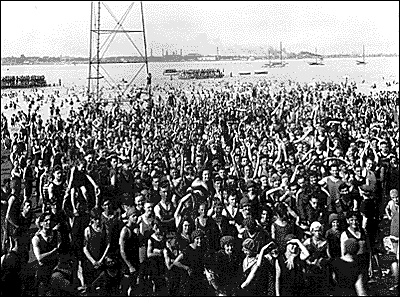
"Hot nights. Belle Isle, pass the Big Stove, lemonade. Fried chicken an' tato salad, scorched hot dogs, get full, laugh loud.
Swim, dig for nightcrawlers, fish, throw the mud-puppies back in the water. Tired? Cool it 'til the Lucky Old Sun rises gleaming from the other side..."

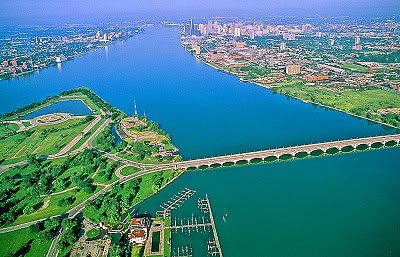
Today, we go to Belle Isle.


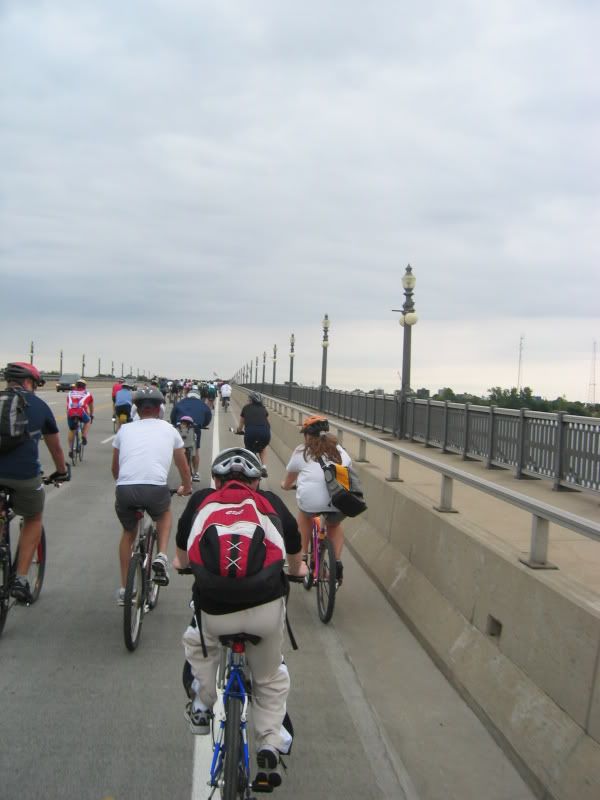
Cross the MacArthur Bridge.


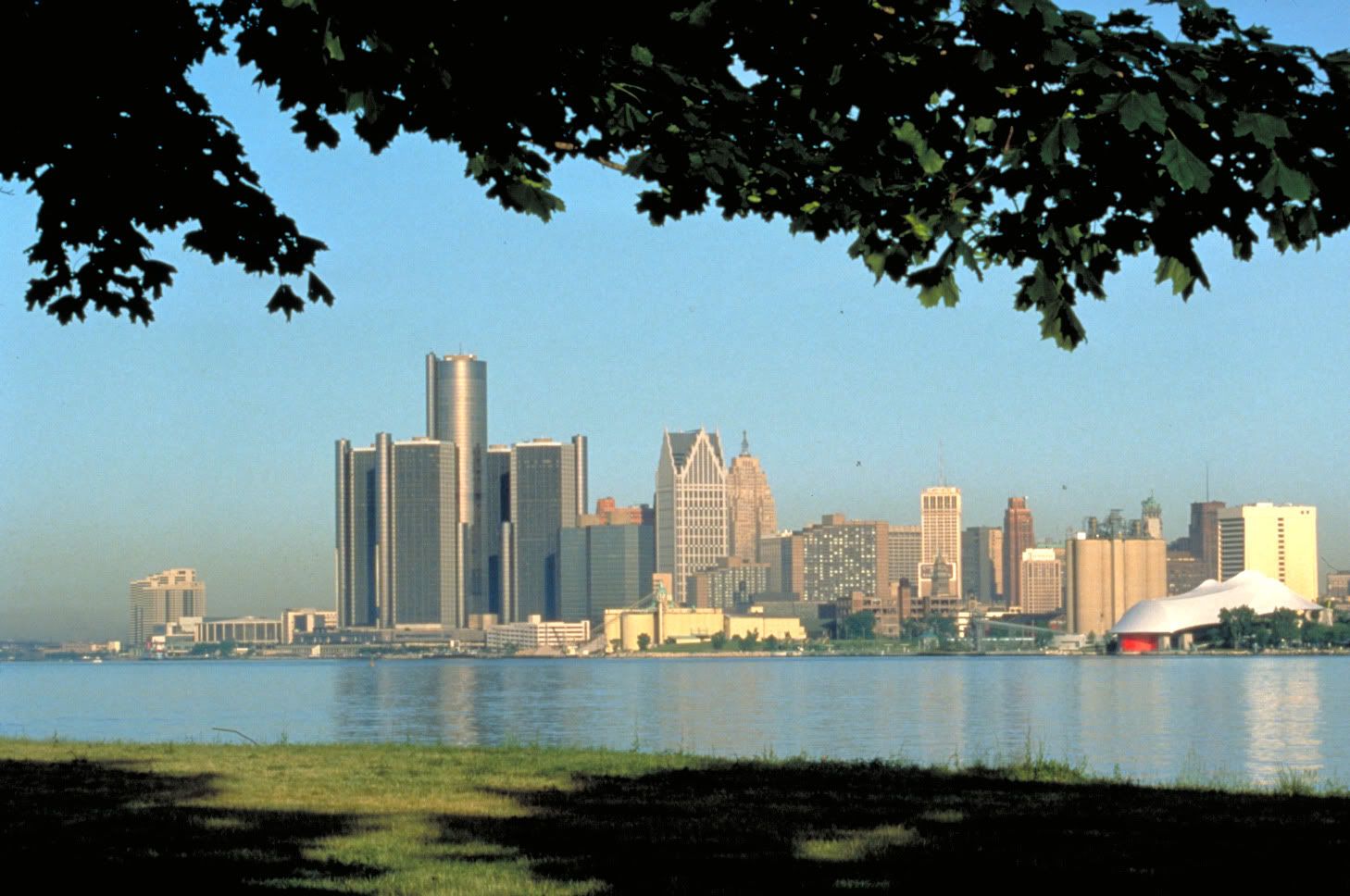
You can see the city of Windsor on the Canadian side and downtown Detroit on the U.S. side, linked by the Ambassador Bridge.


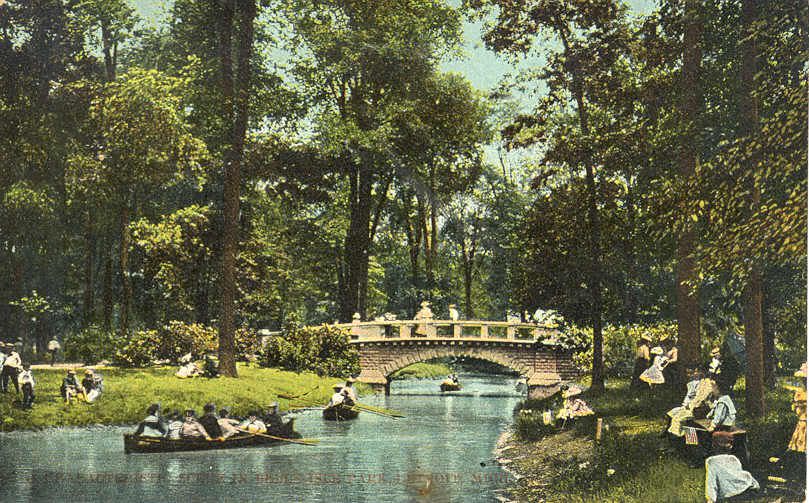
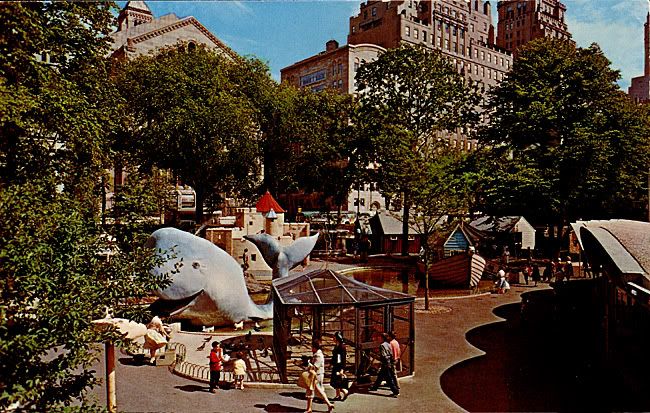
Belle Isle was popular for boating on its canals.


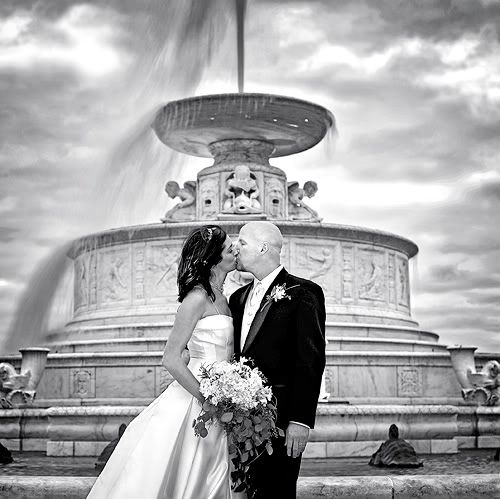
You can visit the Scott Fountain,


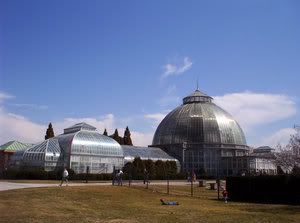
the Whitcomb Conservatory,


and the William Livingston Memorial Lighthouse.


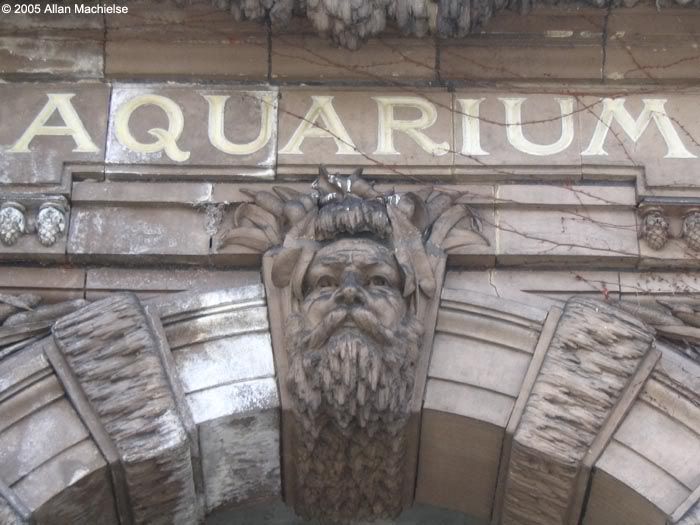
The Belle Isle Aquarium closed for the last time in May 2005, after a continuous 101 years.


At one end of the island, the water's edge is filled with concrete breakwater blocks. These broken up slabs of concrete once belonged to a Nike missile base during the Cold War.


Belle Isle is also the site of the Detroit Grand Prix motor race, and has its own zoo.


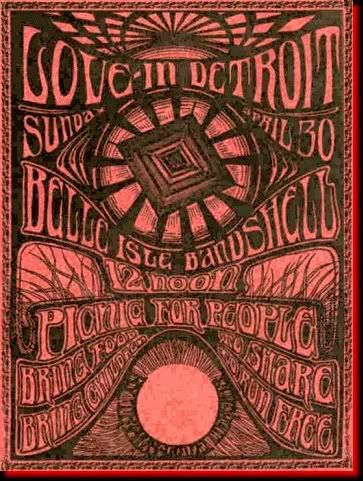
Back in 1967, Yusef Lateef could have gone to see the MC5 at the Detroit Love-In on Belle Isle...


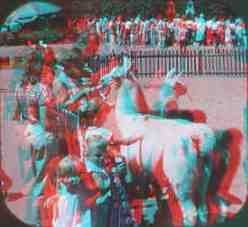
... but I suspect he would have been more interested in this amazing 3D llama at the childrens' zoo.


Yusef Lateef 's Detroit (Atlantic SD1525) 1969

Monday, July 31, 2006

Yusef Lateef's Detroit: The Monroe Theater District & Woodward Avenue

The previous installments of this virtual tour can be found here at the Eastern Market, and here at Bishop School, and here at Belle Isle.

Onwards with our tour of Detroit with Yusef Lateef...

"Stage Show! Arcade, Dunbar, Castle, Willis and Warfield - potatoes for admission on Saturday between 12:30 and 4:00pm. Fifteen cents, otherwise. Freedom of action, unrestricted. Thirteen Spirits of Swing - Matthew Rucker, Milt Buckner. The Duke, The Count, The King, The Prince, The Earl. Royalty at its BEST! Sessions at the West End . . . Joe Brazil's basement ...
... Woodward Avenue. Big parades. The library, the museum, Wayne University, the Toddle House - BEST pecan waffles; cheap ... Paradise Theatre ... The Zephers, Moms Mabley, Patterson and Jackson, and Willie Lewis - "Somebody spit like a dime!" The old Mirror Ballroom, echoes of the giants. World Stage ... New Music Society. The State Fairgrounds - Detroit Symphony and guest artists. Latitude."

- Saeeda Lateef, 1969

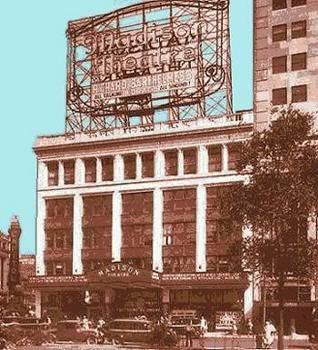
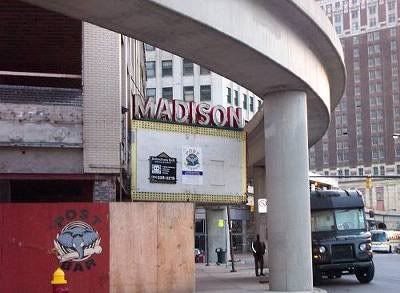
The theatres that Saeeda describes are in mostly a parlous state, or long gone. The Madison Theater has been demolished after serving time as the more exotic sort of cinema, and the site is under redevelopment today for a new entertainment complex. The Arcade Theater still stands at 2416 Hastings Ave. It was open from 1913-1949. The Castle Theater stands at 3412 Hastings Ave. It was open from 1915-1939. A combination of new forms of entertainment and music, economic troubles in the city, the flight of middle-class residents, and regeneration schemes have changed Detroit in many ways.


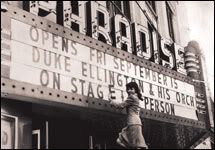
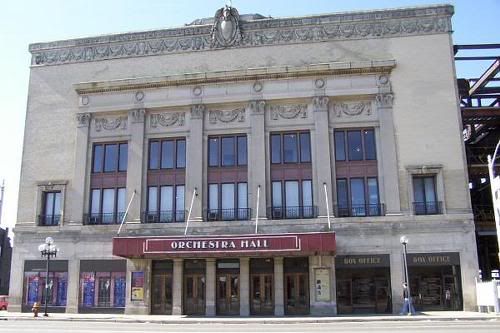
However, there is one story of hope and renewal amongst the ghosts. In 1919, the Detroit Symphony Orchestra build Orchestra Hall on Woodward Avenue and played there until 1939, when they left under financial pressures. Thus began the buildings second and more celebrated life as the Paradise Theater. It was a premier jazz venue, Duke Ellington famously playing there. But the venue closed for the last time in 1951, and in 1970 was slated for demolition.


The community rallied together over the next few months to prevent demolition and raise funds to buy the building in 1972. They started to reopen it for a few fundraising concerts to help continue renovation. By 1989, after $7 million had been raised for repairs, the hall was readopted as the home of the Detroit Symphony Orchestra.

It helped to inspire numerous other community projects to revitalise the area around Woodward Avenue.


Orchestra Hall now promotes the development of the talents of young people via the addition of a new Detroit High School for the Fine, Performing & Communications Arts.

Yusef Lateef's Detroit (Atlantic SD 1525) 1969

Find out more about Orchestra Hall at the Detroit Symphony Orchestra website. To learn more about the local area, why not visit Hamtramck News. Great snippets of local history from the Paradise Valley and Black Bottom districts can be found with Detroit News.

Wednesday, May 31, 2006

Go On Yusef Lateef's tour of Detroit!...


I once stepped out on the tarmac of the airport at Detroit, en route to Milwaukee (yes, a little out of my usual way, but that's another story...), amidst a howling wind and driving snow. I wish I could have stayed to explore the city, but it wasn't to be...

But maybe you have been to Detroit for more than five minutes, or grew up there, or live there now! Off and on, I'm going to try to do a little tour of the places mentioned in Yusef Lateef's Detroit liner notes and songs. But I can only do so much from the internet to find images.

SO if YOU can send a photo of somewhere to me via my email, I'll post it and as a reward, I'll post the track that accompanies that neighbourhood.

Here's a few of the intriguing locations I haven't yet found: Russell & Eliot (streets/aves?), Woodward Ave, Livingston Playground, Bishop School, Paradise Theater, Mirror Ballroom, The Arcade, the Dunbar, The Castle (old theaters?), the Madison Theater ...

Yusef Lateef's Detroit: Eastern Market, A Detroit Jewel

Go here to read the first part of the tour and hear Bishop School. Visit Belle Isle here. See the sights of Woodward Avenue here.

"Every Saturday the Eastern Market. Farmer's holiday! Fresh eggs, poultry, fresh vegetables, fruit, fruit, honey, and apple cider - happy faces, fat arms loaded with shopping bags. The joy of an occasional balloon. POP! SHOCK!! Thrill gone. Sound minds, healthy bodies..."

Saeeda Lateef, Yusef Lateef's Detroit, 1969

Here are some photos of the Eastern Market as it is today, taken for a site called the Hamtramck News, which posts information on local issues in Hamtramck and East Detroit. It seems that the market as it stands may be under threat, as the city consider neighbourhood regeneration projects. If you know about how things are going in the area, please post comments. What is it like?

Yusef Lateef's Detroit (Atlantic SD1525) 1969

Sunday, April 30, 2006

Latitude 42°30' - Longitude 83°


Yesterday's post reminded me of this record. I remember seeing a picture of it on the inner sleeve of another record, and thinking, "I'll never ever find that one...". But somehow, a copy turned up. It has a rare and special quality. This is jazz, with a funk edge, but it is a perfect example of jazz as reportage, describing a community through music. You might have Left Your Heart in San Francisco, you might love New York, New York, you might dream of Galveston, you might even hear London Calling, but only one city has an entire album capturing its everyday scenes and sounds... Latitude 42°30' - Longitude 83°, Yusef Lateef's Detroit...

Let's start our tour, with the words of Saeeda Lateef...

"Detroit. Automobiles. G.M., C.M., A.M. Mark of Excellence! Factories, foundries, gases, grease, grime, smoke, black-out, shake-out, lay pipe, cement: mixer, mixing. Metal. Black sand, Sweet Sweat. Dig ditch, fill hole, carry hod, shift weight, carry hod, step back! Carry hod.
Stage show! Arcade, Dunbar, Castle, Willis and Warfield - potatoes for admission on Saturday between 12:30 and 4:00 pm. Fifteen cents, otherwise. Freedom of action, unrestricted. Thirteen Spirits of Swing - Matthew Rucker, Milt Buckner. The Duke, The Count, The King, The Prince, The Earl. Royalty at its BEST! Sessions at the West End ... Joe Brazil's basement...
Wide boulevards, welfare shoes with cardboard soles ... but shoes! Walking, delivering newspapers, tear down old barn, sell wood, rags - good old, sweet old, happy old ragman - rusty old iron man. Howling dogs. Withered old fishermen. Fishing, Detroit River, river ripples, blue lakes, perch; WOW! A lake-trout! Two feet long! Right out of the river - the Detroit River.
One tree. One big tree in the Bishop School yard. A little exercise bar beneath it. Goat-Latin, hamburgers, doughnuts (day old, week old). Bulldog gingerbeer. Milk and graham-crackers. Drwaing pictures of favorite funnypaper characters ... Barney Google, Spark Plug, Skippy, Olive Oyl and Popeye, Little Orphan Annie and Sandy. Mary Jane and Dum-Dum suckers. Hide and seek - FUN! eduf - da -iduf - da - oduf -da - eduf - da- oduf..."

Yusef Lateef's Detroit (Atlantic SD1525 1969)

Continue our tour of Yusef Lateef's Detroit at these posts: Eastern Market, Woodward Avenue, and Belle Isle.

A CD of this classic description of growing up in pre-60s Detroit can be found at Amazon.co.uk. A biography of Yusef Lateef can be found at www.yuseflateef.com