Showing posts with label Ahmet Ertegun. Show all posts

Friday, December 07, 2007

More Nugetre's Nuggets: Whatcha' Gonna Do?

The tribute concert to commemorate the life of Ahmet Ertegun has been postponed until December 10th. The announcement that Led Zeppelin would reform to headline the show sent rock fans into a frenzy for a furious ticket lottery earlier this year, perhaps to the detriment of the memory of Mr Ertegun himself, who sometimes was barely mentioned in the news reports.

So here for your enjoyment are some more nuggets of Nugetre ("Ertegun" backwards), r&b authored by Ahmet himself, continuing the series I ran last November. Well, this selection has a few twists and turns, which took it past Ahmet along the way...

Whatcha Gonna Do by The Drifters was recorded on 2nd April 1954 and was released in February 1955 and featured Clyde McPhatter on lead vocals, and was to become the last single featuring him, as several other recorded tracks were then canned and kept for rainy days and b-sides. It reached No.2 on the R&B chart. It marked the end of Clyde's tenure with the group, as it had been intended to promote it as a commencement of his solo career. Then in July 1955 he was drafted.

This was the third time that the Drifters had recorded the song, the first time having been with the short-lived Mount Lebanon Singers line-up, the next time when Bill Pinkney and the Jerusalem Stars had come in to replace the Mount Lebanon Singers on 9th August 1953. So in a way the song had a history that spanned the entire period of the classic Drifters line-up. It also had a gospel past.

Whatcha Gonna Do was originally recorded by The Radio Four, and written by their lead singer Reverend Dr Morgan Babb. Ahmet had heard the gospel tune perhaps on the legendary radio show Ernie's Record Parade, John Richbourg's show on WLAC on a 50,00 watt signal out of Nashville, as Dr Babb also acted as a gospel A&R man for Ernie Young, founder of Nashboro and Excello Records, who was the show's sponsor.

This 45 was recorded at 535 Fourth Avenue South in Nashville and released in April 1953 on Tennessee Records subsidiary label Republic. The new subsidiary had been set up in summer 1952 on the back of the success of Christine Kittrell's single Sitting And Drinking. The five brothers in the group, of whom Dr Babb was the youngest, had been performing in various line-ups since the late 1930s. The Radio Four had an enviable reputation in the gospel circuit, regularly sharing billing with R.H. Harris' Soul Stirrers, and by chance happened to be double-heading the bill for Sam Cooke's first outing with the Stirrers. They recorded a kind of country gospel style, which related very much to the older brothers' former days in a popular jug band before their conversion to religion (appparently due to a bolt of lightning that nearly killed their father.) When Dr Babb joined his older brothers in 1950, he brought a emotive, soulful style of singing, which set them apart from the emphasis on technical singing found in the jubilee singing groups of the era.

This particular track also bore the name of Madame Edna Gallmon, a bone of contention for The Radio Four. Morgan Babb had helped her to get a chance singing with them at Tennessee, and coached her in technique to develop an up close and personal style of performance. The first recordings were released released as just by The Radio Four, as Tennessee were unsure whether to even sign her to a contract. When she was finally signed, not for the first time Tennessee wanted to use them as a backing group for the new 'star', and so The Radio Four stated that they would not be backing her in the future. Despite this, tracks like this one were later released and promoted with both Gallmon and The Radio Four's names. To add further salt to the wound, Dr Babb was never paid any royalties for the songs , like this one, that he wrote for Republic.

Listen to a rollicking, boogie-woogie number:

Clyde McPhatter & The Drifters - Whatcha Gonna Do (Atlantic 1055) 1955

And here is the gospel original:

Mdm Edna Gallmon Cook & The Radio Four - Whatcha' Gonna Do? (Republic Records 7067) 1953

OK, I can understand Led Zeppelin being on the bill. But Paolo Nutini?

I really enjoyed researching this little post, as I discovered so many connections between this and other artists I had researched in the past year. Information and images about The Drifters from Marv Goldberg's R&B Notebooks, a site I cannot stop reading! Information about The Radio Four comes from
the liner notes of CD The Radio Four 1952-1954, written by Opal Louis Nations, which is also where I took the featured track from. The great gospel site Recordconnexion, written by Robert Termorshuisen, who got details from ''Gospel Music 1943-1969' by Cedric Hayes and Robert Laughton, is also a great resource. I also read about Dr Morgan Babb on the WLAC Fan Site. The Radio Four label scan and images come from Big Joe Louis and Robert Termorshuisen. The development of gospel in Tennessee is well documented by PBS in the article From Jug Band To Gospel by David Evans & Richard M Raichelson Also, visit this post at Red Kelly's gospel blog, Holy Ghost, to read a bit more about Nashboro Records.

Sunday, January 28, 2007

I've Been Put Out, Shut Out, And Told To Stay Out, And Then Talked About, But I've Still Got You: Joe Tex For The Hall Of Fame!

"This is what rock and roll is all about," Rock And Roll Hall of Fame President Joel Peresman said to the coterie of music executives who had hung around after the ceremonies, eagerly hanging on to his every word. "Who would believe that Van Halen would have to wait so long for their just reward. But lucky for them, I'm in charge now. I spent a lot of good money on hairspray, skipped class to follow their tours, and learnt three whole power chords so I could play their tunes on my 'axe' in my bedroom. Such devotion! But now the whole world understands..."

Bidding his friends farewell, Mr Peresman gave final orders to security to dispose of Iggy and The Stooges. Picking up another sparkling flute of champagne, he trotted, giddily, up the steps and onto the now empty stage. It had been a good night...

... a cold draft blew threw the room. Joel span around, suddenly convinced that he was not alone. But there was nothing there, of course. How silly of me, he thought, nobody noticed. How could they possibly know what we have done? They worship who we say they should worship...

This time, he was spun around with such force he snapped the stem of the flute between his fingers. Yet the strength moving him was not his own.

I Gotcha!

"No!"

You Thought I Didn't See Ya Now, Didn't Ya?

"It's not possible..."

You Thought You'd Sneak By Me Now, Didn't Ya?

"This can't be happening..."

Uh huh, Huh!

"But they told me you only made that disco hit where you ain't gonna bump no more with no big fat woman..."

Uh huh, Huh!

"Please, I didn't know..."

Now Give Me What You Promised Me, Give It Here, Come On!

There was a scream, then the sound of broken glass. Then there was just the sound of running footsteps, an empty awards room, stale champagne, and a pile of gaudy trinkets...


Photobucket - Video and Image Hosting

The decision to omit Joe Tex from the Rock And Roll Hall Of Fame this year astonishes me! How can Van Halen have a better claim, especially in a list of candidates that also included The Stooges as a far more credible 'rock' act? I blame MTV... Yet it continues to be the case that soul artists such as Joe Tex are all but invisible to the public at large, and their contributions to music totally ignored. Even those artists who do rise above into the collective consciousness are incompletely understood. One British tabloid (the formerly proud, campaigning, working-class Mirror) recently described the funeral of Mr James Brown and the public procession to view the casket as 'bizarre' and 'ghoulish' and 'grotesque'. Such commentators are in the most extreme form of denial about the origins of their popular music, yet seemingly revel in their ignorance.

The blogosphere is not immune to such frippery either. The same day as the Rock And Roll Hall Of Fame announcement, one blog admirably featured Joe Tex and several admirable samples of his work, yet spared no expense to mock his comedic lyrical style, and even to denigrate his religion by mocking his name (termed 'El Reg Dwight' for some bizarre reason) and with numerous references to eating pork scratchings. Yusuf Hazziez deserves better than this.


Joe's music is much deeper that the comedy on the surface suggests. There is a serious aspect to many of his songs. The comedy comes from his keen powers of observation. Peter Guralnick puts into context the comedic aspects of Joe Tex's act in Sweet Soul Music:


"Perhaps humor was as good a way to handle the indignities of the road as any other... Removed by twenty [now forty] years, it is not always easy to remember just how grim those days really were ... Ballparks and taxicabs are segregated ...a book about black rabbits and white rabbits was banned... A drive is on to forbid 'Negro music' on 'white' radio stations... In the face of such opposition is it any wonder that many blacks should have fallen back on 'mother wit' as their first line of defence?..."

Joseph Arrington's conversion to Islam was also far from a flippant act. Many white people in the industry saw it as a sign of black activism, and thus a challenge to the established racial order of the day. In fact, it was a deeply personal search for spiritual answers, by a man who was not at all beholden to the allures of fame, and gave up his career to focus on his family and ministry. Now, of course, Joe's religion brings up other latent fears within some. How ironic that they would use comedy to protect themselves from it...

Today's song, from Joe's Dial recordings, shows the character of a man who had experienced ignorance and bigotry aplenty, yet was able to maintain his own sense of dignity and retain focus on the things close to him that meant something more...

Baby, if you be good, if you be good,
If you be good, baby, if you be good,
Listen!
I'll give you all the love and care that your heart desires
Yes I will...

Listen!
I've been lied on, stepped on, walked on, cheated on baby,
I've still got you.
I've been run down, knocked down , turned around and slapped down, baby
I still got you.

Listen!
A man would have to be crazy, to leave a good woman like you.
Coz you have got that certain little something,
That makes me forget all that I've been through...

I've been put out shut out, and told to stay out, and then talked about,
But I've still got you.
I've been beat up, cut up, shot up and told to shut up.
I still got you.

Listen again!
A man whould have to be crazy,
to leave a good woman like you,
Coz you have got that certain little something,
that makes me forget all that I've been through.

Joe Tex - Baby, Be Good (Dial 4086) 1968

Somewhere, I imagine, people who know, amongst them Buddy, Ahmet, and even James, are giving Joe a toast befitting to his contribution, and that's enough for him perhaps. And even down here, it isn't the end of the story. On October 26th 2006, someone named Phile wrote a comment in a blog elsewhere that read: "Where has Joe Tex been all my life?"

The details of the Rock And Roll Hall Of Fame inductees 2007 can be found here. To campaign for Joe Tex's inclusion in The Rock And Roll Hall Of Fame for 2008, write to:


Rock and Roll Hall of Fame Foundation
1290 Avenue of the Americas
New York,
NY 10104
Or leave comments for this post, to form a petition!

Wednesday, December 20, 2006

Nugetre's Nuggets, Part Three: Joe Turner Ties Chains Of Love To You...

Photobucket - Video and Image Hosting

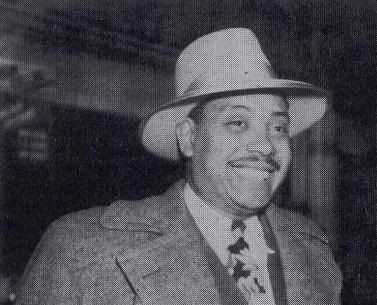
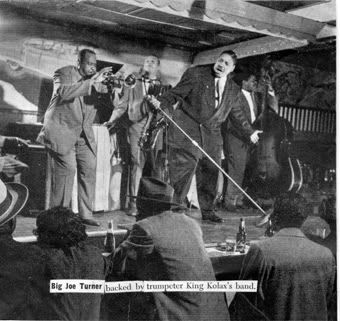
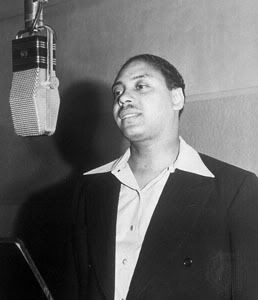
Today's nugget of Nugetre songwriting is Chains Of Love, written for Big Joe Turner.

Joe Turner had already had a long career working with big bands as a vocalist, and alongside friend and fellow bluesman Pete Johnson. By the 1950s, Joe was a veteran of the vocal jazz scene, but his popularity was limited outside this audience.

Photobucket - Video and Image Hosting

The big opportunity for Joe to revitalize his career came in spring 1951, when singer Jimmy Rushing left the Count Basie Band. Ahmet Ertegun heard that Joe was being called in to replace him, so he went to the show at the Apollo Theater. Ahmet signed Joe to a one-year contract with Atlantic. On April 19, 1951, he recorded the first song, written by Ahmet himself with pianist Harry 'Van' Walls, who play behind Joe on the song.

Photobucket - Video and Image Hosting

Chains Of Love b/w After My Laughter Came Tears was the first single in May 1951. It reached No.2, and stayed on the r&b chart for 25 weeks, and became the number four best-selling record of the year. Joe toured with Helen Humes and The Hal Singer Orchestra, then as part of Atlantic's "Cavalcade of Blues" tour traveling throughout Louisiana and Texas.

Atlantic released a follow-up while Chains Of Love was still in the charts. The Chill Is On reached No.3 on the R&B charts. In the meantime, material he had recorded earlier for other labels surfaced on the radio. Joe recorded another Nugetre song, Sweet Sixteen , in January 1952. Up to this point in his career, Joe had written most of his songs, and he continued to write material, including the 1953 No.1 hit Honey Hush. Back in New York in December 1953, Joe recorded his biggest hit of all. Shake, Rattle, And Roll reached No.1 on the R&B charts. While this song wasn't written by Ahmet Ertegun, you can hear Ahmet, Jerry Wexler and Jesse Stone making the noise and doing the backing vocals!

Photobucket - Video and Image Hosting

Oddly, despite the version by Bill Haley and The Comets being heard on the radio, it was Joe's version that remained on the charts for over six months! Such popularity for the original black artist dictated some alteration of the traditional pattern of promotion, and Joe was a rock n' roll star! Joe and Bill ended up bizarrely on a tour together, and became friends. After reinventing himself as an r&b star, Joe now was introduced into the crossover world of rock n' roll, and promoted by DJ Alan Freed as part of his tour, even starring in two rock n'roll movies: Harlem Rock And Roll and Shake, Rattle And Roll.

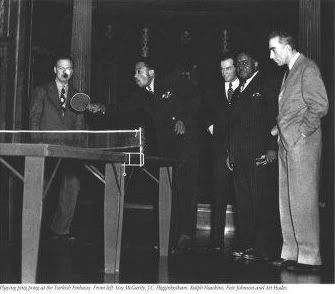
Pete Johnson watches J.C. Higginbotham win the table-tennis competition at the Turkish Embassy...
Pete Johnson watches in awe as J.C. Higginbotham takes on all-comers at a table-tennis tournament at the Turkish Embassy.

After a string of successful hits after that, Joe teamed up once again with his old friend Pete Johnson to record the Boss Of The Blues album, and they played together at The Newport Jazz Festival in 1958 before going off to tour successfully in Europe.

Big Joe Turner - Chains Of Love (1951)

Information from a BluesNotes Magazine article by Terry Currier, of the Cascade Blues Association. Photos from various and What'd I Say: The Atlantic Story.

Tuesday, December 19, 2006

Nugetre's Nuggets, Part Two: Carla And Otis Get Lovey, Dovey

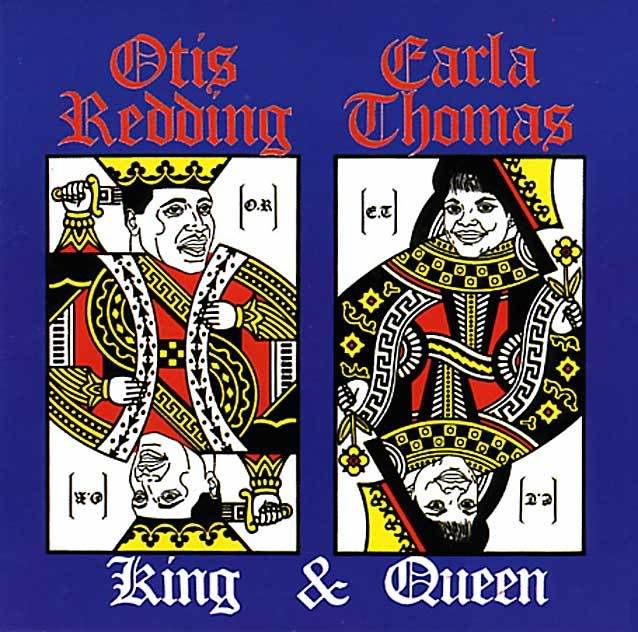
BUY King & Queen Of Soul (March '67) on Vinyl Reissue!

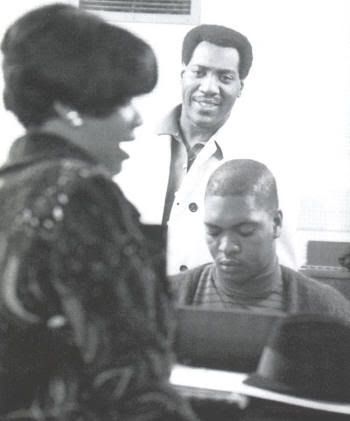
Some more Nugetre magic, with some Stax sorcery added to the mix. Lovey Dovey was written by Ahmet Ertegun (Nugetre) and King Curtis for The Clovers (see Sunday's post). Carla Thomas and Otis Redding recorded Lovey, Dovey for their King & Queen of Soul album in January 1967. They replace the jazzy piano line and sultry saxophone accompaniment of the Clovers' original with Al Jackson's thumping drumbeat, and the sharp blasts of Memphis horns. I love how the horns build up and up towards the end, like when you start up on a rollercoaster, then we go over the top into the final fade out.

Carla, Otis and Isaac Hayes recording in Jan 1967

Carla Thomas & Otis Redding - Lovey, Dovey (Stax 244) Jan 1967

POSTSCRIPT: If you are an Otis Redding fan (you're not?!?!...), incidentally, the photo was featured on a great website devoted to Otis albums, with lyrics and liner notes, called The Otis Redding French Site. The text is in French but its got great features on hundreds of Otis items. And I am learning the French lyrics to Tramp at the moment! Clochard! (transl. Tramp!)

P.P.S. : I've been trying to buy a Clovers track Little Miss Fannie (by Nugetre) on my friend iTunes, and have discovered to my annoyance that it is only listed on US iTunes, and that as a Brit, I am forbidden from purchasing it! AHHH! WHY! (... take a deep breath, there will be other soul music, remember the 12 steps...) Ok, feeling better. I hope they never find out how many 'gift/hobby' parcels of rare vinyl history leave the New World for my door every month...

Sunday, December 17, 2006

Nugetre's Nuggets, Part One: Ahmet's Days In Clover...

Ahmet Ertegun was given a small acetate recording machine at the age of fourteen, and began his own songwriting career by writing lyrics to Cootie William's West End Blues and singing them over the top of the instrumental track playing on a Magnavox record player in the background. His friends would not believe that it was his voice singing!

Being part of the creative process, not just as a producer but as a songwriter, delighted Ahmet, and over the years as president of the company, Ahmet wrote material for numerous artists, under the pseudonym Nugetre (Ertegun spelled backwards). The pseudonym has never been satisfactorily explained for me; after all, everybody knew that the Turkish Ambassador's son ran an r&b and jazz record company. Perhaps it was more that it would look bad for the company to admit that the company president sometimes had to help out at the studio. Ahmet wrote "head" melodies since he couldn't play an instrument or write music. He would record his songs in Times Square recording booths, then take the paper discs and give them to musicians to reproduce.

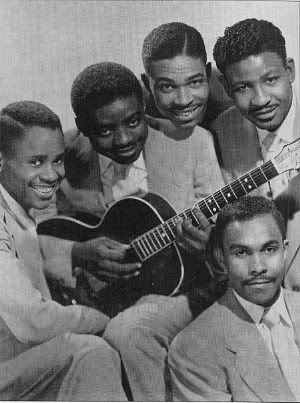
The Clovers

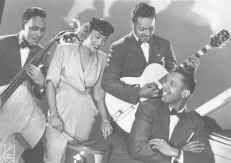
One of the first groups to benefit from Ahmet's songwriting talents were The Clovers. The Clovers were a local Washington group who often played in Washington's Old Rose Social Club, an old bootleg joint dating back to the 20s. In a way The Clovers were perfect for the place, since their repertoire was locked into that era also, with songs such as Yes Sir, That's My Baby, That Old Black Magic, and Pennies From Heaven. They were paid nothing, and were also responsible for looking after the building. Their singing was beautiful, but more barbershop and crooner than doo-wop, and when his old partner Max Silvermann from the "Waxie Maxie" record shop tipped Ahmet Ertegun to them , he was unsure that they could make it in the r&b market. Unimpressed with much of the syrupy material they were recording for Rainbow Records, Ahmet wrote a song himself on the plane ride down from NYC to his old haunt of Washington D.C. that had a quite different style.

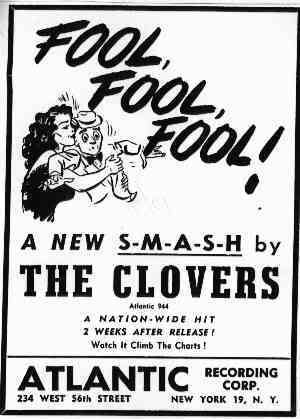
Clovers poster discovered by Marv Goldberg at Marv Goldberg's R&B Notebooks

On February 22, 1951 the Clovers recorded Don't You Know I Love You (Atlantic 934), a mid-tempo, choppy-rhythmed shuffle with Buddy Bailey's blues-tinged vocal leading the group. The surprising use of a sax solo (one of the first on a vocal group record) came about when bandleader Frank Culley demanded to be paid even though he and his sax were not suppose to play on the record. Since Ertegun had to pay Frank as a leader anyway, he let him play and Culley winged it from there. The song sold over 250,00 copies. Ironically, The Clovers themselves preferred the flip-side Skylark, which was more in the pop ballad vein they were used to singing!

The song was later covered by both Fats Domino and Shirley & Lee, but neither do the song full justice - the one overexciting the rock n'roll without the feeling; the other transforming it into pretty kitsch, nasal, bubblegum pop (strange, since normally, I enjoy their songs - I guess the prior knowledge of the Clovers spoiled it for me...)

Clovers poster discovered by Marv Goldberg at Marv Goldberg's R&B Notebooks

Ahmet Ertegun wrote eight songs for the Clovers out of their first nine singles, including their first two number one R&B chart records, the second No.1 being Fool, Fool, Fool. The next year, Kay Starr had a big hit with this song with white pop audiences. The other stand-out songs were In The Middle Of The Night, with its distinctive heavy beat and walking bass line woven into a bluesy ballad, and Lovey Dovey, later covered in the Memphis style by the King & Queen of Soul, Carla Thomas and Otis. Don't You Know I Love You, Fool, Fool, Fool, and Lovey Dovey were each on the charts for over 20 weeks. Five of the Clovers' records during this Nugetre-penned period were double-sided hits, with 3 of them in a row.

Nugetre could write a hit or two!

The Clovers - Don't You Know I Love You? (1951)
The Clovers - Fool, Fool, Fool (1951)
The Clovers - Lovey, Dovey (1953)


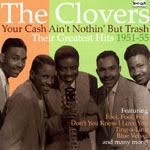
BUY The Clovers' Greatest Hits
You can buy all of these and many other classic Clovers tracks on the excellent compilation Your Cash Ain't Nothing But Trash - Their Greatest Hits 1951-55 by Rev-Ola Records. Most Clovers tracks are also easily found on iTunes.

Information from What'd I Say: 50 Years Of Atlantic Records, and the copious research gathered from interviews with numerous members of the Clovers for Marv Goldberg's R&B Notebooks.

POSTSCRIPT: Has anyone ever heard that Cootie Williams/Ahmet Ertegun recording? I wonder if it survived somewhere in the Atlantic vaults?...

Saturday, December 16, 2006

Living In A Hopeful Future: Ahmet Ertegun 1923-2006

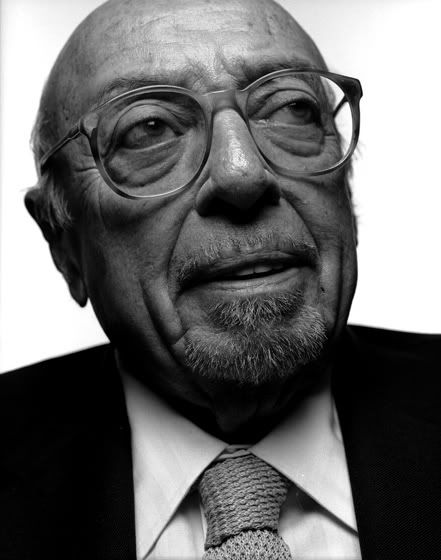
Ahmet Ertegün 1923-2006
Ahmet Ertegün, 31st July 1923 – 14th December 2006

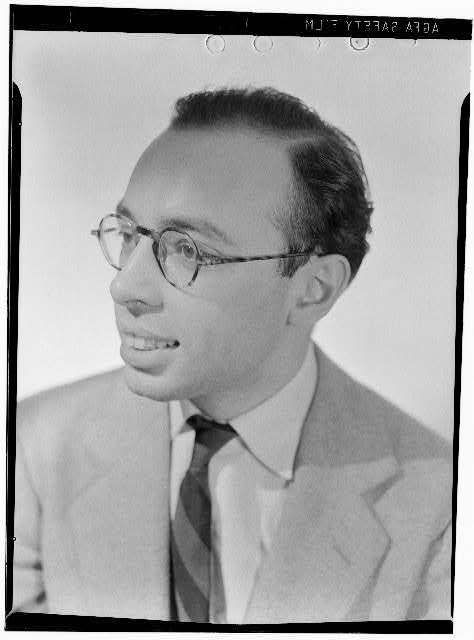
Ahmet Ertegün, who along with Herb Abramson founded Atlantic Records, died this week.

"Ahmet Ertegün was injured after a fall at a Rolling Stones performance on October 29, 2006. Ertegun, 83, slipped and hit his head backstage while the band were playing at former US President Bill Clinton's 60th birthday party in New York Sunday 29 October 2006. After being in a positive stable situation, he slipped into a coma and died with his family by his side on December 14, 2006 at New York Presbyterian Hospital-Weill Cornell Medical Center. He will be buried in his native Turkey, and a memorial service will be held in New York in the New Year, an Atlantic Records spokesman said."

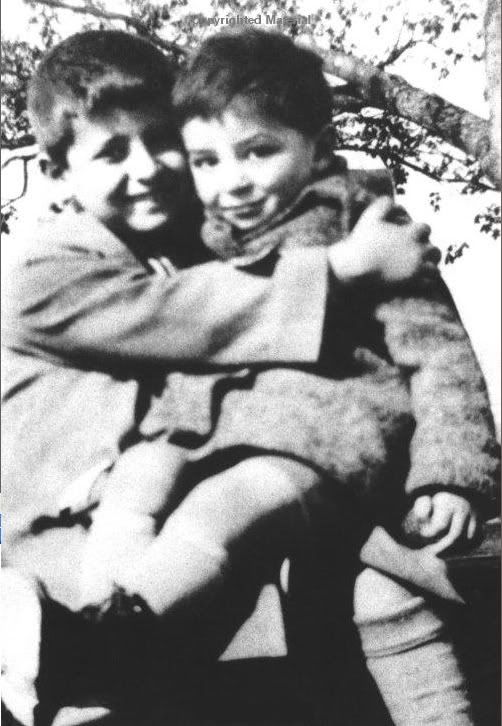
Nesuhi & Ahmet in London 1920s

It was a tragic end to the life of a man who from the age of five had dreamed of being a part of the jazz and blues world he was introduced to by his elder brother Nesuhi, listening to records snuck into their bedroom into the early hours at the Turkish Embassy in Washington D.C. The Ertegun family name means 'living in a hopeful future', and Ahmet and Nesuhi's went out to live theirs as soon as they could, going out to see the great names of jazz; walking from door to door in the black neighbourhoods of Washington asking around to buy old records; and getting to befriend some of those same artists they had worshipped - Duke Ellington, Lena Horne and Jelly Roll Morton, J.C. Higginbotham and Pete Johnson.

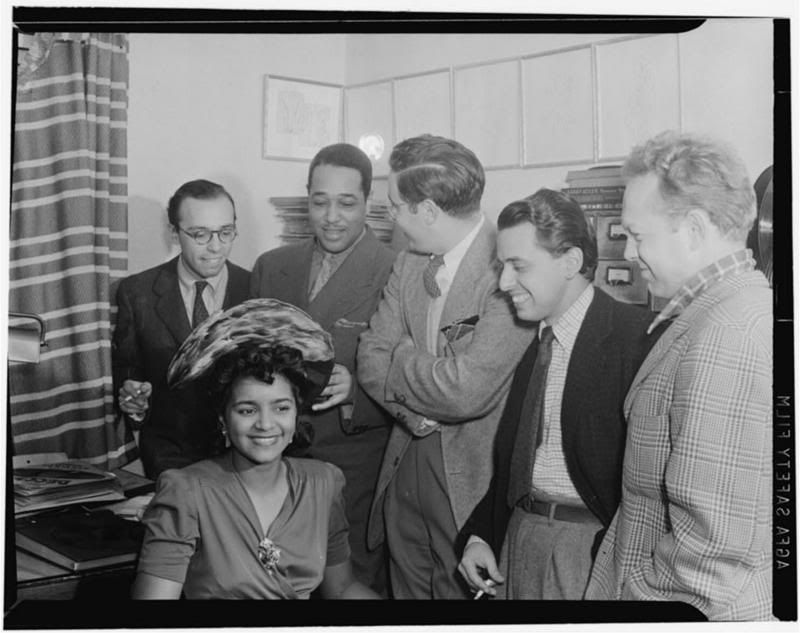
Ahmet M. Ertegun, Duke Ellington, William P. Gottlieb, Nesuhi Ertegun, and Dave Stewart, William P. Gottlieb's home, Maryland, 1941

It wasn't just about music. From the moment he heard jazz as a boy in London in the early 30s, Ahmet felt an affinity with black Americans. He was shocked by the treatment they had to contend with in their own country, and felt something similar in a Europe where their muslim faith set Turks apart despite their modernising new government:

"As I grew up, I began to discover a little bit about the situation of black people in America, and experienced an immediate empathy with the victims of such senseless discrimination. Because although the Turks were never slaves, they were regarded as enemies within Europe because of their Muslim beliefs."

The hopeful future would in Ahmet's dreams include understanding and co-operation between races. As a boy, Ahmet gravitated towards the embassy's black janitor, Cleo Payne, who became a mentor to him, taking him on trips around the black neighbourhoods of Washington and Georgetown, and introducing him to the local musicians, who would then come to play at Ahmet's parties at the embassy.

Ahmet in the 1940s

Nesuhi and Ahmet decided to put on the first ever integrated concert in Washington D.C., the nation's capital being a segregated Jim Crow town back in those years. The Jewish Community Center was the only place that would allow both a mixed audience and mixed band. Later they would be allowed to use the National Press Club's auditorium for other shows.

In 1946 Ahmet became friends with Herb Abramson, a dental student and A&R man for National Records. Deciding to start a label together they talked Max Silverstein into backing them. There was to be two labels Jubilee for Gospel and Quality for jazz and R&B. When things didn't start off well, Silverstein got out, and the two were left to raise some more cash to start a new label, Atlantic Records in the autumn of 1947, working out of a condemned Jefferson Hotel on Fifty-Six between Sixth and Broadway. Sleeping in the bedroom the living room was used as a office, and the office was used as a recording studio through the night. In order to help with the rent Ahmet rented a bed to his cousin Sadi Koylan a poet. With an upcoming recording strike declared by Caesar Petrillo to commence January 1, 1948 they began recording as much material as possible. The first sides were recorded November 21, 1947 by the Harlemaires with The Rose of the Rio Grande. By the end of December a total of sixty-five songs had been recorded.

The Harlemaires

The early recordings, well-written and sophisticated, didn't sell, and searching for inspiration, Ahmet and Herb travelled south to listen to what people were dancing to. The missing ingredient was the danceable rhythm, and with that added to the mix, Atlantic had their first hit with Sticks McGhee's Wine Spo-Dee-O-Dee, an Army drinking song with ribald lyrics heavily toned-down for the pop market. It would not be the last time that Ahmet and Atlantic would be willing to seek out and pick up new inspirations and new ideas, particularly from the South, in their quest for great music. It was one of the qualities that put Ahmet Ertegun apart from other record executives of the time, who relied upon talent scouts and A&R men to do the searching. Ahmet was involved with his artists, and loved the music they made:

"From the moment an artist walks through the door at Atlantic, they are already a star to us."

In r&b, Ahmet would sign up and treat like stars such talents as Professor Longhair, The Clovers, Big Joe Turner, LaVern Baker, Ruth Brown, Clyde McPhatter, The Drifters, Ray Charles, Sam & Dave, Aretha Franklin. Later, he would pioneer the move into rock music that allowed the label to offer itself up for sale in the late 60s and guaranteed its continued survival as an imprint. Ironically that change allowed for the continued support of r&b acts and rerelease of the Atlantic r&b catalogues.

To be fair to the whole man, Ahmet was of course a businessman as well as a music lover. Over the years, several artists would have differences with Ahmet and Atlantic over the business of music, and the payment of royalties. Fred Wilhelms, lawyer involved in royalties work for artists such as LaVern Baker, had this to say this week:

"I had a much harder time than most people reconciling what Ahmet Ertegun accomplished with what he knew was being done to artists with his full complicity."

Unlike some other outfits such as King Records, Atlantic had in fact paid music publishing royalties and also royalties to their performers from the start, but while the contracts were considered standard for the time, as the popularity of the music grew, the deals began to appear less than generous. When disagreements emerged over accounting and collection of royalties due, splits occured, Ruth Brown, Ray Charles and LaVern Baker amongst the well-known. To his credit, in recent years Ahmet and the other old executives of Atlantic were amongst those willing to contribute to the foundation of the Rhythm & Blues Foundation, and other artist benevolent funds, as well as reconciling several outstanding royalties disputes out of their own fortunes.

Now the adventure in search of "cowboys, indians, beautiful brown-skinned women and jazz" , which Ahmet dreamed of as a nine-year old boy collecting and treasuring old 78s has ended with his return to rest in his native Turkey. Ahmet once explained it all, in a slightly tongue in cheek way:

"If it hadn't been for the fall of the Ottoman Empire ..."

I certainly had never really considered the contribution of Mustafa Kemal Ataturk to the spread of black American music into the homes of all Americans and on across the Atlantic into the consciousness of the whole world, but it is impossible to forget the part that Ahmet and his brother Nesuhi played in that. Ahmet and Nesuhi didn't treat r&b as 'race music' in the way so many others had done previously, but as music at the forefront of creativity and genius. Quincy Jones made a similar comment in one of many tributes in the press this week:


"[Ahmet was] one of the pioneering visionaries in this whole scene. He was a very 360-degree person. He loved to have a good time. He knew how to party, which is my kind of guy, and he knew how to work. He knew how to look into the future and how to execute to bring it to fruition.”


The music Ahmet brought to the world made us think about living in a more hopeful future.

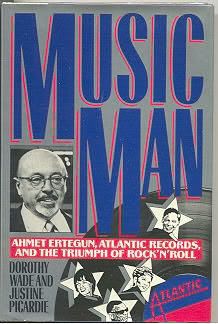
To read about Ahmet's life and Atlantic Records in his own words, read What'd I Say: 50 Years of Atlantic Records, from which much of the information and quotes here are to be found. Another good read is the biography Music Man. Fred Wilhelms article at CounterPunch offers another interesting perspective on Ahmet.
BUY What'd I Say: 50 Years Of Atlantic Records
BUY Music Man: Ahmet Ertegun & Atlantic Records

Sunday, November 19, 2006

The House That Ruth Built: Ruth Brown 1928-2006

Ruth Brown
This post began a few days ago as a continuation of my series of Nashville linked songs. Already in this month, we have mourned the loss of Mr Buddy Killen. However, as I went back to researching yesterday, the sad news began to appear that Ms Ruth Brown has passed away also at the age of 78. Red Kelly at The B Side has produced a memorial post, to which a friend of Ms Brown, Mr Stanley Behrens, has contributed a personal message of condolence. Link to them here. Read an article in the Virginian-Pilot newspaper here.

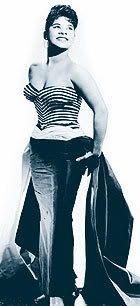
Born Ruth Weston in Portsmouth, Virginia on January 30th 1928, she began to sing at Emanuel AME Zion Church in Olde Towne, Portsmouth. After tasting the limelight while singing (unbeknownst to her parents!) in local USO shows during the war, and even going up to New York City and winning the Harlem Apollo Amateur Night on another secret trip, she finally ran away for good to Washington D.C. aged 17, in 1945, to live the life she had dreamed about listening to the jazz singers and orchestras of the 1940s. When she began to lose her way in 1947, Blanche Calloway took her under her wing and began to manage her, getting her an audition with a small new label called Atlantic Records. After recovering from a broken leg brought about by a serious car accident in 1948, Ruth Brown finally began her first Atlantic recording session eleven months late in May 1949.

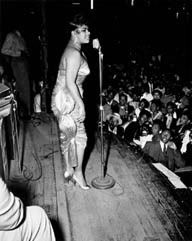
Ruth Brown at Memphis Hippodrome 1950
Ruth Brown at The Hippodrome Memphis 1950, photograph by Ernest Withers.

So Long reached No. 4 on the R&B chart, and began a string of hits, with her next song, Teardrops from My Eyes, becoming her first No.1 record in 1950, and staying at the top for 11 weeks. Next was I'll Wait For You in 1951, reaching No.3; in 1952 there were 5-10-15 Hours, reaching No.1 R&B, and Daddy, Daddy at No.3; Atlantic Records came to be dubbed "The House That Ruth Built".

I have linked to a performance by Ruth Brown singing Mama, He Treats Your Daughter Mean on television in 1953, which marked her appearance in the national Pop charts and wider recognition.

This track was in fact recorded twice by Ruth Brown, the first time in New York City in 1953. Ruth Brown wasn't impressed with the 1953 demo, feeling it was too crude, and suggested that it not be released. However, Ahmet Ertegun was adamant that it was a potential hit. He was proved correct when it reached No.1 on the R&B chart, and No.23 on the Pop chart. White entertainers such as Frankie Laine became vocal admirers, and it was Frankie who dubbed Ruth Miss Rhythm.

The hits continued with Wild Wild Young Men, and in 1954 with two more No. 1s, Oh What a Dream and Mambo Baby. In 1955 she dueted with Clyde McPhatter on Love Has Joined Us Together. She was the star of the television broadcast Showtime At The Apollo that same year. Ruth Brown recorded with Atlantic up to 1960, before parting ways in order to spend more time with her young family. In addition, she had fallen out of love with the company. While she was being paid advances of up to $350 for each song she recorded, and selling millions of records, the accounts of Atlantic Records always showed her owing the company for recording costs, touring and promotions!


Ruth Brown performing in 1960

However, she never lost the desire to sing and record, and continued to be involved in music even during this hiatus. In 1962, Ruth Brown was signed by Shelby Singleton to the Nashville-based Phillips label. He persuaded her to re-record Mama, He Treats Your Daughter Mean, featured on Night Train To Nashville, and this time Ruth herself was pleased with the results:

"Going down there and working with these great musicians ... there's a different feeling. Just a whole wonderful feeling... I think it's one of the best things that I have ever done."

Ruth Brown decided to return to music in the 1970s, and even branched out into TV, film, the stage, and radio; in the sitcom Hello, Larry; the film Hairspray; the Broadway show Black And Blue; and as a host on NPR radio. As well as a desire to perform, urged on by her friend the comedian Redd Foxx, another motivation was spurring Ruth Brown to work and to promote black musical heritage.

I first heard about The Rhythm And Blues Foundation when I saw a TV interview with Sam Moore of Sam & Dave, and I discovered that simply because you made the music, it did not necessarily mean that you were getting paid for it. In the late 1970s, Ruth Brown discovered that the same situation was affecting her, with less and less royalties monies actually arriving, and having to take on other jobs to support her family. Ruth Brown's greatest endeavour perhaps was her battle with Warner, new owners of Atlantic Records, and former owners Ahmet Ertegun and Jerry Wexler, to recover her royalties due since the start of her career, and to establish a fund to support other artists who had not profited by their work in music. After discussions with Ms Brown about the way deals were done in the early years, and paying her $20,000 in back royalties, former Atlantic owner Ahmet Ertegun, to his credit, agreed to personally donate $1.5 million to set up the Foundation to acheive this goal in 1987.

Ruth Brown had been on life support since Oct. 29 after suffering a heart attack and stroke. She died at a hospital in Henderson, Nevada, near Las Vegas, where she lived with family. Amongst the memories close friends and relatives shared was this one from cousin Mae Breckenridge-Haywood:

"We've lost another pearl...She was just a beautiful person with a very warm spirit, especially for her hometown, her school and also her family..."

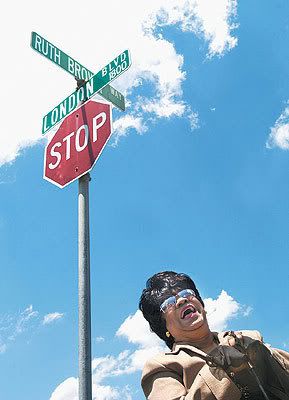
Photobucket - Video and Image Hosting
Ruth Brown in Portsmouth, VA, in May 2006. (Photo courtesy of Virginian-Pilot newspaper.)

Information for this post from VH1.com, and Malcolm Venables and Steven Stone of The Virginian-Pilot newspaper, who give a moving and in-depth account of Ruth Browns life and acheivements. Video performance provided by innercalm.