Showing posts with label Clyde McPhatter. Show all posts

Friday, December 07, 2007

More Nugetre's Nuggets: Whatcha' Gonna Do?

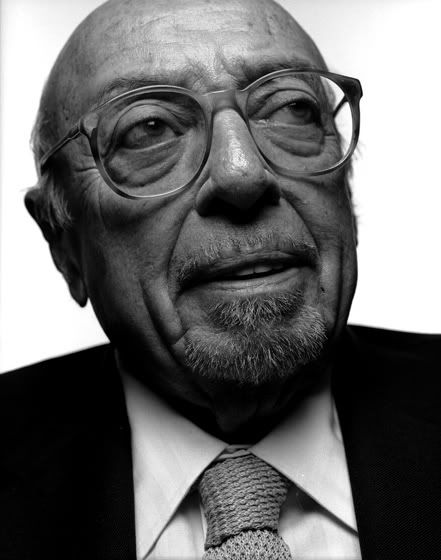
The tribute concert to commemorate the life of Ahmet Ertegun has been postponed until December 10th. The announcement that Led Zeppelin would reform to headline the show sent rock fans into a frenzy for a furious ticket lottery earlier this year, perhaps to the detriment of the memory of Mr Ertegun himself, who sometimes was barely mentioned in the news reports.

So here for your enjoyment are some more nuggets of Nugetre ("Ertegun" backwards), r&b authored by Ahmet himself, continuing the series I ran last November. Well, this selection has a few twists and turns, which took it past Ahmet along the way...

Whatcha Gonna Do by The Drifters was recorded on 2nd April 1954 and was released in February 1955 and featured Clyde McPhatter on lead vocals, and was to become the last single featuring him, as several other recorded tracks were then canned and kept for rainy days and b-sides. It reached No.2 on the R&B chart. It marked the end of Clyde's tenure with the group, as it had been intended to promote it as a commencement of his solo career. Then in July 1955 he was drafted.

This was the third time that the Drifters had recorded the song, the first time having been with the short-lived Mount Lebanon Singers line-up, the next time when Bill Pinkney and the Jerusalem Stars had come in to replace the Mount Lebanon Singers on 9th August 1953. So in a way the song had a history that spanned the entire period of the classic Drifters line-up. It also had a gospel past.

Whatcha Gonna Do was originally recorded by The Radio Four, and written by their lead singer Reverend Dr Morgan Babb. Ahmet had heard the gospel tune perhaps on the legendary radio show Ernie's Record Parade, John Richbourg's show on WLAC on a 50,00 watt signal out of Nashville, as Dr Babb also acted as a gospel A&R man for Ernie Young, founder of Nashboro and Excello Records, who was the show's sponsor.

This 45 was recorded at 535 Fourth Avenue South in Nashville and released in April 1953 on Tennessee Records subsidiary label Republic. The new subsidiary had been set up in summer 1952 on the back of the success of Christine Kittrell's single Sitting And Drinking. The five brothers in the group, of whom Dr Babb was the youngest, had been performing in various line-ups since the late 1930s. The Radio Four had an enviable reputation in the gospel circuit, regularly sharing billing with R.H. Harris' Soul Stirrers, and by chance happened to be double-heading the bill for Sam Cooke's first outing with the Stirrers. They recorded a kind of country gospel style, which related very much to the older brothers' former days in a popular jug band before their conversion to religion (appparently due to a bolt of lightning that nearly killed their father.) When Dr Babb joined his older brothers in 1950, he brought a emotive, soulful style of singing, which set them apart from the emphasis on technical singing found in the jubilee singing groups of the era.

This particular track also bore the name of Madame Edna Gallmon, a bone of contention for The Radio Four. Morgan Babb had helped her to get a chance singing with them at Tennessee, and coached her in technique to develop an up close and personal style of performance. The first recordings were released released as just by The Radio Four, as Tennessee were unsure whether to even sign her to a contract. When she was finally signed, not for the first time Tennessee wanted to use them as a backing group for the new 'star', and so The Radio Four stated that they would not be backing her in the future. Despite this, tracks like this one were later released and promoted with both Gallmon and The Radio Four's names. To add further salt to the wound, Dr Babb was never paid any royalties for the songs , like this one, that he wrote for Republic.

Listen to a rollicking, boogie-woogie number:

Clyde McPhatter & The Drifters - Whatcha Gonna Do (Atlantic 1055) 1955

And here is the gospel original:

Mdm Edna Gallmon Cook & The Radio Four - Whatcha' Gonna Do? (Republic Records 7067) 1953

OK, I can understand Led Zeppelin being on the bill. But Paolo Nutini?

I really enjoyed researching this little post, as I discovered so many connections between this and other artists I had researched in the past year. Information and images about The Drifters from Marv Goldberg's R&B Notebooks, a site I cannot stop reading! Information about The Radio Four comes from
the liner notes of CD The Radio Four 1952-1954, written by Opal Louis Nations, which is also where I took the featured track from. The great gospel site Recordconnexion, written by Robert Termorshuisen, who got details from ''Gospel Music 1943-1969' by Cedric Hayes and Robert Laughton, is also a great resource. I also read about Dr Morgan Babb on the WLAC Fan Site. The Radio Four label scan and images come from Big Joe Louis and Robert Termorshuisen. The development of gospel in Tennessee is well documented by PBS in the article From Jug Band To Gospel by David Evans & Richard M Raichelson Also, visit this post at Red Kelly's gospel blog, Holy Ghost, to read a bit more about Nashboro Records.

Thursday, July 05, 2007

The Original Drifters Come To Rest: Bill Pinkney 1925-2007

RIP Bill Pinkney, 15th August 1925 - July 4th 2007

Yesterday, Bill Pinkney, the last original member of The Drifters, passed away in Daytona, Florida. He had continued his career as a Drifter unbroken from 1953 to the present day, and had been due to perform for a 4th July event.

As well as contributing his distinctive bass to the early hits of the Drifters, Bill stood as a testament to musical integrity, defiantly fighting to use the name of Original Drifters after he and the other founder members were summarily sacked by their management in 1958, and campaigning for a law which requires a band to include at least one original member if it wishes to claim to be the genuine article.

Bill's life up until 1953 was equally remarkable. Born in Dalzell, South Carolina, Bill Pinkney used to listen to his mother, a choirleader in a church in Woodrow, South Carolina, and started to perform gospel himself at the age of 12 with a group called the Wandering Four. Bill Pinkney joined the US Army to fight in France, and took part as one of 1,500 black troops in the initial assault to secure the Omaha and Utah beaches on D-Day, helping to set up and maintain barrage balloons over the beachhead, delivering ammunition and supplies constantly throughout the assault, dealing with the wounded, and in the following days liberating several villages. Pinkney was assigned as a technician in a combat support unit attached to the 3rd Armoured Division. For his part in outstanding acts of courage supporting the 101st Airborne and fighting shoulder-to-shoulder with them at Bastogne, Bill was the proud recipient of the Distinguished Unit Citation (now known as the Presidential Unit Citation) with Four Bronze Stars, denoting service in Normandy, The Battle of Saint Lo, Bastogne, and crossing the Rhine. That Saint Lo action tells you that Bill had a role as a technician in the transport route known as the Red Ball Express, which trucked supplies from Saint Lo to the front line, which is how Bill became trapped in Bastogne with the 101st Airborne whom he was bringing supplies to. After the war, Bill moved to New York and tried for sporting fame, as a pitcher from 1949 to 1951 in a Negro Baseball League with the New York Blue Sox. He also began singing with gospel groups the Jerusalem Stars and The Southern Knights. However, by 1953, Bill had decided he needed a more regular job, and he was running a car dealership.

Watch an interview with Bill Pinkney from 2005 about his career...


Watch an interview with Bill Pinkney recorded in 2005 by Vince Welsh...It was in 1953 that Bill Pinkney was contacted by his old Southern Knights colleague Gearhart Thrasher. Clyde McPhatter, another old aquaintance on the gospel circuit, had an r&b contract with Atlantic Records, but was in need of a new group to back him, after the first group, the Mount Lebanon Gospel Singers, were rejected by Ahmet Ertegun. Billy met up with Gearhart and his brother Andrew 'Bubba' Thrasher and local labourer Willie Ferbie. The group were among those strongly influenced by the harmonising gospel quartet style of The Orioles, and Bill's deep bass helped to complement Clyde McPatter's soaring melodic lead tenor. It was a sensation in r&b music. The group secured a contract, and Clyde revealed the name Drifters at the end of the sessions after a worried Gearhart Thrasher asked him what they were going to call themselves!

Bill, Willie, Clyde, Andrew & Gearhart in August 1953
Thus began a series of r&b hits, amongst which Bill sang lead parts on White Christmas, their biggest hit of all time, Steamboat, I Should Have Done Right, Bip Bam, and Soldier Of Fortune. Bill's presence in the group was soon resented by their manager George Treadwell, as Bill, acting as road manager, frequently argued that the group were not getting their fair share of the ticket receipts for their shows.

"I was a singing road manager, well there was a fellow name of Charlie Carpenter, he was the manager of a show for Mr Fell, every week he would pay everybody. With the Drifters money, I had to pay Gearhart, a man by the name of David, and a guitar player by the name of Jimmy Oliver... I had to take this money back to New York in a suitcase, cash, and I was making $200 for the week, and the others would get £180, $175, and I would get a few more dollars under the table. Anyhow, I'd dump that suitcase of money, .. then I'd go on back, and get another tour started .. til I finally got hip! I said, you know what, this man is sitting down in his office in New York, we've doing all the work! Atlantic Records paying Jesse Stone, we went in and did the recording, and [George] Treadwell was climbing fat as a manager! He should have only won a percentage of what the Drifters made, not all of the money. So we talked it over with the rest of the Drifters and they said, Yeah you talk to George, we want raise in pay..."

A pay rise was not forthcoming, and he was summarily fired. After that, Bill went off and recorded some rock and roll themed tracks with a band called The Turks (or The Perks according to itunes!) The rest of the Drifters, chastened by Mr Treadwell, carried on, but were all finally fired from their own band in 1958, after a dispute at the Apollo Theater, and George replaced the entire line-up!

Bill persuaded the original group to stick together, and kept them going on a lucrative touring schedule, gaining a solid following in the Southeast. At first they went under the name of The Harmony Grits, and recorded some singles in 1959 with David "Little David" Baughn, who had been one of the singers Clyde had originally picked for his group. Later, Johnny Moore, who had also left the Drifters to go solo, got Bill's group to back him on several songs he recorded under the name Johnny Darrow, thus renuniting the 1957 Drifters line-up. But it occured to Bill and the others that they had every right to stake a claim to the Drifters name themselves, and so The Original Drifters were born. In 1964, they recorded Don't Call Me and I'll Do The Jerk, on Fontana Records, with temporary lead singer Jimmy Lewis. In 1966, they recorded another, for Veep Records, I Found Some Lovin' backed with the slow classic The Masquerade Is Over. I love this song, especially Nancy Wilson's version, but I would love to hear this rendition by the Drifters some day.

As the line-up of the Atlantic Records' Drifters continued to change, it seemed more and more Drifters were competing and claiming the same authenticity! Both Johnny Moore and Charlie Thomas would continue their own Drifters on the groups departure from Atlantic. This Bill's Original Drifters could accept, seeing as there was some connection to the classic group. Indeed, in 1976 Johnny Moore's Drifters paid the complement of covering (More Than A Number) In My Little Red Book, which the Originals had written and recorded back in 1967.

As the 70s arrived, however, the Drifters name became further clouded by bands that had little claim to the name. One group that Bill had hired and rehearsed to go on a tour after the other Originals had decided to retire, The Tears, dumped him and toured for many years as The Drifters. In the 80s and 90s, other groups, like the Nu Drifters, worked almost like Drifters 'franchises'. Bill Pinkney became involved in campaigning for the rights of artists who were being denied control over the identity that was their livelihood. And right up to the present, Bill had kept faith with authenticy by including the son of the founder of the Drifters, Ron McPhatter, Clyde's son, in the Originals, alongside Richard Knight Dunbar, of duo The Knight Brothers fame. The group also ventured into gospel in recent times, recording as The Gospel Drifters.

Bill was awarded the key to the state of South Carolina, which proclaimed May 14 as Bill Pinkney Day. Not least amongst his other honours must stand his 2001 honorary doctorate for services to South Carolina's state dance, the Shag!

The Drifters - Bip Bam (B side of Atlantic 1043) 1954
The Drifters - Steamboat (B Side of Atlantic 1078) 1955
The Drifters - I Should Have Done Right 1956


Information found at BBC News, www.originaldrifters.com , Soulfulkindamusic, wikipedia (!), the South Carolina African American History Calendar, and most especially from the amazing research of Marv Goldberg's R&B Notebooks, (also his Original Drifters Notebook ). Vince Welsh has recorded an interview with Bill Pinkney which you can watch. Also of interest is the regimental history page of the 761st Tank Battalion. Info concerning black soldiers on D-Day can be found in an article by Marian Douglas at Afrigeneas. Gregory Kane writes an interesting article about the contribution of black soldiers fighting at Bastogne in the Battle of The Bulge.