Showing posts with label Otis Redding. Show all posts

Tuesday, August 21, 2007

More Tricolore Soul: Eddy Can Handle It!

I've been on holidays for three weeks, driving through France with ma cherie amour and her mother. First, we went off to Limoges, and then across country to Alsace. I'd been preparing some posts that I hoped I could post en route, when I reached an internet cafe... Well, I got the Al Green one online when we stopped by a friend of ma cherie amour, but other than that the holiday has been computerless. I tried using a internet-accessing phone, but it was totally beyond my understanding. The good news is that here is last weeks post, and that posts and ideas are piling up ready to tumble out.

When I prepared my Bastille Day post, I knew I couldn't resist a bit more Eddy Mitchell before next 14th July! This one is from 1969, and sees Eddy get to grips with Otis Redding material. It's a version francais of Hard To Handle, with a new set of lyrics written by Eddy himself, and titled Otis. Playing the song are a group called JC Petit et Les Soul Brass.

Eddy translated and recorded a number of songs by his favourite rock and roll artists including many songs by his biggest hero Gene Vincent, and also many r&b artists, including Little Richard, Ray Charles, Louis Jordan, J J Jackson, Wilson Pickett, Clarence Carter, Sam & Dave, Stevie Wonder, James Brown and Don Covay.

Eddy sings Otis on 4th September 1969
Eddy Mitchell - Otis (Hard To Handle) (Barclay 20036) 1969

A fantastic site for details of all of Eddy Mitchell's cover versions is available at Mitchell-City. Watch Eddy singing Otis on French TV in September 1969 here.

Saturday, July 14, 2007

How Can You Mend This Broken Heart?

No, I haven't had a fight with ma cherie amour (well, not today, anyhow...)!

I've been visiting the doctor these past two weeks, checking out some chest pains, getting a cholesterol test, x-rays and ECG scans to see how the old ticker is doing. No news yet, which is good news. I took up cycling again recently, in anticipation of the Tour de France - I always said exercise would kill me. SO I've been taking it easy a bit, going for gentle walks on the promenade by the sea, looking out the window in my bathchair, grumbling about the good old days, and mentally totalling the number of tubs of Haagen-Daas ice-cream I have consumed wantonly in my lifetime.

And now, this weekend, would you believe it, I've caught a nasty flu-type thing called parvovirus from kids at school! Taking Friday off work is just no fun if your actually ill! And ma cherie amour is currently off on a camping trip with her class somewhere near Ardres in Pas-de-Calais. So there is nobody to pamper me and feed me soup. In fact, there is no soup! Pizza delivery guys, I have decided, should be considered the seventh emergency service (behind the coastguard, mountain rescue and the AA).

There were thus many candidates for today's post. We've got Pain In My Heart from Otis Redding, or we could have had his I've Been Sick Y'all. The Supremes nearly made it with Nothing But Heartaches. Then there were The Isley Brothers with This Old Heart Of Mine. Sadly, those would all have involved me rummaging around for vinyl and tranferring them, while shivering and with a splitting headache!

In that vein, here are some fantastic heart-stopping tunes! Guaranteed to get your pulse racing and your soul aching!

Otis Redding - Pain In My Heart (from Atco LP 'Saturday Night At The Apollo') 1964

(for more on this track, read my old post here)

Al Green - How Can You Mend A Broken Heart? (Hi Records) 1972

Ann Peebles - Troubles, Heartaches And Sadness (Hi 2205) 1972

James Brown - Your Cheatin' Heart (King Records) 1970


Well, I'd better get back to the couch and my blanket, and hopefully I'll be playing you Art Posey with No More Heartaches soon! Also, I've just realised its Bastille Day, so I'm going to try to phone ma cherie amour's relatives with my terrible linguistic skills! Meanwhile, as a sort of Saturday question: How many soul tunes with a heartache or flu/illness/plague theme can you think of?

Friday, January 05, 2007

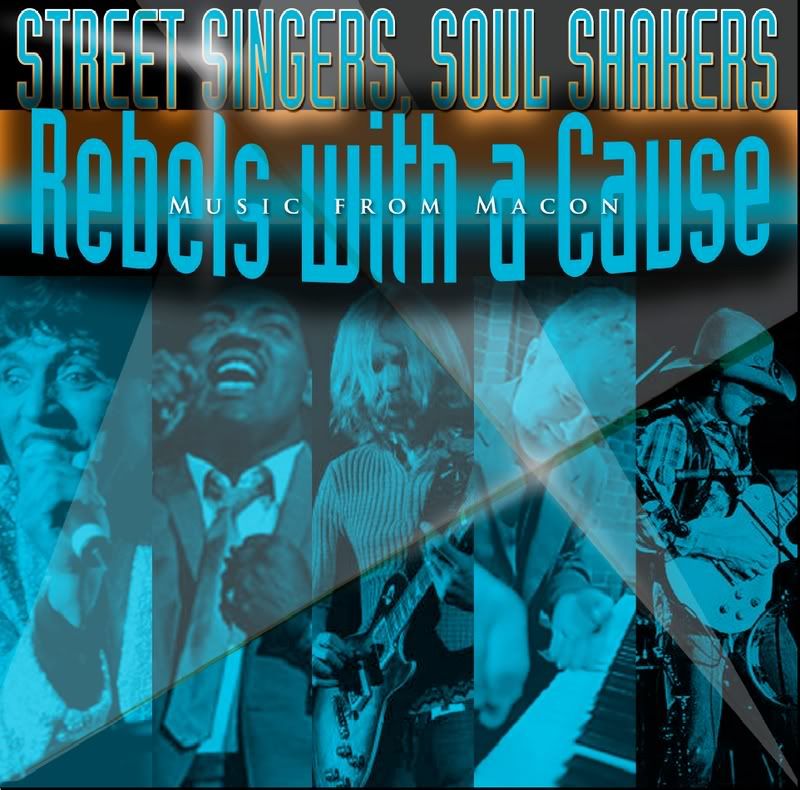
Street Singers, Soul Shouters, And Rebels With A Cause: Music From Macon!

Photobucket - Video and Image Hosting

The sad passing of Mr James Brown at Christmas brought home to me that people we take for granted as ever-present parts of our culture are passing each day, sometimes without the recognition they deserved for contributing so much to the lives of thousands of people. Every effort that is made to record and learn about the life-stories of people who have on so many levels done more than entertain us should be cherished.

So after the shock of James Brown's death, something more positive is occuring for Georgia soul fans. A new book is being released in March 2007 from Indigo Custom Publishing and the New Town Macon urban regeneration scheme, entitled Street Singers, Soul Shouters And Rebels With A Cause: Music From Macon.

It has taken author Candice Dyer a couple of years and a supporting team of music sleuths to track down and interview the hundreds of key players who made Macon a special place for music. Here is a short list of just some of the people who have contributed: Phil & Alan Walden, Carolyn Killen, Hamp Swain, Little Richard and Melvin 'Percy' Welch, Zelma & Rogers Redding, Eddie Kirkland, Jerry Wexler, white soul singer Wayne Cochran, the late James Brown and Johnny Jenkins, Pinetop Perkins, Speedo Simms, Jackie Avery and Ella Brown, Rick Hall, former Ohio Untouchable Robert Ward, and Otis tour band trumpeter Newt Collier, as well as a number of people associated to the Allman Brothers Band.

The title of the book was thought up by Wade Griner from Warner Robins, who submitted the winning entry for the Name That Book contest held by Indigo Publishing in the autumn. He won an all-expenses-paid to see The Allman Brothers Band in New York’s Beacon Theater:

“Although I am not a Macon native, like so many others from Central Georgia, I’ve spent my entire life impressed by the music that came from our region. From the Reverend Pearly Brown to Little Richard, Otis Redding and the soulsters who shook the music world despite society’s racial lines, as well as the Allman Brothers Band who elevated rock and roll to a new level by playing it from the guts of the South---there are no few words to describe the history of music from Macon.”

Wade in fact has his own personal connection to Macon music. His wife, Jessica Walden-Griner, is the daughter of Alan Walden and the niece of Phil Walden.

The book will feature photographs never before seen and a CD of interviews with the key artists who transformed the music of the 60’s and 70’s. The website for the book is being set up as we speak and should be online later in January at: www.streetsingerssoulshakers.com You'll be able to buy the book, find out more about the music of Macon ... and also try a recipe for Rocklet Chocolate Chip Cookies. Mmmm.

Pre-order Street Singers, Soul Shakers And Rebels With A Cause here from late January...

Information and cover photo kindly provided by Mary Robinson at Indigo Custom Publishing.

Tuesday, December 19, 2006

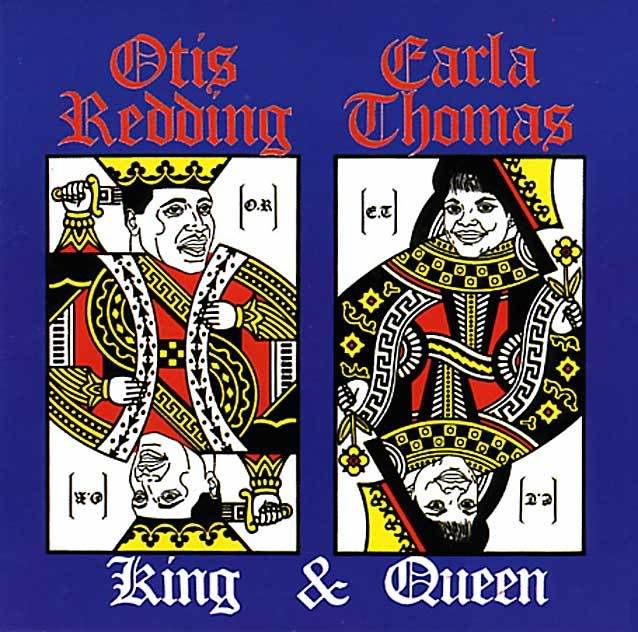
Nugetre's Nuggets, Part Two: Carla And Otis Get Lovey, Dovey

BUY King & Queen Of Soul (March '67) on Vinyl Reissue!

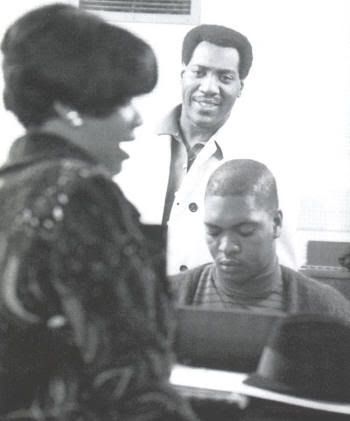
Some more Nugetre magic, with some Stax sorcery added to the mix. Lovey Dovey was written by Ahmet Ertegun (Nugetre) and King Curtis for The Clovers (see Sunday's post). Carla Thomas and Otis Redding recorded Lovey, Dovey for their King & Queen of Soul album in January 1967. They replace the jazzy piano line and sultry saxophone accompaniment of the Clovers' original with Al Jackson's thumping drumbeat, and the sharp blasts of Memphis horns. I love how the horns build up and up towards the end, like when you start up on a rollercoaster, then we go over the top into the final fade out.

Carla, Otis and Isaac Hayes recording in Jan 1967

Carla Thomas & Otis Redding - Lovey, Dovey (Stax 244) Jan 1967

POSTSCRIPT: If you are an Otis Redding fan (you're not?!?!...), incidentally, the photo was featured on a great website devoted to Otis albums, with lyrics and liner notes, called The Otis Redding French Site. The text is in French but its got great features on hundreds of Otis items. And I am learning the French lyrics to Tramp at the moment! Clochard! (transl. Tramp!)

P.P.S. : I've been trying to buy a Clovers track Little Miss Fannie (by Nugetre) on my friend iTunes, and have discovered to my annoyance that it is only listed on US iTunes, and that as a Brit, I am forbidden from purchasing it! AHHH! WHY! (... take a deep breath, there will be other soul music, remember the 12 steps...) Ok, feeling better. I hope they never find out how many 'gift/hobby' parcels of rare vinyl history leave the New World for my door every month...

Wednesday, July 05, 2006

Johnny Jenkins: Walking On Gilded Splinters


Photobucket - Video and Image Hosting


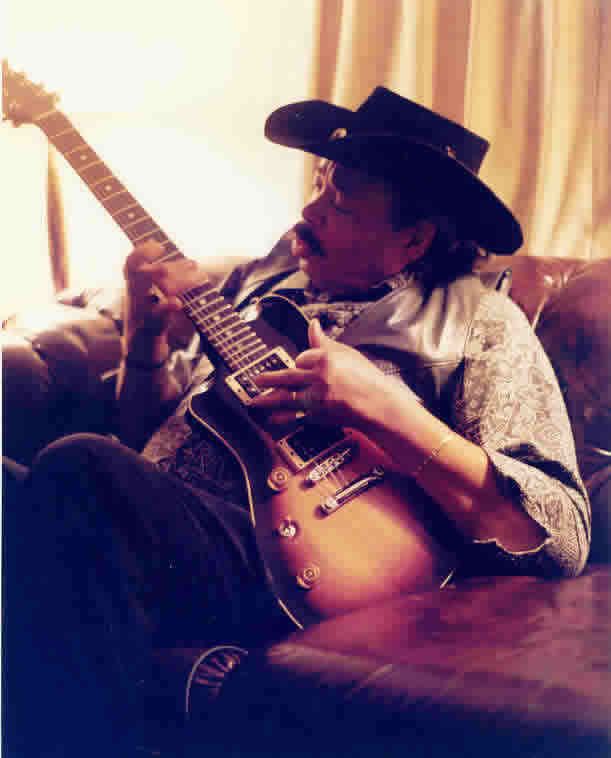
After a short weekend trip to France, I came back to read some sad news for soul fans. Agent 45 at Georgia Soul! Blog reports that Johnny Jenkins, leader of the Pinetoppers and recording artist at Capricorn Records, died on Sunday June 25th 2006, aged 67. I had been reading about him and telling my girlfriend about him on the plane home...

Johnny Jenkins was born in Macon, Georgia in 1939. At age 9, he made his first guitar out of a cigar box and rubber bands; as a left-hander, he learned to play it upside down and entertained people at a local gas station.

Phil Walden signed Jenkins in 1958, while he was a high school president looking for a way to book r&b shows for fraternities. Johnny began to tour around the South, playing fraternity parties and various venues, first with Pat T Cake & The Mighty Panthers, and then with his own band, the Pinetoppers.


Photobucket - Video and Image Hosting


Paul Hornsby of the Capricorn Rhythm Section, who played with Johnny on his key albums, recalls:

"He was legendary playing at college fraternities at the University of Alabama. I always heard about the left-handed guitar player who was doing all these acrobatics."

Phil Walden talked about Johnny in a 1996 interview with the Macon Telegraph:

"I have a great deal of sentiment attached to Johnny Jenkins. He was my first client, and it was through him that I met Otis Redding. ... I was still a teenager when I met him, and I thought my entire world rotated around Johnny Jenkins' guitar. I was convinced he could have been the greatest thing in rock 'n' roll. He had all the earmarks of stardom. He looked the part, he played the part, he acted the part. ... He made a major impression on my entire career. This was my first relationship with an African-American musician, and what made that unusual was the time of the relationship (the late '50s). I learned so much about life from Johnny Jenkins and Otis Redding during those early years. It was exhilarating, to say the least."

At the Douglass Theatre in Macon, an amateur talent show was held every week and broadcast as The Teenage Party. Otis Redding sang regularly in 1958, and won week after week. One night, Johnny went to watch. Jenkins described what happened to Peter Guralnick:

"I heard Otis at the Douglass, and the group behind him just wasn't making it. So I went up to him, and I said, 'Do you mind if I play behind you?' And he looked at me like, 'Who are you?' 'Cause he didn't know me. And I say, 'I can make you sound good.' ... And you know how the guitar can make a singer sound good by covering up his weaknesses? Well, he sounded great with me playing behind him - and he knowed it. I say, 'How much you pay me?' He say, '25 cents.' I say, 'Well, that be all right, maybe you better pay me 15 cents now, 10 cents at the gig.'"

The Pinetoppers, now with Otis singing, got a chance to record a single, Shout Bamalama, for Confederate Records, but the excitement was short-lived,a nd money became tight. Phil Walden set up Phil Walden & Associates, and booked the members of the band in various guises and combinations under assumed names to try to eke out more gigs - once they performed just as Johnny & Otis, with Otis playing the drums.

Johnny Jenkins then recorded a regional hit instrumental, Love Twist, released on Tifco, and then distributed by Atlantic thanks to record promoter Joe Galkin, who took a cut, and Phil Walden got a follow-up session booked at Stax Records. The confusion over Otis' role at the session stems from the fact that while Otis was an integral part of the band, they were there to record an instrumental follow-up to capitalise on Love Twist. But when the tunes didn't come together for the Pinetoppers, the remaining half-hour went over to trying some vocal tracks. Johnny Jenkins was there playing guitar on Hey Hey Baby and These Arms Of Mine, happily supporting his friend. Rogers Redding said that the original idea had been to promote These Arms Of Mine as a duo, Johnny & Otis.

But Johnny decided not to tour, disliking air travel, and perhaps more nervous, or more wary, about the prospect of fame than he liked to admit. He was suspicious of the Stax set-up, and like those black artists such as Gilbert Caple who played on Last Night but received no credit, believed that his contribution was being appropriated:

"They [Jim Stewart and Stax] had me in the motherfucking studio, and I played the best I knowed how... [then got Steve Cropper to study it]"

Johnny released just one 45 on Volt, Spunky bw Bashful Guitar. Johnny preferred to stick with Phil and those whom he trusted from Macon, and despite some portrayals of Johnny as a bitter man, others recall him quite differently. Joseph Johnson, curator of the Georgia Music Hall of Fame, recalls:
"I listened to an interview in which he said he never really wanted to become famous, he just wanted to play guitar. ... He was happy playing guitar, playing with a band and going home."

Paul Hornsby worked as a producer at Phil Walden's Capricorn Records when Jenkins recorded his most well-known album, Ton Ton Macoute, in 1970. He believes that Jenkins didn't try to get the fame and attention the other artists on the label such as the Allman Brothers, were receiving:

"Capricorn wanted him to be something special. They wanted him to be another Hendrix. But that just wasn't him."

Jenkins' guitar style is more familiar than you might think. Jimi Hendrix, whose aunt lived in Macon, saw Jenkins perform and fell in love with his signature acrobatic left-handed guitar style. Johnny was light-hearted about his possible influence:

"He used to see me at Sawyer Lake. The next thing you know, he's jumping around like me, but he had his own stuff."

The death of his best friend Otis Redding in 1967 had a profound impact upon Johnny. He could not bring himself to go to the funeral in Macon, unable to hold back his distress, and filled with suspicions that something more sinister might lay behind the plane crash. He feared also that Zelma and the family might be upset by his presence; and that Stax associates might not want him there, a reminder of Otis' younger, wilder days, rather than as a pop idol.

Johnny's career petered out with the fall of Capricorn Records. In 1996, Phil Walden produced Jenkins' comeback album, Blessed Blues. He performed at the first concert at the Douglass Theatre after it was renovated in 1997. Jenkins continued to perform sporadically, including a 2000 show at the Georgia Music Hall of Fame. His last two albums, Handle with Care (1999) and All in Good Time (2000), were produced by Mean Old World Records.

The singer Arthur Ponder sums up Johnny Jenkins as a character:

"I learned a lot from him... If you sang or played, you would go find Johnny. He would give you a chance."


The first track today comes from Ton Ton Macoute, and is a funky blues titled Walking On Gilded Splinters. Yes, Paul Weller once chewed this one up... Then, on his 2003 album, Johnny sings the William Bell penned tribute to his old friend Otis:

Johnny Jenkins - Walking On Gilded Splinters ('Ton Ton Macoute' 1970 Capricorn Records)


Johnny Jenkins - A Tribute To a King ('All In Good Time' 2003 Mean Old World)

Information and quotes from the Macon Telegraph, and from Sweet Soul Music by Peter Guralnick. Photos by Mark Pucci, and by the Capricorn Rhythm Section.

Monday, May 29, 2006

Otis Redding: Live At The Apollo November 1963

It's holidays again, so I can do an extra post this week!

You should all have everything ever committed to vinyl by the Big O. That is all. Sadly, my girlfriend informs me that I can't afford the Definitive Collection. Unless I am very, very good...

So, it is quite hard to do a posting about Otis Redding, which contributes anything new. However, I found recently a tape of a BBC radio show from some years back about the life of Otis, and amongst the interviews and tracks was a recording of Otis Redding at the Apollo Theater, on 16th November 1963, singing Pain In My Heart. On the stage that night werethe headliner Ben E King, The Coasters, The Falcons (including of course Wilson Pickett and Eddie Floyd), James Brown's protegé Doris Troy and Rufus Thomas. Otis was understandably nervous.
The recordings that evening were released as The Apollo On A Saturday Night on Atco. This had been a common event from 1944 up until 1962, overseen by engineers from nearby Apollo Records, but shows had been released ad hoc and never viewed as commercial until James Brown's Live At The Apollo. The November 16th 1963 recording was overseen by a crew from Atlantic Records, and considered a showcase of new talents from city and southern branches of soul music. It includes The Falcons singing I Found A Love and Alabama Bound, Doris Troy singing Misty and Say Yeah, Rufus Thomas with Rockin' Chair and Walking The Dog. The Coasters sing Ain't Nothin' To Me and Speedo's Back in Town, and Ben E. King does Groovin', Stand By Me, and its reverse Don't Play That Song.

Ben E. King, putative headliner that night, had nothing but r.e.s.p.e.c.t. for 'the big, bearlike man, sweating and trembling worrying about his suit, his voice, the band...' He recalled:

"Otis told me he was up from home and he was terrified... Otis said to me, 'You think they're gonna go for what I do, what we do down home?' But as long as I knew him, Otis never did get over that little bit of stage fright. He looked over at Rufus that night..."

There is an interview with Rufus Thomas about the evening, in which he reveals that Otis was so nervous and unsure of his stage presence, that Rufus, due to come on after Otis, and Apollo MC King Coleman trained him up in the moves, and showed Otis how to catch the eye of one girl, just one girl, and sing to her, so that her enthusiasm spread through the crowd. Coleman introduced him with the line, "He can sing baby, he can sing!..."

It certainly seemed to work. Backed by King Curtis' band, Otis raises the roof...

Some of the live Apollo tracks can be found on Otis! The Definitive Otis Redding (Rhino Records)

Rufus Thomas interviewed about Otis' debut at the Apollo
Otis Redding - Pain In My Heart (Apollo Theater Nov 1963)

I've got myself so intrigued I have sought out a copy of this LP!... I'll post something when it arrives...

Ben E. King quotes taken from Nowhere To Run by Gerri Hershey. Other facts from liner notes and from A Tribute to Otis by BBC Radio.

Saturday, May 13, 2006

The Soul Clan: Where you going, Joe?...

The way that Don Covay asks, "Hey Joe's packing his bags, where you goin', Joe?" at the begininning of The Soul Clan's single "Soul Meeting" has never sounded like a good omen. The concept of the southern soul supergroup, founded by Covay in 1968, and comprising Don Covay, Solomon Burke, Joe Tex, Arthur Conley and Ben E. King, never fulfilled the hopes of its members, and perhaps some could already sense it while recording their first and only single.

The original plan had included Wilson Pickett, but reportedly, Pickett had backed out, concerned both for his solo career ambitions, and perhaps concerned that the group would not prosper amongst Solomon Burke's many other business ventures.

Otis Redding was the other mooted Clan member, and the beginning of recording had been delayed while Otis underwent throat surgery and recuperated. Sadly, by the time the situation had been finalised, Redding had met his tragic death. Arthur Conley, an artist whom Redding had cultivated and produced, was inducted in his stead. Joe Tex said during the 1981 reunion, "I would have given it a chance if Otis had lived. Man's head was on straight... the future of the Soul Clan died with Otis..."

Joe revealed also his take on the spirit he had hoped the Soul Clan would embody, as he describes Otis thus: "Talk to white, talk to black, don't piss nobody off, but don't Tom neither..."

Solomon Burke, who, after Covay himself, was possibly the most committed to the enterprise, said in an interview, “We wanted to interlock ourselves as a group, to express to the younger people how strong we should be and to help one another, work with one another and support one another...”

The sentiment was a noble one, therefore, but the business acumen of Atlantic Records' Jerry Wexler was not buying into it. The Soul Meeting single failed to catch fire, reaching No.34 on the RnB Chart, and only No.91 on the Pop Chart. An LP was scheduled and duly appeared, but it seems Wexler cancelled funding for group recordings. The LP has the two sides of the single, plus a selection of solo recordings by the Soul Clan members. What was the motivation for this? Don Covay said in an interview with Gerri Hirshey, "Some funny stuff went down at Atlantic." Solomon Burke seemed to believe that Wexler in particular did not want to give his most successful black stars a greater control over their careers.

There is some cold logic in this. Wexler had groomed Ray Charles, only to see him leave at the moment Atlantic might have capitalised upon their investment by involving Charles in movie deals etc. He may have feared that to allow five of his greatest and most lucrative hitmakers to work and act in solidarity would give them the power to collectively renegotiate their contracts, and cut the company's profit margins. As I said, logical, but hardly honourable or far-sighted, in my view. In each case, the members of the Soul Clan were poorly served by a company which failed to invest in publicity and actively sabotaged their recording schedule. Times were changing, and none of the final line-up of the Soul Clan were experimenting with, nor being encouraged to try, the new sounds of funk that might have boosted and elongated their hit careers. Atlantic Records was happy to let them fade away, while sucking up the back-catalogues and talents of regional hit factories such as Stax. No Marvin Gayes or Stevie Wonders would be nurtured in New York City.

The B-Side to Soul Meeting is That's How It Feels, an apt summation of a bold but doomed venture to establish the Five Pillars of Southern Soul. It was written by Don Covay and Bobby Womack. The single was recorded in Nashville, in February 1968.

That's How It Feels - The Soul Clan (Atlantic LP 587127 1968)

This song has just been released on Atlantic Unearthed: Soul Brothers, a new compilation of allegedly never-released tracks, that have been mercifully set free from their state of limbo by Rhino Records. I am sure this is not the only example of a track that, rather than being unreleased, Atlantic simply willfully forgot... you can buy it here.

Joe Tex said at the press conference before the1981 reunion show: "I'm tellin you right now, it ain't gonna work." The concert was reportedly chaotic, with many technical problems and other setbacks. "...we been having to make it on our own so long it's hard to get in step. A soul man is that. Singular. Soul Clan is more a beautiful idea to me." A statement that undercuts the sugar-coated marketing of soul music that tries to reduce it to a Starbucks moment.

The quotes and some of the facts for this entry have been found in Gerri Hirshey's "Nowhere To Run: The Story of Soul Music".