Showing posts with label History. Show all posts

Thursday, October 18, 2007

99 1/2 Just Won't Do: Brown Eyed Has Got To 100!

I have let another milestone pass me by... my post about The Chants was in fact my 100th published post.! With all of the half-started posts strewn in my blogger dashboard, I never realised...

To help me celebrate it, here is the late, the great, the wicked Wilson Pickett, to sing that ode to perfection, 99 1/2 Won't Do. I just hope 102 is enough! Accompanying him, The Alabama Christian Movement For Human Rights Choir sing the hymn and freedom song from which Pickett, Eddie Floyd and Steve Cropper took their inspiration.

Carlton ReeseIn the summer of 1963, in the midst of the gruelling Birmingham, Alabama protests co-ordinated by Rev Fred Shuttlesworth of the ACMHR and Rev Martin Luther King of the SCLC, the Alabama Christian Movement Choir perfomed nightly at the Sixteenth Street Baptist Church in support of the protests. According to historian Wilson Fallin Jr: "In two organizations within the ACMHR, women made up the majority of the members. The ACMHR choir, formed in 1960, was intended to enhance the spirituality of the Monday night meetings. Twenty-three members formed the group. Most were Baptist women who sang in their church choirs and were accustomed to singing songs similar to those sung by the movement choir, including spirituals and gospel hymns. They sang "God Will Make a Way Some How," Walk with me Lord," and "Ninety-Nine and a Half Won't Do." One member of the choir remarked that "the choir sang with faith in God knowing that his power worked through their songs to give courage." In the mass meetings, female singers allowed their emotions to take over, and on many occasions, they had to be restrained by the ushers."

Choir conductor Carlton Reese adapted the lyrics to add new civil-rights phrases to a popular gospel song sung by Mother Katie Bell Nubin (mother of even more famous Sister Rosetta Tharpe). Reese is leading the singing, backed by a powerful thumping Hammond organ. This version was recorded by folk singer Guy Carawan. The recording served a dual purpose, giving nightly hope and strength to those taking part in the protest, but also as a conscious element of Project C, a strategy to confront the racialist system of segregation in the city head-on in a high-visibility strategy that would engage the entire nation. The singers themselves faced intimidation and arrest. Cleopatra Kennedy was 20 years old in 1963 when she sang solos for the choir. She recalls what it was like the first time she was sent to jail: "That first time, she was in jail for 14 days, but the group sang songs and stomped their feet on the iron beds to make their music. "Singing songs was our way of keeping our self-esteem up, of washing away fear," she says. The day after she was released, she went back on the picket line." When Martin Luther King was arrested and jailed in April of that year, local liberal white church leaders wrote to him urging him to tone down the movement's activities, calling them "unwise and untimely". His response was the famous Letter From A Birmingham Jail, with his powerful riposte: "For years now I have heard the word "Wait!" It rings in the ear of every Negro with piercing familiarity. This "Wait" has almost always meant 'Never." The situation would become even more ense later in that year, with the use of dogs and fire hoses against student and youth protestors, and the bombing of the 16th Street Church during a Sunday school session, with the tragic death of four children. It was in trying times like these that freedom songs could give hope and inspiration.

Jerry Wexler & Wilson PickettJump forward in time two years, to May 1965. Wilson Pickett arrived in Memphis courtesy of Jerry Wexler, who was sure that The Little Label That Could had the spark he needed to secure Pickett, former member of The Falcons, an elusive r&b hit. Pickett sat down with Steve Cropper, and within a matter of half-an-hour, they had come up with In The Midnight Hour and Don't Fight It, both taking the behind-the-beat Stax sound in a new direction by incorporating a behind-the-beat 'Jerk' rhythm. Not a bad night's work! So pleased was he with the sessions, that he sent each of the MGs a $100 thank-you gift.

Eddie Floyd publicity photoWexler and Pickett were eager to return in October and again in December 1965. Eddie Floyd, Wilson's old partner from The Falcons, Steve Cropper, keen to earn some more songwriting money, and Donald Dunn, impressed with Pickett's vocal ability, were all pleased to see him again. Jim Stewart was less keen, perhaps fearful that Atlantic Records were borrowing too much of the Stax sound. The MGs were joined this time by Isaac Hayes, brought in to play piano while Booker T Jones was at college. The new sessions were more difficult, as the group felt the pressure to reproduce what they had achieved in May. Nervous about the prospect, Steve Cropper turned to the experienced Eddie Floyd for advice about songwriting. Cropper said in an interview with Gerry Hershey: "He had been on the stage, and he knew what was going on... He was real helpful to me. Eddie knew the pulse on the street, he knew the pulse of the ghettos of Chicago and Detroit, and I didn't know jack shit about that..."

Eddie Floyd and Cropper had been working on a new song for a whole week, 634-5789, before Wilson arrived back in Memphis on 19th December. After hearing a tape, a clearly tense and nervous Pickett let fly: "This is it? This is my hit tune? It's a piece of shit!" Eddie Floyd had to be prised off his old buddy! But apparently, it had been no different in the old days with The Falcons...

Later on that day, Wilson had calmed down, and so had Eddie, so they went over to Pickett's hotel to write something else. Eddie and Steve noticed a Coca-Cola billboard, with the slogan 'Ninety-Nine And A Half Won't Do.' Recalling the gospel tune and the freedom song, and with Eddie suggesting they add that stop-start behind-the-beat jerk feel, soon Pickett had another classic in the can, so to speak!

Wilson Pickett at FAME with Jimmy Johnson and Clarence CarterThe songwriting and recording relationship was sometimes explosive but always professional, and could have produced even more hits, had not Jim Stewart become uncomfortable with the amount of studio time devoted to an Atlantic artist. Citing Pickett's 'drunkenness' (an assertion that Cropper and others hotly dispute, citing Pickett's sober dedication to every session), Stewart packed Pickett and Jerry Wexler back to New York. It was time for them to try to find similar magic at FAME Studios...

The Alabama Christian Movement Choir - 99 1/2 Won't Do

Wilson Pickett - Ninety-Nine And A Half (Won't Do)

Read A Letter From A Birmingham Jail here...

Information from Soulsville: USA by Rob Bowman, Nowhere To Run by Gerry Hershey, and liner notes of Voices Of The Civil Rights Movement: Black American Freedom Songs 1960-1966 by Bernice Johnson Reagon and Phyllis May. Wilson Fallin's article about the ACMHR and the role of women in the organisation can be found here. Visit the Birmingham Civil Rights Institute to read more and to study eye-witness accounts of events from 1956-1963. Quote from Cleopatra Kennedy from an interview for Baylor University magazine.

Saturday, October 06, 2007

More Soul Britannia: The Chants Of Liverpool 8

The Chants In 1963Time for some more Soul Britannia, and we are returning to Toxteth, Liverpool, to continue the story of The Chants...

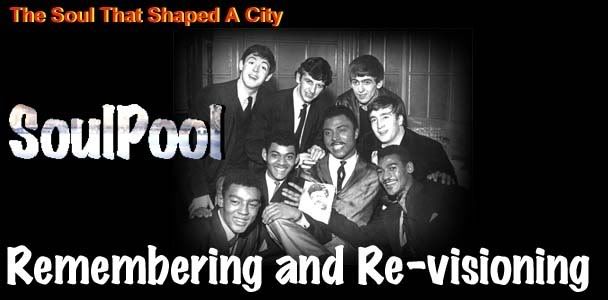
As the excellent Soulpool website explains, and as discussed in a previous post, the musical heritage of Liverpool and the origins of the Merseybeat explosion have deep roots. Some of those roots were drawing nutrients from the singing groups and bands of Toxteth, Liverpool 8, an area of Liverpool with a large Caribbean population long pre-dating the Windrush generation. Local halls such as the Nigerian, the Sierra Leone, Stanley House, the Rialto Ballroom, and the All Nations, built by the Toxteth community, or the White House pub, were popular venues for local people to hear r&b, and a big draw to black GIs from RAF Burtonwood. Some of the key r&b acts of the late 50s and early 60s - Derry Wilkie, Sugar Dean and Colin Areety, The Sobells, The Conquests, The Poppies and The Chants - all came from Toxteth.

It was in this environment that The Shades - Joe and Edmund Ankrah, Nat Smeda, Alan Harding and Eddie Amoo - honed their craft, enough to be noticed by the young and eager Paul McCartney, who met Joe Ankrah in a New Brighton ballroom, and invited them to come along to The Cavern. The other Beatles were equally enthusiastic, and they decided to play behind as the backing band. The response from the audience was enough to convince Epstein to sign the renamed Chants, but it would not be the magical mystery tour of fame that they had expected. Rather, they would take the long and winding road to the real thing...

Despite Epstein's management, nothing seemed to happen for The Chants through early 1963, and as they continued to miss the wave of the Mersey Sound, they managed to convince a clearly-disinterested Epstein to release them from their contract. They had to go to Manchester to find Ted Ross, who arranged a record deal with Pye Records in London in April 1963. Such a journey to find musical success was not at all unusual in the British music industry, which was overwhelmingly centred on the capital for many decades. It would, however, leave The Chants particularly isolated from the musical influences and musicians that underpinned their vision for themselves.

The Chants - I Could Write A Book
The Chants - I Don't Care


Pye Records, a big industry hitter which was trying to embrace this new youth fashion for 'beat' music, were not an r&b label. 'They had no idea what to do with a black doo-wop group, they just had no idea.' recalled Eddie Amoo in an interview. While other r&b groups, for example The Kinks, could turn up at Pye and just start playing the way they wanted to sound, The Chants, as a harmony singing group, suffered from the need to rely upon the hired musicians and arrangements designed by people unfamiliar with all of the nuances of doo-wop and r&b. Eddie in another interview explained the impact this had upon them:

"But in that era - late 60s, the very early 70s - most black bands in this country that were recorded were recorded like white bands, and they sounded like white bands. They used to record The Chants like a white pop band, which we weren't. We weren't musically adept enough in them days to establish what we really wanted ourselves - we weren't musicians then."

Eddie talks with some bitterness about this upon the career of The Chants, but at the end of the day, the other musicians could only bring the influences they had to the table, and that seems to have extended only as afar as the latest releases of the 'beat' and 'mod' scene - r&b influenced, to be sure, but too adulterated for what The Chants wanted. You do sense that Eddie is directing his ire more at their management and at A&R at Pye itself, who either from benign ignorance, or paternal condescension, did not put enough thought into how The Chants worked best, and didn't hire the kind of arranger and band that would have made a difference. With Pye unaware of The Chants best interests, as Eddie admitted, they were also too inexperienced to know how to ask for what they wanted.

The Chants around 1968
So, during the 1960s, you can hear the sound of The Chants changing with the dominant trends of 60s British pop, and changing accompaniment, from Merseybeat ballads to psychedelic-tinged pop in the late 60s. Live, they continued to attract a loyal following, regularly performing at venues such as The Twisted Wheel in Manchester and touring Europe, where they played alongside Curtis Mayfield and The Four Tops at US Army bases in Germany. Whatever they tried, however, they still could not break into the pop market for commercial success. It is not entirely clear that even if they had hit the magic formula, that they would have profitted from that success. Geno Washington, who despite low single sales made a success of a series of 'live' albums, cashing in on his immense popularity on the live circuit, became embroilled in a legal fight over the royalties he was owed by Pye, a battle he lost and saw him bow out at the end of the 60s.

'Battling Bessie' Braddock, long-time campaigning MP for Liverpool Exchange.
In their singles of the late 60s, The Chants developed messages into a number of their songs, perhaps in part inspired by the problems and barriers they had tried to overcome in their career. For the community of Toxteth, they continued to be feted, and in particular, local MP, 'Battling' Bessie Braddock, had strongly supported them ever since their first recording.

The Chants - Progress

The Chants - You Don't Know What I Know


Throughout
all of this, The Chants had to also make a living. Increasingly, they took bookings to perform less at the cutting edge of soul, and more on the cabaret circuit of popular standards mixed with a few of their Mersey hits. This way, the rest of the Chants could continue in music and put food on the table, but for Eddie Amoo, it was not what he had dreamt of. He began to perform less and less with The Chants, and made his way back to Toxteth, where he discovered a new possibility unexpectedly close to home. His younger brother Chris had formed his own band...

"The Real Thing started out with three people, then went to five, then they dropped two out and by 1975 they'd become a trio - Ray, Dave and Chris. But by then Chris [Amoo] and I had started to write together. I wrote the first three Real Thing singles. I was still with The Chants, but I was writing for The Real Thing, because The Chants were no longer a vehicle for the songs I was writing - The Chants were doing cabaret, and The Real Thing were able to play these songs live, so I was writing and giving the songs to Chris."

Eddie Amoo, Chris Amoo, Ray Lake, Dave Smith(and Kenny Davis, not pictured)The Real Thing were more fortunate than The Chants had been in that they were able to secure the services of some people with experience of soul music, in the form of songwriter Ken Gold, who had written songs for Aretha Franklin, Jackie Wilson and Eugene Record, and producers such as Jerome Rimson, who had played with The Detroit Emeralds, Hugh Masekela and others. They also had the experience of Eddie Amoo, who wrote many of The Real Thing hits with his brother, to steer them away from decisions that might stymie their career.

Such considerations were important, for essentially, the mass commercial appeal of 'soul music' had begun to dissappear not long after the 'mod' heyday of 1965-66, and by 1967, new influences focused more on the psychedelic scene had taken their place in British youth culture. It is important to remember that youth cultures in those times were not fuelled by 20 and 30-somethings living an ete
rnal youth, but by teenagers just entering the world of work. In 1970, 95% of people under the age of 45 in Britain were married, and embarking on a new family life, which did not involve following the latest musical trends. An entire generation who had been inspired somewhat by soul music had essentially 'grown up' and settled down, sometimes casually tuning into Tony Blackburn on Radio 2 to hear some old Motown hits. It wasn't until the mid 70s that a new disco-influenced soul began make an impression on the record-buying public, who were by then a quite different generation of teenagers.

This time, the band set out deliberately to write those hit records, and they succeeded time after time, with classic disco soul like You To Me Are Everything and Can You Feel The Force in which even Pye Records could not fail to see the potential. Beneath the surface of success, however, the band yearned to venture further into funk and to write lyrics with a wider meaning. By the mid 70s, racial tensions in Toxteth were building to levels not experienced since 1948, despite the outlawing of
overt racial discrimination The Race Relations Act. Britain was in the midst of yet another period of economic decline after a short respite of the early 70s, Merseyside itself was suffering a major slump, and many people looked around for easy explanations. While small in actual number, the National Front were a prominent and highly vocal group, and their activities in the mid 1970s validated a much larger swathe of petty prejudices amongst white Britons. Levels of unemployment were higher in Liverpool 8 than in the surrounding districts, as people struggled. Housing, welfare and education in Toxteth was maintained badly by a bankrupted council increasingly preoccupied by ideological disputes about socialism. Meanwhile, Merseyside Police were becoming increasingly heavy-handed with the application of stop and search powers. It was in this environment that The Real Thing wrote their masterpiece, Children Of The Ghetto. Sadly, the song's call for action to change conditions were ignored, and political interest in the difficulties of Liverpool 8 would only be pricked by the Toxteth Riots in 1981.

The Real Thing - Liverpool Medley: Liverpool 8/Children Of The Ghetto/Stanhope Street

Joe Ankrah at a recent Art In Liverpool event opening a new local galleryThe Real Thing Today: Chris Amoo, Eddie Amoo and Dave Smith
Today, Joe Ankrah, who also left The Chants in the 1970s to perform with Ashanti with brother Edmund, is a respected artist, working and living in Liverpool 8. Eddie and Chris Amoo still tour with The Real Thing. Bizarrely, one of their former tour bassists, Des Tong, went on to form a computer company, and devised some of the motion-capture technology that is used in film and animation today.

Information about the Chants came from excellent articles by Bill Harry, Des Tong, and The Soulpool website. Bessie Braddock photo by Bert Hardy/Getty Images. Chants photos courtesy of Bill Harry and Des Tong. Dave Haslam has written a particularly good article and interview with Eddie Amoo about The Real Thing. You can buy "The Real Thing: Children Of The Ghetto - Greatest Hits" direct from itunes.

Thursday, July 05, 2007

The Original Drifters Come To Rest: Bill Pinkney 1925-2007

RIP Bill Pinkney, 15th August 1925 - July 4th 2007

Yesterday, Bill Pinkney, the last original member of The Drifters, passed away in Daytona, Florida. He had continued his career as a Drifter unbroken from 1953 to the present day, and had been due to perform for a 4th July event.

As well as contributing his distinctive bass to the early hits of the Drifters, Bill stood as a testament to musical integrity, defiantly fighting to use the name of Original Drifters after he and the other founder members were summarily sacked by their management in 1958, and campaigning for a law which requires a band to include at least one original member if it wishes to claim to be the genuine article.

Bill's life up until 1953 was equally remarkable. Born in Dalzell, South Carolina, Bill Pinkney used to listen to his mother, a choirleader in a church in Woodrow, South Carolina, and started to perform gospel himself at the age of 12 with a group called the Wandering Four. Bill Pinkney joined the US Army to fight in France, and took part as one of 1,500 black troops in the initial assault to secure the Omaha and Utah beaches on D-Day, helping to set up and maintain barrage balloons over the beachhead, delivering ammunition and supplies constantly throughout the assault, dealing with the wounded, and in the following days liberating several villages. Pinkney was assigned as a technician in a combat support unit attached to the 3rd Armoured Division. For his part in outstanding acts of courage supporting the 101st Airborne and fighting shoulder-to-shoulder with them at Bastogne, Bill was the proud recipient of the Distinguished Unit Citation (now known as the Presidential Unit Citation) with Four Bronze Stars, denoting service in Normandy, The Battle of Saint Lo, Bastogne, and crossing the Rhine. That Saint Lo action tells you that Bill had a role as a technician in the transport route known as the Red Ball Express, which trucked supplies from Saint Lo to the front line, which is how Bill became trapped in Bastogne with the 101st Airborne whom he was bringing supplies to. After the war, Bill moved to New York and tried for sporting fame, as a pitcher from 1949 to 1951 in a Negro Baseball League with the New York Blue Sox. He also began singing with gospel groups the Jerusalem Stars and The Southern Knights. However, by 1953, Bill had decided he needed a more regular job, and he was running a car dealership.

Watch an interview with Bill Pinkney from 2005 about his career...


Watch an interview with Bill Pinkney recorded in 2005 by Vince Welsh...It was in 1953 that Bill Pinkney was contacted by his old Southern Knights colleague Gearhart Thrasher. Clyde McPhatter, another old aquaintance on the gospel circuit, had an r&b contract with Atlantic Records, but was in need of a new group to back him, after the first group, the Mount Lebanon Gospel Singers, were rejected by Ahmet Ertegun. Billy met up with Gearhart and his brother Andrew 'Bubba' Thrasher and local labourer Willie Ferbie. The group were among those strongly influenced by the harmonising gospel quartet style of The Orioles, and Bill's deep bass helped to complement Clyde McPatter's soaring melodic lead tenor. It was a sensation in r&b music. The group secured a contract, and Clyde revealed the name Drifters at the end of the sessions after a worried Gearhart Thrasher asked him what they were going to call themselves!

Bill, Willie, Clyde, Andrew & Gearhart in August 1953
Thus began a series of r&b hits, amongst which Bill sang lead parts on White Christmas, their biggest hit of all time, Steamboat, I Should Have Done Right, Bip Bam, and Soldier Of Fortune. Bill's presence in the group was soon resented by their manager George Treadwell, as Bill, acting as road manager, frequently argued that the group were not getting their fair share of the ticket receipts for their shows.

"I was a singing road manager, well there was a fellow name of Charlie Carpenter, he was the manager of a show for Mr Fell, every week he would pay everybody. With the Drifters money, I had to pay Gearhart, a man by the name of David, and a guitar player by the name of Jimmy Oliver... I had to take this money back to New York in a suitcase, cash, and I was making $200 for the week, and the others would get £180, $175, and I would get a few more dollars under the table. Anyhow, I'd dump that suitcase of money, .. then I'd go on back, and get another tour started .. til I finally got hip! I said, you know what, this man is sitting down in his office in New York, we've doing all the work! Atlantic Records paying Jesse Stone, we went in and did the recording, and [George] Treadwell was climbing fat as a manager! He should have only won a percentage of what the Drifters made, not all of the money. So we talked it over with the rest of the Drifters and they said, Yeah you talk to George, we want raise in pay..."

A pay rise was not forthcoming, and he was summarily fired. After that, Bill went off and recorded some rock and roll themed tracks with a band called The Turks (or The Perks according to itunes!) The rest of the Drifters, chastened by Mr Treadwell, carried on, but were all finally fired from their own band in 1958, after a dispute at the Apollo Theater, and George replaced the entire line-up!

Bill persuaded the original group to stick together, and kept them going on a lucrative touring schedule, gaining a solid following in the Southeast. At first they went under the name of The Harmony Grits, and recorded some singles in 1959 with David "Little David" Baughn, who had been one of the singers Clyde had originally picked for his group. Later, Johnny Moore, who had also left the Drifters to go solo, got Bill's group to back him on several songs he recorded under the name Johnny Darrow, thus renuniting the 1957 Drifters line-up. But it occured to Bill and the others that they had every right to stake a claim to the Drifters name themselves, and so The Original Drifters were born. In 1964, they recorded Don't Call Me and I'll Do The Jerk, on Fontana Records, with temporary lead singer Jimmy Lewis. In 1966, they recorded another, for Veep Records, I Found Some Lovin' backed with the slow classic The Masquerade Is Over. I love this song, especially Nancy Wilson's version, but I would love to hear this rendition by the Drifters some day.

As the line-up of the Atlantic Records' Drifters continued to change, it seemed more and more Drifters were competing and claiming the same authenticity! Both Johnny Moore and Charlie Thomas would continue their own Drifters on the groups departure from Atlantic. This Bill's Original Drifters could accept, seeing as there was some connection to the classic group. Indeed, in 1976 Johnny Moore's Drifters paid the complement of covering (More Than A Number) In My Little Red Book, which the Originals had written and recorded back in 1967.

As the 70s arrived, however, the Drifters name became further clouded by bands that had little claim to the name. One group that Bill had hired and rehearsed to go on a tour after the other Originals had decided to retire, The Tears, dumped him and toured for many years as The Drifters. In the 80s and 90s, other groups, like the Nu Drifters, worked almost like Drifters 'franchises'. Bill Pinkney became involved in campaigning for the rights of artists who were being denied control over the identity that was their livelihood. And right up to the present, Bill had kept faith with authenticy by including the son of the founder of the Drifters, Ron McPhatter, Clyde's son, in the Originals, alongside Richard Knight Dunbar, of duo The Knight Brothers fame. The group also ventured into gospel in recent times, recording as The Gospel Drifters.

Bill was awarded the key to the state of South Carolina, which proclaimed May 14 as Bill Pinkney Day. Not least amongst his other honours must stand his 2001 honorary doctorate for services to South Carolina's state dance, the Shag!

The Drifters - Bip Bam (B side of Atlantic 1043) 1954
The Drifters - Steamboat (B Side of Atlantic 1078) 1955
The Drifters - I Should Have Done Right 1956


Information found at BBC News, www.originaldrifters.com , Soulfulkindamusic, wikipedia (!), the South Carolina African American History Calendar, and most especially from the amazing research of Marv Goldberg's R&B Notebooks, (also his Original Drifters Notebook ). Vince Welsh has recorded an interview with Bill Pinkney which you can watch. Also of interest is the regimental history page of the 761st Tank Battalion. Info concerning black soldiers on D-Day can be found in an article by Marian Douglas at Afrigeneas. Gregory Kane writes an interesting article about the contribution of black soldiers fighting at Bastogne in the Battle of The Bulge.

Sunday, May 13, 2007

Soul Britannia: The Modernists, The Marquee and The Music

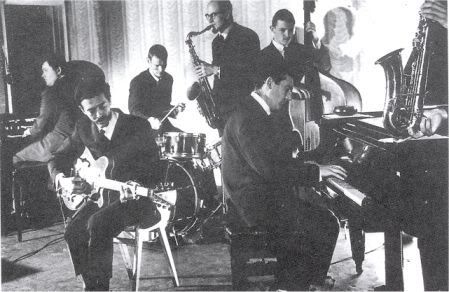
Alexis Korner, Cyril Davies & Blues Incorporated1956. Back to Soho. Home of the jazz clubs and the skiffle clubs. Above The Roadhouse pub on Wardour Street, tired of skiffle and trad jazz, Cyril Davies and Alex Korner are setting up a club night, playing the blues. The night is called the Blues & Barrel House Club. The band is called Blues Incorporated. Who knows if anyone will come?

They come. Big Bill Broonzy and Otis Spann even come down to hear and play, and stay at their houses while they are in town.
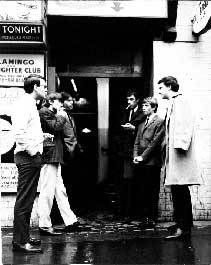
The Flamingo Club on Wardour Street in 1964
They've come down from the Cold War US airforce bases around London, where they've been playing for the servicemen - the only place up to then you could hear the blues in Britain. Like many GIs, they come into Soho, looking for entertainment. First to clubs like the Americana for jazz; then on to Wardour Street to the Barrel House and finally down to the basement club The Flamingo for modern jazz and latest r&b singles from Ray Charles and Lee Dorsey. Mixing with student trad jazz fans, being beatnik in old jumpers and scruffy trousers, the GIs cut a style in suits and ties. Some of the skifflers and jazz musicians are interested: Zoot Money, Georgie Fame And The Blue Flames, Chris Farlowe and the Thunderbirds, are listening and learning.

They interest the younger kids too. From all over London they come to hang out in Soho, young mostly working-class boys who are fascinated by everything American, but can't find it in austerity Britain, can't dress like that, but they try and put on an attitude. They are not going into National Service like their older brothers, the Teds, and coming out aged and conformist. Thanks to the self-same GIs and thanks to mutually assured destruction, the country doesn't need their services. These boys are able to go to work, earn their money, buy clothes, go out, and spend it how they want. They aren't as rich as they make out - you can do a lot on the HP. They want a new kind of life all the same.

At the Flamingo, they can meet real Americans. The GIs can sell you buttoned Levi's for a fiver.
Where do you get those suits, those shirts? They just don't exist in the high street. So you need to find a way to alter things yourself. First, find something you like at Marks & Sparks, or C&A. Round the corner from The Roaring Twenties Club, where blue beat mixes with r&b from 1961, the tailor at Newmans on North End Road will make you a suit with the 'Billy Eckstine collar', or help you get the perfect 'Italian' drop to your trouser. Go to the cinema, and there are new ideas every week. La Dolce Vita with Marcello Mastroianni, Shoot The Pianist with Charles Aznavour, Rocco And his Brothers with Alain Delon, the New Wave. Always new, different, modern, changing. Think of a style, and take it to John Stevens in Fulham, Bilgorri in Bishopsgate. Now show it off at the clubs...

It's not just about the clothes anymore. It's about the music. The GIs have records to sell as well. Better than trad jazz, or skiffle, or Cliff Richard's tame rock and roll. Its a handy extra income, and a way to offload belongings before returning to the States.

March 17th 1962.

The Barasque Club, opposite Ealing Tube Station. Art Wood, singer with Blues Incorporated, asks if the owner wants a new resident band, a blues band. He agrees. Davies and Corner open a new club night, and the faces start to appear from other pockets of London, young, fashion-conscious, a little arrogant, interested in the new sounds. Soon, another club offers them a residency - The Marquee Club, at that time on Oxford Street.

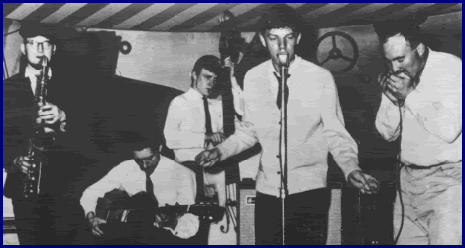
Blues Incorporated in 1963, with a young Mick Jagger having a go on vocals...Clubs in 1962 mean live music, and there are a small but growing coterie of young people who have absorbed the r&b records they have bought, and are starting to play. You'd find Brian Jones in the audience at the Marquee, Mick Jagger taking a turn as a singer with Blues Incorporated, Eric Clapton and other Yardbirds not far behind, Chris Farlowe and especially Georgie Fame and his Blue Flames turning from jazz and skiffle towards r&b at The Flamingo.

A local phenomenon amongst young men and women in London, looking for whatever the latest styles and trends are, trying to make their own identity, has encountered a club life suited to the tastes of GIs and Caribbean-Britons, and heard a music that intrigues them. Something similar is happening in some other places, in Liverpool, and in East Anglia, in smaller towns near other airforce bases. People visiting the London nightlife are bringing back the news and the new sounds to towns across the south. The rest of the country hardly know anything about it, but soon it will become a national youth culture...

Here are some tunes from Blues Incorporated in the early years. The first is taken from an LP recorded live at The Marquee Club in its first few months back in 1962, and released on Ace Of Clubs. The second is the b-side of Blues Incorporated's first single, released in 1963, many years after the formation of the group. I think this reflects the assumptions in Britain at the time that the priority for a band was playing live, and perhaps also that for many British blues musicians, they did not fully consider the idea that they could make records like their own idols. This was about to change dramatically as the recording industry, soon to be bowled over by the public fervour for The Beatles, awoke to the potential of British beat.

Alexis Korner & His Blues Incorporated - Rain Is Such A Lonesome Sound (LP 'R&B From The Marquee Club' ACL1130) 1962
Alexis Korner's & His Blues Incorporated - Please, Please, Please (B-side of Parlophone R 5206) 1963

Information gathered from The Georgie Fame site, The Marquee Club website, The British Beat Boom website (very good index of many bands), and from Mod: A Very British Phenomenon by Terry Rawlings.

Sunday, April 22, 2007

Soul Britannia: Just What Is It that Makes Today's Homes So Different, So Appealing?

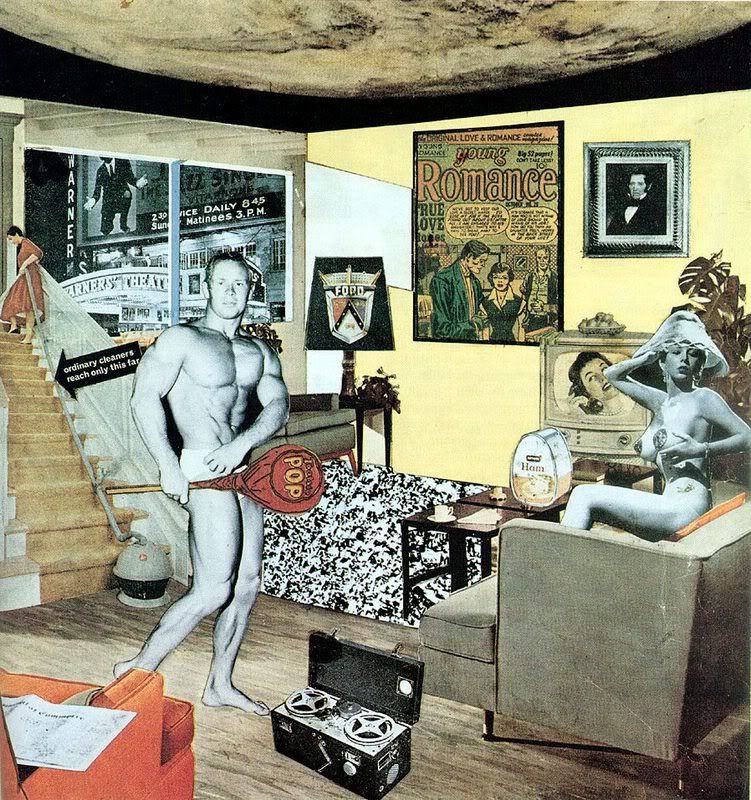
Just What Is It that Makes Todays Homes So Different, So Appealing?1956. This Is Tomorrow. Richard Hamilton presents his collage Just What Is It That Makes Today’s Homes So Different, So Appealing? Pop Art starts in Britain. Bring us America!

From Belfast to Birmingham to Newcastle, to Liverpool and back to London, Britain is emerging from the years of rationing into a more prosperous era. Full of new consumer goods and other influences from America. New musical sounds of America making their way across the Atlantic and reaching young people…

Not r&b, or even rock and roll, but skiffle at first. The music that first encouraged thousands of British youths to pick up an instrument and form a band. Lonnie Donegan and other British jazz musicians, playing a spin-off from New Orleans in the jazz era in Soho clubs. A BBC reporter investigates:

“In London, the skiffle movement provides entertainment at several dozen coffee-houses [playing] blues, ballads, shanties, work songs, country songs, cowboy songs, railway ditties and even evergreen popular tunes.”

Tune in to Saturday Skiffle Club on the BBC Light Programme on the family radio, half an hour for the teen-agers on a Saturday evening, starting in 1957. It’s the place we encountered real gospel spirituals, bluegrass, country, blues and r&b for the first time. Sometimes the authentic sound of Leadbelly on a recording. More often than not (thanks to strict rules on not allowing too much ‘needletime’ on radio), interpreted by a British skiffler in a live performance.

Skiffle sound doesn’t hold sway for long. Rock and roll hits British shores. The rechristened Saturday Club plays us more Gene Vincent, Cliff Richard, more American acts. But just half and hour still. If you want to hear some more, wait until early evening when the signal bounce is stronger off the ionosphere, sneak a transistor radio under the covers and tune into Medium Wave 208, Radio Luxembourg. They play the latest hits from the major record companies, who vied to sponsor a show to plug their products. The sound fades in and out in the south on England, but up North things are clearer…

1957: Don Lang & The Frantic Five on Six-Five SpecialTV! Neighbours rented one, it costs 10s a week from Rumbelows. Turn it on at six on Saturday and catch your favourite British rockers on Six-Five Special, Drumbeat on the BBC, or live from the Palladium on Oh Boy! on ITV. See some film clips of the American stars we wish would come to Britain.

1960. Finally, the end of the Musician’s Union ban on American performers. Finally hear Gene Vincent and Eddie Cochran, Duane Eddy and Bobby Darin, Chris Montez, Jerry Lee Lewis and Bo Diddly - performing live on Saturday Club! Finally get to see some of their rock and roll heroes in the flesh, and along with them the latest stars of soul music, a new sound, mixed with gospel music – Little Richard and Sam Cooke, at Brighton Hippodrome in 1962, Richard jumping on the piano, never been a performance like it before. Solomon Burke in 1963, Chuck Berry in 64.

Want more?

1964. Here come the pirates, broadcasting from out at sea, far away from the reach of the BBC. Radio London, Atlanta, and most of all Radio Caroline. All aboard the good ships MV Mi Amigo and the Frederica. One stays south anchored off Essex, and one goes North, carrying a cargo of several thousand rare jazz and r&b records. Now everybody can hear the new sounds of British beat, and the sounds of America, the familiar and the unfamiliar, the old and the brand new. Whatever young people are listening to in Britain, now it all originates with the music of Black America…


Information about Saturday Club is from an article by Spencer Leigh. There is a nice list of all of the artists who appeared on Saturday Club here. I read up on Six-Five Special here. Also from The Story Of Radio Luxembourg website. Radio Caroline information is everywhere on the web, I have enjoyed looking through the Radio London scrapbook on Radio Caroline, and The Pirate Radio Hall Of Fame.

Saturday, March 31, 2007

Soul Britannia: Soulpool

Click here to visit Soulpool! This article is based upon the remarkable research of the Soulpool website, conducted by Steve Higginson , David Pendleton and others. Basically, Soulpool is creating a detailed social and cultural history of the musical roots of Liverpool, and using oral history they have been able to present a very different version of the origins of the Mersey Sound. I don't think there is any similar project of such depth online concerning this aspect of British social history. So, once you have finished reading my short(er) post to wet your appetite, follow the links over to Soulpool to read the rest of the story that forms one of the most important chapters in the history of Soul Britannia...

Trying to track down the origin point for a social phenomenon is intrinsically difficult, and there will always be the isolated example that acts as an exception to the rule. However, the history of Merseyside offers evidence that it is amongst the earliest British communities to have ready access to and develop an appetite for American r&b music. From this appetite, a new musical movement was formed, which then went on to transform music in Britain and then impact across the world...

We will all think we know this story of course. Yet while four loveable moptops were indeed responsible for the final breakthrough of Merseybeat into popular success in 1962, their careers alone do not explain the origins of this new sound.

Liverpool's black history, of course, is a long one. Both free and unfree, black people have been living in Liverpool for 400 years. As Britain's principal slave-trading port for over a century, it surpassed Bristol and London. Even after abolition of slavery in the British Empire, Liverpool's dock workers were among the most vociferous in their support for the Confederacy during the American Civil War, being at that time dependent on the southern cotton trade. Throughout all this time and beyond to living memory, Liverpool was the principal port of access to the commerce of the Caribbean.

Poverty and casual racism often colluded to ghettoise these communities geographically, for example in Toxteth, Liverpool 8, despite the lack of racial codes. As in other areas of Britain, the sign in the window of rooms to let would frequently read, "No Irish, No Gypsies, No Blacks." However, in a busy port like Liverpool, there was work to be had in boom times, and throughout the C19th, racial solidarity could be found in workers' movements such as the Chartists (William Coffey being one of the prime leaders in London), and later in the trade union movement. Of course, in times of slump, more selfish motives could rise to the surface. Such a time occured in 1948, after a wartime rise in the black population, due to the call for qualified nurses and doctors to aid the mother nation during its time of crisis. In the post-war austerity era, it became easy for people to accuse black Liverpudlians of taking jobs that belonged to white people. White rioting occured through Toxteth in that year.

So, in Liverpool by the late 1940s, before even the Windrush generation, the black community was larger and more established than in other cities outside of the major seaports. It stands to reason that there was already a growing number of musicians with both Caribbean and African influences through the 1940s and 50s. It was however, according to oral histories, quite difficult to find venues to play in, in large part due to the long-running Musicians' Union ban on any American bands playing in unionised venues. This ban was in large part a reaction to 'negro bands', as the union put it, and affected local musicians as much when combined with the casual segregation of most Liverpool venues in the 40s and 50s. Right up until the late 1950s, most licenced clubs were folk orientated in central Liverpool. Local halls such as the Nigerian, the Sierra Leone, and the All Nations, built by the Toxteth community, or the White House pub, were some of the few opportunities to perform and to go in relative peace to hear what was still unfamiliar music to the majority of Britons.

Liverpool's position as a major seaport made it open to other influences, from the late 30s onwards. Merchant seamen who found themselves travelling to the Caribbean and to the United States had the opportunity to take shore leave and wind down in the local nightlife. They began to get a taste for the very different kinds of music they encountered there. Soon they were seeking out record stores in those places, and bringing their finds in country, jazz and later r&b home with them. To the Liverpudlians back home, these 'Cunard Yanks', as they were known, often appeared outlandish, somewhat strange, when they began to congregate and play this discover'd music at their hangouts. Their clothing would seem outlandish also, described by Cunard employee Tony Dwyer as being manily African-American fashions, such as zoot suits, full drape jackets, and very tight bottoms to the trouser leg, and which Steve Higginson describes from a slightly later era as being the smart, sharp suits and button-down shirts being worn by the American r&b artist Billy Eckstine, and uncannily similar to the 'mod' fashion that would emerge in Europe and Britain nearly six or seven years later. Some, like sailor Ian Gilmour, came home in the late 50s and established clubs in Liverpool, at least tapping into the rock and roll boom and providing a atmosphere tolerant to r&b and jazz as well as the usual rock and roll. However, some other historians strongly dispute the influence of merchant seamen on Merseybeat bands themselves, stating that it was a world in which those bands rarely interacted. As this is a big debate, I will come back to it in another post.

Record stores in Liverpool began to stock this new music in the 1950s. When the rock and roll boom hit Britain in the late 50s, there was already this established influence. Teenage skiffle enthusiasts and banjo players in Merseyside were able to satisfy their curiosity when they encountered names such as Elmore James, Sleepy John Estes, Larry Williams or Arthur Alexander alongside Elvis or Buddy Holly, in a way that other British rock and rollers would not so easily. However, there was something else that allowed the growing army of scouse rock'n roll bands to deepen their understanding and experiences of r&b.

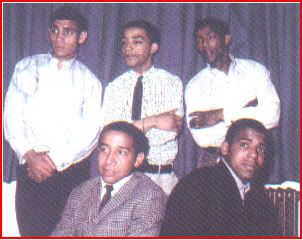
Up with rockers like Rory Storm or the Hurricanes, the Merseybeat scene was dominated byThe Chants: Joe and Eddie Ankrah, Eddie Amoo, Nat Smeda and Alan Hardin. homegrown artists playing their own authentic r&b. Derry Wilkie, Sugar Dean and Colin Areety jumped onstage when Little Richard played Liverpool, and were accepted for their talents and the enthusiasm of the local crowd. A number of big American r&b artists made it their business to tour to Liverpool, where they were assured of a good audience - one recent commentator on this blog, Bill Mitchell, remembers with fondness the time Joe Turner performed and came down into the audience during the interval to chat and have a drink with the people. The Valentinos, named for their American namesakes, and other local groups were digesting and recreating the American vocal harmony group sounds of the late 50s and early 60s. The Chants were also writing and performing in this vein. When four befringed lads came by to hear them play, they went back to their manager Brian Epstein to beg to play behind The Chants as their backing band. When The Chants came to The Cavern, this is exactly what the Beatles did, despite Epstein's obvious displeasure that his band were being upstaged.

This is how bands like The Beatles, who were also the songwriters behind hits for many other Merseybeat bands, were able to listen to complex vocal harmonies in r&b firsthand, and learn how to incorporate them into their guitar-based rock and roll.

They encouraged Brian Epstein to sign up The Chants along with many other Merseybeat bands in 1964. However, you get the impression that he had little enthusiasm for promoting them. Ironically, Epstein got them a record deal with ... Pye Records, the well-meaning but slightly out-of-their-milieu label of Jimmy James and The Vagabonds and later Geno Washington & The Ram Jam Band also. The sound of the black r&b groups of Liverpool had some similarities with the Merseybeat sound, but it is clearly pure r&b, and different enough that the record-buying public, obsessed with Beatlemania, passed it by for the next long-haired Mersey group single. Meanwhile, other enthusiasts of American r&b, in other parts of Britain, were unaware of what was on offer to them in Toxteth, in those dark days before the internet. Micks and Keiths and Erics (both Bs and Cs) continued to think they had to go to Detroit and Chicago to find the gritty r&b they had encountered.

Here is a little taste of the early Chants, written by Eddie Amoo, as would have influenced Liverpool beat groups. Later, I will be sharing some of the transformations that The Chants and other black British groups went through to try to gain commercial success to match their talents.

The Chants - I Don't Care (1963)

Information for this post came from the Soulpool website - who go into much greater detail than I have here on all these phenomena. It is a must-read if you are interested in the story of Soul Britannia! Much information about the Chants comes from articles and photos collected by Bill Harry, journalist and author of the site Mersey Beat. I have also learnt some interesting things from the websites of Colin Dilnot, who has been kind enough to mention this site several times in recent months. In Dangerous Rhythm should be part of everyone's weekly blog trail. Recently, on his Soul of Liverpool blog, Colin announced the sad passing of Vincent Ismael, a member of Liverpool soul group The Harlems.

Saturday, February 24, 2007

Soul Britannia & The Blue Beat: The Impact of Ska In The Early 1960s

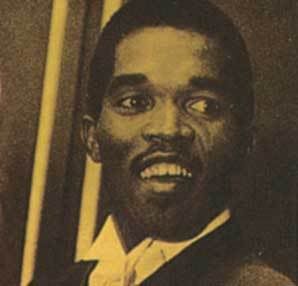
Prince Buster The story of the impact and influence of r&b on British society has as much to do with musical and social trends stemming from the Caribbean and Jamaica in particular, as it does the United States. I thought I would investigate some more and write a post about some of the key influences of the early 1960s. Sorry it's taken a couple of weeks to put into order!


During the years 1960 to 1964, an audience for Jamaican ska existed in Britain, thanks to the communities of Jamaican emigrés in the major conurbations. They were particularly interested in hearing this new sound, which both reminded them of home, but also heralded a new confident Jamaica on the road to independence. The music had a distinctive sound, culture and image that, for the younger generation, they could project onto their everyday, British urban environment; and it set them apart from the calypso and mento music associated with their parents. In London for example, as well as local blues dances and shebeens and their soundsystems, DJs and promoters were opening venues such as the Roaring Twenties, the Ram Jam, The Flamingo, El Partido in Lewisham, Brixton Town Hall, and Stoke Newington Town Hall which helped to promote ska. Records were imported into Britain by companies such as Blue Beat Records, and the jazz label Esquire, as well as its subsidiary Starlite. Above all other ska artists, it was probably Prince Buster who was most admired. However, while ska was popular within the Caribbean communities, in the wider society and the pop charts, it was at this time fairly invisible. City club Djs were probably carrying ska 45s with them to play in clubs in provincial towns all over the UK, intriguing the curious who would eventually emerge as faces in the mod scene, but these audiences were more familiar with rock and roll, and at that time more curious about discovering more about old bluesmen and the artists they read about in the American r&b charts. It would not be Prince Buster, but one young yet confident girl who would push ska into the popular British consciousness.


The decision by Jimmy James and The Vagabonds to leave Kingston and move to London in 1964 was likely prompted by the example set by Millicent Small, AKA Millie, who had left Jamaica the previous year with Chris Blackwell, a local producer and owner of a label called Island Records. The story of Millie is a significant one in terms of the introduction of Jamaican musical styles into popular British consciousness, and played a major part in the subsequent development of a distinctive Jamaican music industry. It is also a salutory tale, which highlights some of the significant barriers to the creation of a distinctive British r&b tradition in the 1960s.


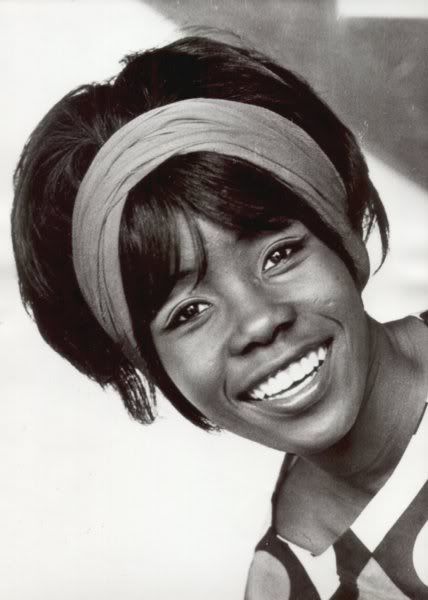
MillieMillicent Small was born in Clarendon on the 8th October 1947 (which is incidentally the same day my father was born!), although it may have been 1946 (Millie celebrated her 60th last year.) Her father was a sugar plantation worker, and she was born the youngest into a large family of seven brothers and five sisters. Millie's singing career began in 1960 with a win in the nationally popular Vere Johns Opportunity Hour talent contest at the Palladium Theatre in Montego Bay, Jamaica. Millie remembers the prize for the contest being about 10 shillings:

"When I won the prize money, it seemed like a fortune. I felt I was the richest girl in the world. The following year, when I made my first record (I was 13 then), the disc crashed into the Jamaican Hit Parade and gave me the most wonderful feeling of confidence. You see, when I was 9 years old, I had told my family I was going to be a film star or a singer, and you know what, they laughed!"
Clement 'Sir Coxsone' Dodd 1932-2004
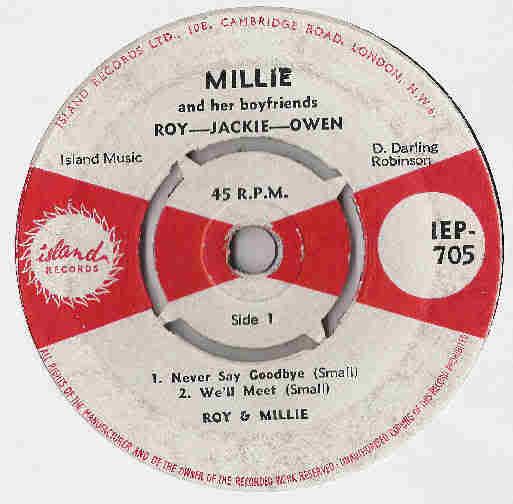
Success brought the twelve-and-a-half year-old Millie to the newly established Clement "Sir Coxsone" Dodd's Studio One label at Brentford Road in Kingston, where she first recorded with Roy Panton as part of the duo Roy & Millie, debuting with We'll Meet. By 1962, Millie was a local hit, and regularly performed with Roy Panton and other popular local singers such as Owen Gray, Jackie Edwards and Shenley Duffas. However, the success of Millie and other Jamaican artists influenced by r&b and Jamaican dance rhythms was limited by certain factors. In the early 1960s, Jamaican radio and music sales were dominated by mainstream fare from England and the USA, such as Mario Lanza and Billy Vaughn, and the local recording industry was small and lacking in funds for wider promotion into other markets outside the island. There was an assumption that calypso was more commercial for export, thanks to the shortlived calypso fad in the late 50s in the US.


Roy & Millie - We'll Meet (Island EP 705) 1962

Owen Gray
Chris Blackwell in Island's heydays in the 1970s


Emil Shalit founded the Melodisc record company in the 1940's. To market the new ska sound he formed the label Blue Beat in 1960. Blue Beat was the largest company importing records from Jamaica into Britain, where Jamaican emigrés were buying more records from them and other import labels such as Esquire and Starlite than were being sold locally. It occured to Chris Blackwell, a small producer and owner of the small label Island Records, that in order to expand the music industry of the island, it was necessary to gain a wider audience for some artists in Britain. Owen Gray released the first LP of Jamaican (rather than Trinidad-style calypso) music in Britain, Owen Gray Sings, on Starlite in 1961, and decided to move to London in 1962 to make a career there. Noting the trend, Blackwell also moved Island's headquarters to London in 1962. Within a few years Blackwell had produced or licensed several hundred singles for Island and its various subsidiary labels in Jamaica and Britain, that alongside Blue Beat's efforts, firmly established a distribution system for ska in most major British cities and towns. However, none of Island's records had broken through into the British Music Week pop chart. Blackwell was still convinced that ska could become a dance and musical sensation in Britain and Europe. Looking around for a distinctive artist unique enough to make a cross-over hit, Blackwell thought of Millie Small, and convinced Sir Coxsone Dodd to let him manage her.

It occured to Millie herself that this was an opportunity of a lifetime. Millie made the arrangements for her passport and ticket to England personally. Arriving on a foggy day in London in July 1963, Millie and Blackwell turned to Fontana Records. Jack Baverstock, A&R Director of Fontana Records, was impressed immediately by Millie. He offered her an exclusive recording contract, licenced from Island Records, and arranged for the first recording session at Olympic Studios on Carlton Street, which became the single Don't You Know, which has a sweet orchestral arrangement conducted by Lord Rockingham's Harry Robinson, and strayed from the Jamaican rhythms Millie had been recording.

The first single did not break into the charts, but the second, My Girl Lollipop rose to Number Two in the UK within three weeks, and when released in the USA on the Fontana's US affiliate, Smash Records, it repeated the feat, selling over half-a-million records within five weeks of its release. Chris Blackwell has his own ideas about why it was this track that broke through as a cross-over hit:

"On that record, the reverb came from a sort of cupboard in the back of the studio that we used as a live chamber. It was a mono record, and we fed the sound in, adding a bit more of the reverb on Millie's voice. The record worked well for radio, but partly because it was a minute and 51 seconds. That was important for people at radio who were putting playlists together. Also, Millie's voice was irresistible-for a certain length of time, anyway. So a short record worked well for her."
Ernest Ranglin Jimmy Powell & The Five Dimensions, with Rod, in 1964
The recording of My Girl Lollipop was an arrangement by Jamaican guitarist Ernest Ranglin, who had played on Island's first record by Owen Gray and The Caribs. It also included contributions from a number of the beat group called The Five Dimensions. Jimmy Powell and Pete Hogman played harmonica on the first takes of the song, but later Chris Blackwell decided that a new part needed to be recorded, and brought in lead singer Rod Stewart to have a go. Both Millie and Chris affirm that this is the take that was used.

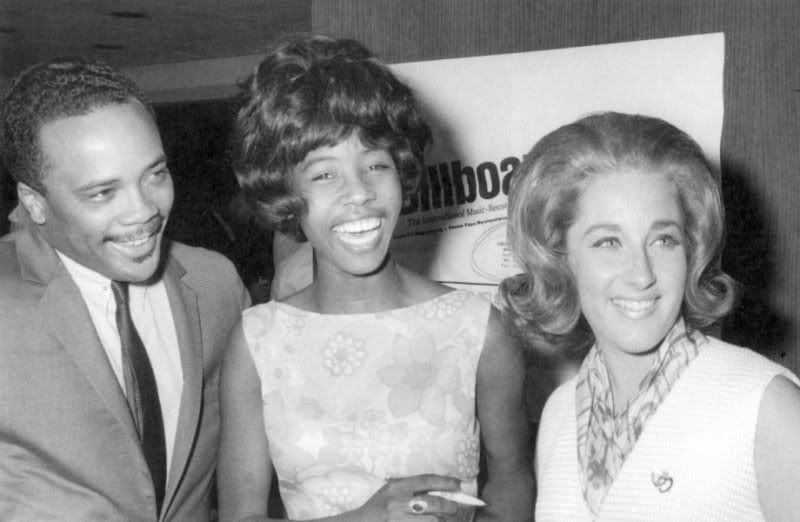
It's My Party: Quincy Jones, Millie Small, and Lesley GoreMy Girl Lollipop heralded a whirlwind rise to fame for Millie, that saw her race from touring the UK to a manic reception for her in New York, hosted by DJ Murray The K; then back home to a hero's welcome in Jamaica, and an invitation to meet the Prime Minster Sir Alexander Montie; and back out to the USA for a proclaimed Millie Small Day at the New York World's Fair on August 12th 1964; only to return to the UK to record two TV specials with The Beatles:

"The diminutive 16-year-old with the big smile and ever-shining eyes spread new music excitement across Britannia and went up the British Hit Parade..'There hasn't been a voice like it since Shirley Temple,' headlined the Daily Express..."
- Teenville Magazine Issue #2, 1964

Shirley Temple? Here were intimations of the potential pitfalls for a Jamaican artist recording for a London record label with a broad range of popular artists. What were they to do to capitalise on Millie's recent success? There were no shortage of potential tour dates, both in the UK and worldwide, that saw her performing non-stop for over 2 and a half years, and regularly up until her 'homecoming' concerts in Kingston at Easter 1971. Chris Blackwell was able to earn enough money to finance his ambitions for Island Records. However, any future expansion of the label, and promotion of other homegrown Jamaican talent, would take time, and all lay in the future. What Fontana did not have right now in 1964-65, and Chris Blackwell was unable to provide, was a roster of similar acts upon which to build. Collaborations with The Spencer Davis Group aside, Millie and Blackwell were in a difficult position. Lollipop was immensely successful, and to the present day has sold over 7 million copies worldwide. But in the London music business of 1964, it was a curio and novelty, an interesting dance record, and Fontana gambled rightly that this was the best way to market it to a wide audience. Millie's records would look like, if not sound like, any other Fontana female singing star's. Jack Baverstock had made his name at Oriole/Embassy Records in the 50s and later at Fontana with his ability to tap into the latest pop craze, quickly turning out 'chinese copies' of upcoming hit songs with the help of John Gregory's orchestra, and selling them at discount prices through Woolworths stores. A new single with a similar vibe, Sweet William, was released in July 1964, aimed at making another similar hit to capitalise on Millie's publicity, which reached No. 30 in the UK. Sadly, this was not the start of a heralded ska revolution. Fontana and other British labels were not looking for another new sound just yet. Fontana was itself in a strong position signing up the new 'beat' groups of young British r&b, and had the example of The Beatles to follow as a ready-made business model. Even Chris Blackwell, for all his enthusiasm for ska, had also been using his time in England to make connections to the 'mod' scene, eyeing up talent in the pubs and clubs of Birmingham...

Millie Small - My Girl Lollipop (Fontana TF449) 1964

Despite all these inhibitors to a blue beat and ska explosion in early and mid 1960s Britain, the impact of Millie and other ska artists had not been insignificant. Jamaican r&b had been given a worldwide exposure from London to Birmingham, from Lagos to New York, where Prince Buster and others had joined Millie at the World's Fair. The infrastructure of the Jamaican record industry had been given a massive boost, enough to secure its future development for itself. Significant creative artists in the British r&b scene had worked with Millie and come into greater contact with Jamaican musical trends, and a similar process would start to occur in Memphis and Chicago as the sounds that Jamaican musicians had taken from there and adapted now made their way back. Ska was immensely popular and entrenched in the social scenes of the Black British communities of many towns and cities. Thanks to Blue Beat, Starlite, Island, Studio One and later Trojan, a thriving production and distribution system was bringing Jamaican music to UK markets, and so the new product of ska artists was readily availble in mid 60s Britain. Record outlets such as Musicland in Deptford and Joe's Records in Brixton, and the committed music salesmen and promoters behind them such as Joe Mansano, were responsible for getting the product to this market. Prince Buster was able to record and distribute a phenomenal 600 different singles from 1962 to 1970, and found a viable market. He appeared on the popular TV show Ready Steady Go in 1964, having just broken all records with a sell-out concert at Brixton Town Hall. His song Al Capone broke into the Top 20 in the UK in 1966, and gave a distinctive twist to the 'gangster' trend sweeping through the pop chart that year courtesy of Georgie Fame. This entailed a significant level of sales, proving the ska beat had made its impression on the mod culture. By that year, Prince Buster was able to make a tour of Britain that included venues such as The Guildhall in Southampton, the Atlanta Ballroom in Woking, the Tabernacle in Stockport, the Shoreline Club in Bognor Regis, and the Starlite in Crawley - all venues somewhat outside of the early major settlement areas of Caribbean immigrants - as well as venues such as the Marquee, the Brummel Club in Bromley, and the Beachcomber in Nottingham. As Jamaican music continued into its period of innovation from ska to rock-steady and into reggae in the late 60s, they would be transmitted to a growing British audience, where in the 1970s, they would contribute to the development of home-grown and sometimes multiracial musical movements.


Prince Buster & The All Stars - Al Capone (Blue Beat 324) 1964


Millie at the National Arena in Kingston Easter 1971As for Millie Small, now settled in England, she continued to ride the fame of her hit singles and continued touring and making records which sold to a smaller but appreciative audience, and began to tackle a number of issues concerning black and white relations in Britain head on. One fly in the ointment was, as often in the music industry, Chris Blackwell had not been entirely upfront about his business dealings, and Millie was lucky to see anything but her expenses paid and a share out of the tour profits. He and Island profited from the royalties associated with her biggest hit. Recently, aged 60, Millie revived her recording career with producer Arly Cha of Yardie Style Records. They have recorded a new album 'Millie Is Back', which came out last October.

Information for this post compiled from:
Teenville Magazine Issue #2 from late 1964, as hosted by www.spectropop.com. The article 'Chris Blackwell: FROM LP TO DVD, STILL LIVING THE ISLAND LIFE' by Dan Daley for MIX magazine.
Articles on ska in Britain at www.coasttocoast.org .
'Millie not so 'small' anymore' published on October 15, 2006 by The Jamaican Gleaner newspaper to celebrate her 60th birthday.
I found a lot of fascinating facts and images of flyers for various clubs at the Ska2Soul website, a site that specialises in telling the story of the British ska experience from the mid 60s onward.
For an introduction to ska itself, try this short history of the origins of ska also from Wikipedia.
Millie's greatest hits album, Time Will Tell, is available at itunes. It contains both the tracks featured today.

Sunday, February 04, 2007

Soul Britannia: Windrush

Britons had come into contact with Black America directly during World War Two, socialising with G.I.s, and getting to hear some of the sounds of blues and jazz that black american soldiers listened to. This influence would continue in small pockets of rural Britain, in East Anglia for example, around the American Airforce bases of the Cold War (as it would also to an even larger extent in Germany).

Meanwhile, in the 1950s, the mainstream American recording industry was heavily promoting 'rock and roll' to the young people of Britain. It was promoted to a younger generation living in an austere economic environment, and couldn’t help but become a nationwide 'teenage' phenomenon, especially backed with the teen orientateed films of the period. 'Teddy Boy' fashion was distinctive and colourful for the time. Coffee bars provided a new form of social outlet for young people. Young Britons could not emulate the car cruising culture of their American counterparts. But they were able to interact and listen to music at the local dance hall.

But while the curious British youngster began to explore the less familiar names of rock and roll, and wonder about the blues, it would have remained a fringe curiousity and access to the recordings of black r&b artists would have been far harder to obtain, where it not for another factor in 1950s Britian. The remainder of the British public would have continued to soak up and enjoy the Elvises and Eddie Cochrans supplied by the record industry. British awareness of the history of rhythm and blues, and all related musics, would have been pegged to the pace of social change in the United States. Ironically, the awareness of black musical traditions in America would be championed by some very passionate groups of Brits in the mid 60s.

The vital bridge between American soul music and its assimilation into British cultural life is the Caribbean. Windrush led to the development of communities in numerous cities and ports where a demand for both American soul and its Caribbean variant ska existed in high enough amounts to make importation a viable business. Sound system parties became a new feature of night life in Caribbean communities such as Notting Hill in London and Toxteth in Liverpool.

What kind of nightlife culture for example was being established by the Caribbean community in Notting Hill in the late 50s? In the main, it was built on the sounds of Trinidad and Togabo, St Kitts and the surrounding islands, while being influenced by the sounds of Jamaican ska popular in the communities of Brixton and Tottenham. Sound systems were run by popular figures such as Duke Vin, Count Suckle, Baron Baker and King Dick, who conducted events, called ‘blues’ or ‘shebeens’, in basements, and even in peoples front living rooms, once all of the furniture had been moved out into the back room to make space!

“...In fifty-eight you had a lot of shebeens, you call it that, a social situation, there was nothing because of the no-coloured policy, no blacks, no coloureds in homes, entertainments, there was nothing really for black people so you had to create your own social environment. "

Such creativity in the creation of local entertainment for a new community was done in the face of the unpleasant reality that an unofficial colour ban made going to many pubs and clubs an unwelcoming and dangerous experience. Amongst the few pubs in Notting Hill where black people could make a presence were The Colville (known affectionately as ‘The Pisshouse’) and The Apollo on All Saints Road. Meanwhile, the local hall or private room was frequently off-limits to hire due to prejudice of the owner, or due to refusal of the local police to allow parties without the relevant entertainment licence - which they were unlikely to give.

“The Jamaican people created particularly the reggae, ska and bluebeat. And Fullerton, a chap called Fullerton, was a tailor and bought his first house in Talbot Road. He had a basement and we used to have blues dances and stuff. Everybody used to get down there and get down. You had people like Duke Vin who used to play with big speakers, all these things that we have now is part of our culture, discotheques were actually born out of Caribbean culture.You had a certain club that a lot of us never got into called the Montparnasse that was on Chepstow Road, the corner of Chepstow and Talbot, but round the corner was the Rio on Westbourne Park Road. Then you come further down, then Larry was in a place there with Johnnie at the corner of Ledbury Road and Westbourne Park and that was called Fiesta One. And right next door to it it had the Calypso. That what I call there, is no more than about 800 yards square. Then when you leave there you come to the corner of Colville Road and Elgin Crescent and some Barbadian guys have a club in the basement. Then Sheriff had his gym/club. It was a wild - when I say wild life you understand me - sometime you don't reach the West End. I used to hit the Grove like about four o'clock of the evening and leave there about quarter to five in the morning.”

Older local white people reacted to the arrival of British citizens from the Caribbean with fear and incomprehension, and continued to inculcate their children with these notions. Young white people living in close proximity to Caribbean neighbours should theoretically naturally progress from a love of Elvis and rock n’ roll to an appreciation of black Caribbean culture. Instead in the summer of 1958, many Teddy boys chose to go along with what their parents were telling them ought to be done about it. With the violent actions of older men as a role-model, the general attitudes of their parents, and the influence of workers for Oswald Mosley's Fascists, it was quite simple to channel some of the ‘rebellious’ attitude of rock n’ roll teddy boys and rockers into a monolithic identity to distinguish and set white youths apart. Yet some eyewitnesses attest that in fact, the 'Teddy boy' presence in the rioting was minimal, and in fact it was the wider, older community driving the hostility. Teddy boy interest in rioting and far-right meetings began to pale off, in contrast to their older brothers and parents.

The murder of Kelso Cochrane , and its unsatisfactory investigation, revealed how the Metropolitan Police themselves mirrored the attitudes of the wider population. When white people began to enter the streets, initiating the Notting Hill Riots of 1958, the police response was inadequate and focused on the wrong targets. Such insensitive policing continued to be a problem at gatherings even years afterwards:

“The police didn't take kindly to it. A lot of things made them annoyed. The music was too loud, they didn't like blacks period gathering in any kind of situation, and the selling of drinks which was outside [the law], because you couldn't get a licence, so you had to sell drinks, So you had to break the law. All this got under their wick. The shebeen didn't survive. The police, well they survived in a sense; the police used to regularly raid them, kick their boxes in, kick their speakers in, but sheer will, just natural perseverance. That aggravated the blacks no end and gave them the determination to persevere and the whole police hatred came out of that.

Anything which happens with the blacks and the police is inherent in the early stupidness of breaking their sound systems, costing them money, and indirectly disrupting their social pattern. It carried on after the riots, way into the sixties. The riots didn't do much for change. All the riots did was establish that you can't take liberties with black people, that's what it established, you've got to stand up and defend yourself. You're not going to back off.”


One more description now from an oral account of a night in 1963, which perhaps encapsulates many of the sensations and experiences of a blues dance into one account:

"Wherever you come from, you had a feel for the music. The people dem didn't too care where you come from. Dem people didn't have a prejudice like island thing, you know. For the youth dem, it was just oneness. Like when you finish work in a factory on a friday night, this is where you go, Blues dance. All de doors close and sounds just a drop in you head. Its like a refuge still. It remind you of home, the feel of it. From Blues sessions a culture develop. I remember one on Winston Road, played by a brother called Jucklin. One night in 1963 the door just kick down and policeman just step in and you hear funny sound, sound system switch off. Dem just bust up de dance! We couldn't understand it. De older people dem did know because it happen to them. A couple of brethren get fling on police van and get charge with obstructing police officers on de Monday morning"

Around the edges of this new entertainment came the most curious white teenagers interested in these unfamiliar songs. In different cities around Britain, certain individuals were investigating the music they heard, and interacting with black people. Yet for British white youths, it was all still quite different and confusing. Pete Townsend, of The Who, describes in one interview his confused image of ‘black’ culture at that time, where the reality of the black community he knew and the one in his head were somewhat blurred:

“America was still a distant and evocative IDEA to us, full of mystique. Remember we were all war-babies. brought up on free chewing gum handed out by clean-cut grinning G.I.s.. When I drove [a Lincoln Continental] to the Marquee Club … Count [Prince Miller] said ,'The Lincoln is the Rolls Royce of the United States man. Heavy car!’ The British black population were all Caribbeans. Their clubs, their drugs, their music and dancing they freely shared - but they were too close to influence us very deeply. They had a self-contained life-style; they were good people, suspicious of young Whites who saw something special in simply being black.”

Yet, curious, they continued to approach and Djs like Count Suckle saw the opportunity to establish a more mainstream club to attract them. In 1961, after establishing a reputation as one of the capital’s leading DJs, he gained a residency at the west end’s Roaring Twenties Club, where his set, featuring a mixture of R&B, Ska and Jazz, attracted audiences from far and wide. Three years on, he moved on to the famous Cue Club in Paddington and played host to many of the biggest names in the British, Jamaican and American music industry, with the likes of The Supremes, Desmond Dekker, Joe Tex, Prince Buster, Junior Walker (to name but a few) all appearing at the venue. As the years drew on, the Count increasingly concentrated his efforts on running the club, which finally closed its doors in 1988.


Quotes taken from extracts of Notting Hill in the Sixties - Mike Phillips (Lawrence and Wishart, 1991) and Behind the Masquerade: The Story of Notting Hill Carnival – Kwesi Owusu and Jacob Ross (London: Arts Media Group, 1988). Pete Townsend quotes from interview in 1985. Information on the exact nature and locations of Notting Hill cultural life in the 50s found in Counter Culture Portobello Psychogeographical History by Tom Vague, and The Notting Hill Cornival by Caspar Melville.