Thursday, August 31, 2006

Soul Of A Black Cop


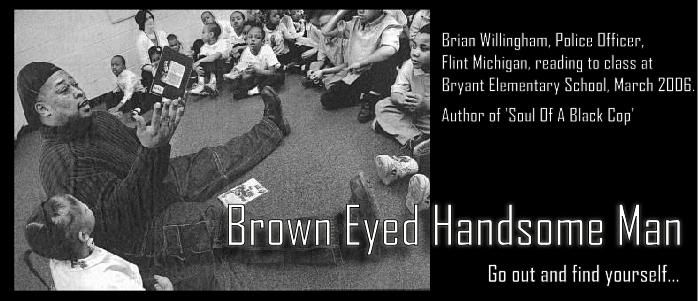
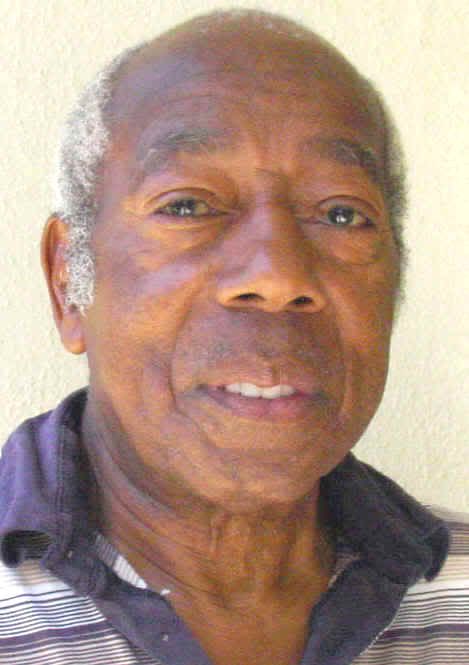
I thought I would change the header again. This time it is Brian Willingham, a police officer from Flint, Michigan. Rather than push for promotions within the department, Officer Willingham has spent much of his career working in community projects such as the 'March Is Reading' event shown.

"The more I'm involved in various parts of the community, I see that there are good people trying to make a difference against tremendous odds..."

Working with children, he feels, will pay off when they reach 14 or 15 years of age, and they have a positive role-model who knows them and they respect:

"At heart, the kids are good. They just have so many things they are dealing with... ...We need to reach them early."

To find out more about community projects Brian Willingham is involved with, or to buy his book, Soul Of A Black Cop, visit his website.

Tuesday, August 29, 2006

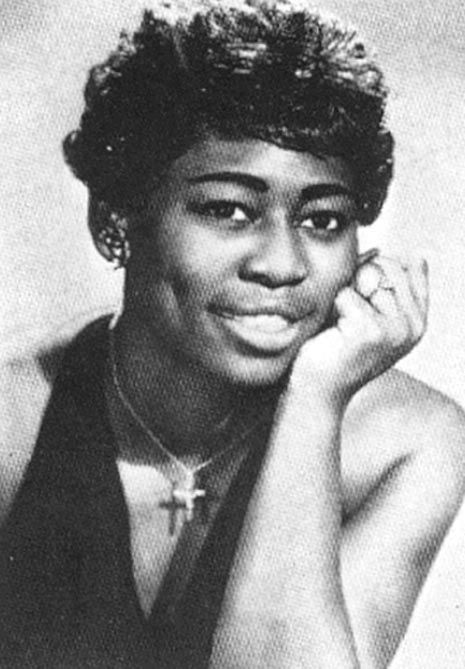
Barbara George Remembered...


I read today in the obituary column of the Guardian newspaper that Barbara George, the New Orleans soul singer, died on the 10th August 2006. Born Barbara Smith in New Orleans on 16th August 1942, she married young but very unhappily. To exorcise some of the emotions she felt trapped in her violent relationship, she wrote the song I Know (You Don't Love Me No More), basing the melody on the gospel song Just a Closer Walk With Thee. She signed to the black co-operative label All-For-One, run by pianist Jessie Hill, who recognised her song-writing ability. The song reached No. 1 on the R&B charts, and No. 3 on the US Pop charts.

After a second single You Talk About Love, and an album of her songs titled I Know, both failed to break out on the national r&b chart, All-For-One let George move to Sue Records. Her later records did not duplicate the chart success of her first hit, and Barbara George increasingly turned to alcohol to cope with the life of a singer constantly touring on the soul music circuit. After making a recovery in the 1980s, she returned to gospel and to Chauvin, Louisiana.

I know we'll remember her.

Dan Phillips at Home of The Groove wrote a detailed obituary and biographical piece on Barbara George on 20th August, which has been used by the local press in Louisiana and by obituarists in the press as the basis of their reports. I recommend visiting to learn the full story of this remarkable woman.

POSTSCRIPT: Could the horn interlude in Otis Redding's version of Down In The Valley have been influenced by the horn section on Barbara George's I Know (You Don't Love Me No More)?

Monday, August 21, 2006

Go 'Head On With The Packers

Continuing my Magnificent Montague theme, today's post centres around one of those legendary recording sessions of soul myth. Did Booker T & The MGs record a tune in LA while around them Watts burned?

In August 1965, Estelle Axton, joint owner of Stax Records, sent The MGs to do a tour of California. According to Steve Cropper, their last gig on the tour took place the night before the riots began (at the 5-4 Ballroom, which burnt down in the fires), and it was the liquor store next door that was set fire to next day at the start of the riots. Thus the rumour that the band recorded amidst the flames began, fanned by associations with the infamous catchphrase "Burn, baby! Burn!" of the MC for the Stax Revue gig and producer of the instrumental in question...

Of course, the recording took place elsewhere, as part of a session making jingles for Magnificent Montague's radio show. As he tells it, it "was another of those half-hour-left-in-the-studio throwaway jobs." Considering that writing and producing r&b instumentals was one of Montague's self-confessed money-making sidelines, and one he was good at too, it seems a little too convenient.

What was also too convenient was that Packy Axton, Estelle's son and estranged member of the Mar-Keys, and his friend Johnny Keyes, just happened to be in town, signed to Montague's Pure Soul Music label, and present at the studio, ready to play horn and congas respectively. Montague it should be noted, doesn't mention the contract which meant that he would own the recordings that day, mischievously describing Packy as just "Booker T's sax player"! Nothing can be proved, but nearly all of the principals involved assume that Estelle Axton was pulling strings for Packy to get another chance of a hit record, after he had fallen out with Jim Stewart over time-keeping and drinking.

The song recorded was Hole In The Wall, which was releaed as by The Packers, and was a No.5 R&B hit. Montague describes the genesis of the song:

"We finished the jingles, and then, jsut for fun, I started beating on my conga drum: one, two, bop-bop. I'd read it was what slaves used as a code beat, a warning at secret meetings that massa was coming; the change-up of rhythm was the signal to start their emotional dance and laughter, to fool massa that they were contented and happy."

The session over, the MGs left for home, all knowing that Packy and Montague had put one over on them, and the feelings were mixed, between respect for Montague's acumen, sympathy for their friend Packy, confusion about why Estelle would arrange it, and some annoyance at the lost earnings on what should have been released as another MGs hit. The MGs are listed alongside Nathan (Montague's real name is Nathaniel) as writers, but it is doubtful that they or Montague have seen much of the royalties as the masters have been sold on more than once.

Montague added some girls from Santa Monica doing background vocals, yelling and cheering for a 'live jam' feel, in the style of Ramsey Lewis. But now, Montague and Packy needed a b-side. Packy, Johnny Keyes and Leon Haywood came back to record another instrumental, which was titled Go 'Head On. Out of the two sides, I think it is actually my favourite at the moment.

Larry Grogan at Funky 16 Corners blog did a detailed detective investigation into the various line-ups of the Packers after this session, and into the mysterious reappearances of Hole In The Wall and Go 'Head On in other guises, back in April 2004 and again in January 2006. Strongly recommended for further fascinating facts!

The Packers - Go 'Head On (Pure Soul Music 45-1107) 1965


A CD of the Stax Revue tour or August 1965 at the 5-4 Ballroom is available here. Interestingly, it lists the Mar-Keys as playing 'Last Night' at the gig. So, if Packy had been playing some nights on the tour anyhow, and horns were needed, the MGs would have perhaps expected his presence at the recording session... You can listen and hear Magnificent Montague MCing at the Amazon web page.

Wednesday, August 16, 2006

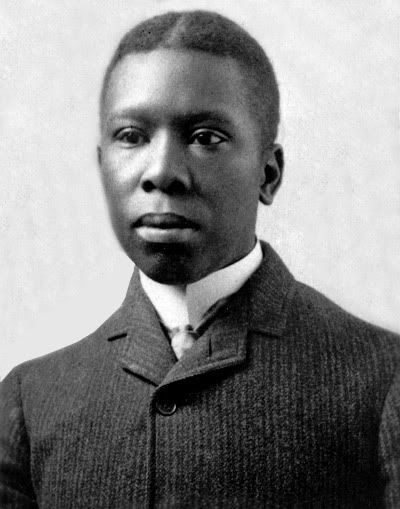
Paul Lawrence Dunbar: We Wear The Mask

While reading the biography of Magnificent Montague, I discovered that he also used to include a little historical interlude in his broadcasts, entitled They Paved The Way. The picture header at the top of my blog always seemed a good place to put some things about history once in a while, but I thought it would be interesting to sometimes write a bit more about people whose place in history should be better known. "First it was jazz, now history lessons!", they groan... "Silence at the back! Pick up your pen and turn to page 135..."


Today's post is pure poetry. Paul Lawrence Dunbar (1872-1906) went to Dayton Central High School in Ohio with the Wright Brothers in the 1890s. By the age of 21 he was a published poet, and soon had built a national reputation. Frequently using dialectical spelling and grammar in his writing, he is sometimes for this accused of pandering to the prevalent image of the 'plantation negro', a judgement that neatly sidesteps any examination of the actual content of his writing. Here is one of his best known poems, We Wear The Mask, written without dialect voice, that helps to put into context the meaning of his other works and disarms the critics:

We wear the mask that grins and lies,
It hides our cheeks and shades our eyes--
This debt we pay to human guile;
With torn and bleeding hearts we smile
And mouth with myriad subtleties.

Why should the world be over-wise,
In counting all our tears and sighs?
Nay, let them only see us while
We wear the mask.

We smile, but oh great Christ, our cries
To Thee from tortured souls arise.
We sing, but oh the clay is vile
Beneath our feet, and long the mile;
But let the world dream otherwise,
We wear the mask!


In other words, his other poems may well have sold to some northern readers as tales of 'happy folk way down south'; but the same poems in fact treat the subject with dignity that is only hidden by our own prejudices towards the 'correct' form of written language.

Some critics, such as Kenny J. Williams, mock Dunbar for his pretensions to speak for black Americans, pointing to his Ohio birth, not being a slave himself (yet why should people assume that Dunbar is writing about antebellum slavery?!), white friendships and even criticising his caring mother for 'shielding' him from contemporary racism (how exactly she would achieve this I find hard to fathom...).

In When Malindy Sings, Dunbar goes to great lengths to attempt to describe the technical prowess of blues singing as it then was practised, while mocking the limitations of the european musical tradition. That contemporary white readers, and modern critics, might sometimes fail to spot this, is their problem... Let the world dream otherwise, we wear the mask.

G'way an' quit dat noise, Miss Lucy --
Put dat music book away;
What's de use to keep on tryin'?
Ef you practise twell you're gray,
You cain't sta't no notes a-flyin'
Lak de ones dat rants and rings
F'om de kitchen to be big woods
When Malindy sings.

You ain't got de nachel o'gans
Fu' to make de soun' come right,
You ain't got de tu'ns an' twistin's
Fu' to make it sweet an' light.
Tell you one thing now, Miss Lucy,
An' I'm tellin' you fu' true,
When hit comes to raal right singin',
'T ain't no easy thing to do.

Easy 'nough fu' folks to hollah,
Lookin' at de lines an' dots,
When dey ain't no one kin sence it,
An' de chune comes in, in spots;
But fu' real melojous music,
Dat jes' strikes yo' hea't and clings,
Jes' you stan' an' listen wif me
When Malindy sings.

Ain't you nevah hyeahd Malindy?
Blessed soul, tek up de cross!
Look hyeah, ain't you jokin', honey?
Well, you don't know whut you los'.
Y' ought to hyeah dat gal a-wa'blin',
Robins, la'ks, an' all dem things,
Heish dey moufs an' hides dey faces
When Malindy sings.

Fiddlin' man jes' stop his fiddlin',
Lay his fiddle on de she'f;
Mockin'-bird quit tryin' to whistle,
'Cause he jes' so shamed hisse'f.
Folks a-playin' on de banjo
Draps dey fingahs on de strings--
Bless yo' soul--fu'gits to move em,
When Malindy sings.

She jes' spreads huh mouf and hollahs,
"Come to Jesus," twell you hyeah
Sinnahs' tremblin' steps and voices,
Timid-lak a-drawin' neah;
Den she tu'ns to "Rock of Ages,"
Simply to de cross she clings,
An' you fin' yo' teahs a-drappin'
When Malindy sings.

Who dat says dat humble praises
Wif de Master nevah counts?
Heish yo' mouf, I hyeah dat music,
Ez hit rises up an' mounts--
Floatin' by de hills an' valleys,
Way above dis buryin' sod,
Ez hit makes its way in glory
To de very gates of God!

Oh, hit's sweetah dan de music
Of an edicated band;
An' hit's dearah dan de battle's
Song o' triumph in de lan'.
It seems holier dan evenin'
When de solemn chu'ch bell rings,
Ez I sit an' ca'mly listen
While Malindy sings.
Towsah, stop dat ba'kin', hyeah me!
Mandy, mek dat chile keep still;
Don't you hyeah de echoes callin'
F'om de valley to de hill?
Let me listen, I can hyeah it,
Th'oo de bresh of angels' wings,
Sof' an' sweet, "Swing Low, Sweet Chariot,"
Ez Malindy sings.

Sunday, August 13, 2006

Yusef Lateef's Detroit: Belle Isle

It's time to relax on our occasional tour of the Detroit described by Yusef Lateef in his classic Atlantic jazz album of 1969. "Jazz?", someone says, "but I'm only into obscure northern soul and talcum powder..." And I say, "But this man lived right there in it, and saw and listened, and then described with music what you seek to find. He knows the background to those three-minute gems of intensity. Come on, only 9 people have got on the bus! You've still got time to visit Woodward Avenue and the Paradise Theatre where Billie Holliday and Duke Ellington played; Bishop School where Yusef learned; and pick up some groceries at the Eastern Market! What is it like? Tell me when you get there."

Saeeda Lateef reminisces in the liner notes...

"Hot nights. Belle Isle, pass the Big Stove, lemonade. Fried chicken an' tato salad, scorched hot dogs, get full, laugh loud.
Swim, dig for nightcrawlers, fish, throw the mud-puppies back in the water. Tired? Cool it 'til the Lucky Old Sun rises gleaming from the other side..."

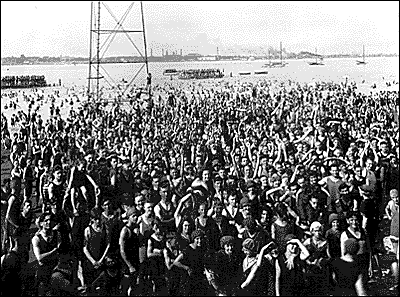
Today, we go to Belle Isle.


Cross the MacArthur Bridge.


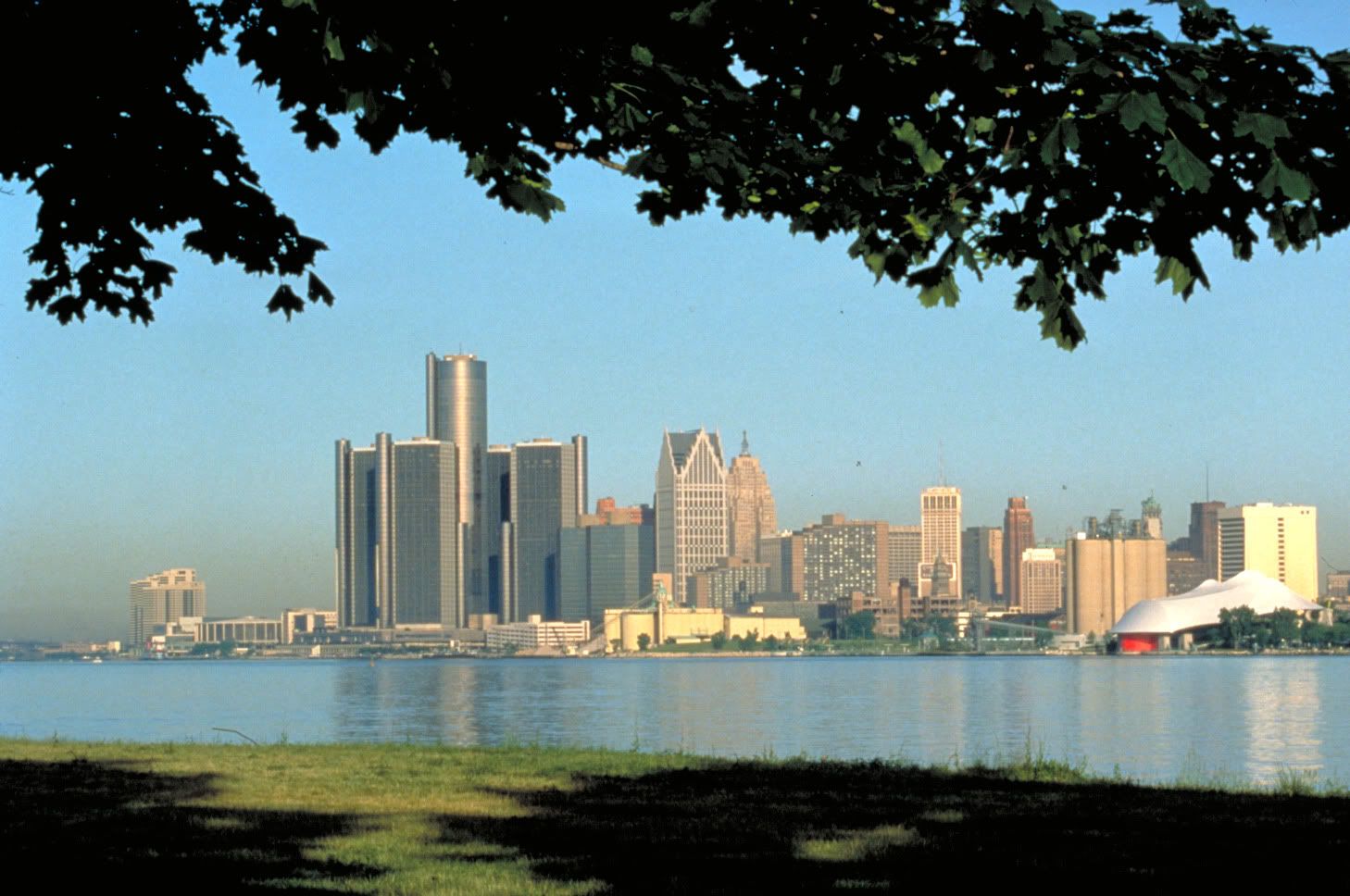
You can see the city of Windsor on the Canadian side and downtown Detroit on the U.S. side, linked by the Ambassador Bridge.


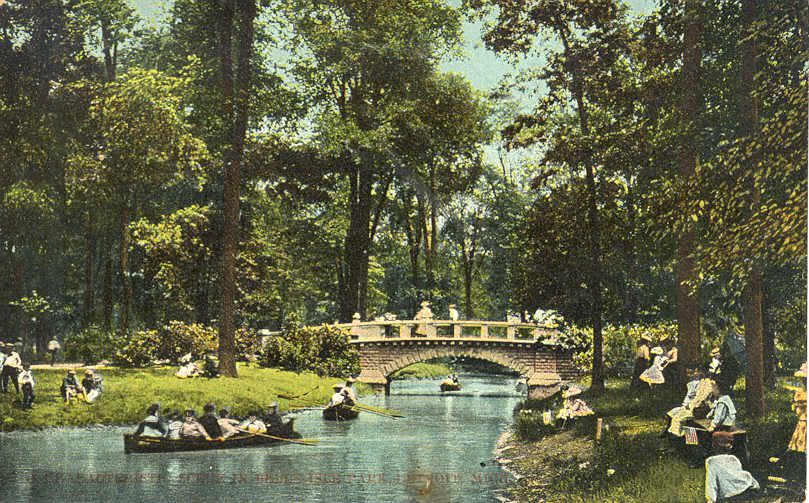
Belle Isle was popular for boating on its canals.


You can visit the Scott Fountain,


the Whitcomb Conservatory,


and the William Livingston Memorial Lighthouse.


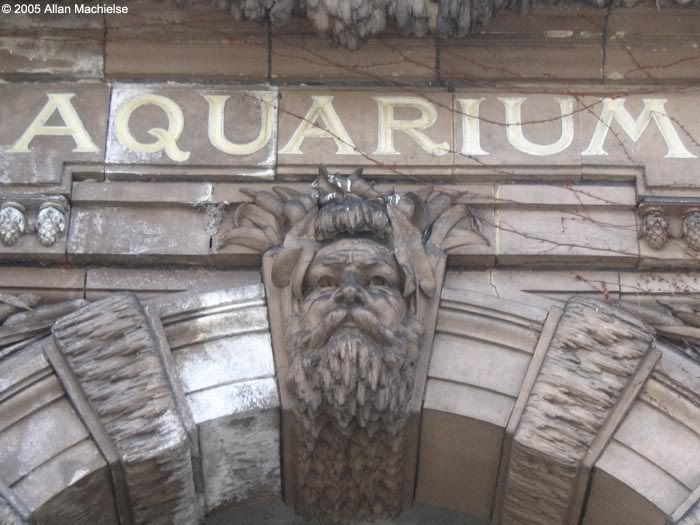
The Belle Isle Aquarium closed for the last time in May 2005, after a continuous 101 years.


At one end of the island, the water's edge is filled with concrete breakwater blocks. These broken up slabs of concrete once belonged to a Nike missile base during the Cold War.


Belle Isle is also the site of the Detroit Grand Prix motor race, and has its own zoo.


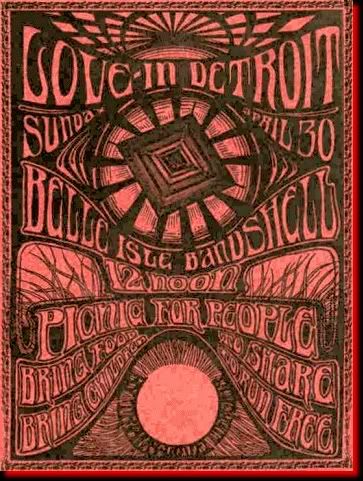
Back in 1967, Yusef Lateef could have gone to see the MC5 at the Detroit Love-In on Belle Isle...


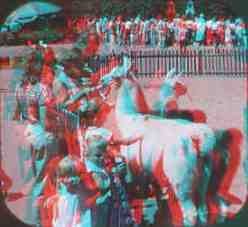
... but I suspect he would have been more interested in this amazing 3D llama at the childrens' zoo.


Yusef Lateef 's Detroit (Atlantic SD1525) 1969

Sunday, August 06, 2006

Magnificent Montague: Put Your Hand On The Radio, Touch My Heart!


Remarkable people are often best know by their remarks, but on occasion they can be held hostage by them. When I mention the name of Magnificent Montague, it would probably be another phrase, not the one in the heading of this post, that springs to mind, and you might well associate it with the turmoil, anger and violence that erupted in Watts in August 1965. Yet the association would be a misapprehension, and the life of Magnificent Montague is of far greater significance for many other reasons...

Nathaniel Montague was born in New Jersey on the 11th January 1928. Possessed of keen intellect, confidence and desire for experience, he ran off to Los Angeles several times in his youth, and in 1942, with his close friend Tony Williams (later of The Platters), joined the Merchant Marine, making numerous convoy journeys supplying the Allies during WWII. He learned to be creative, independent, organised, and was fast to pick up on the niches and opportunities that others didn't.

One particular opportunity whch Montague tried his hand to on a few shore leaves was as a radio DJ, and thus began the most well-know part of his career, first working out of stations in Houston and Galveston Bay, a little later in Louisiana, then off to Chicago, New York, San Francisco, and to his dream audience of Los Angeles. Eachtime he moved city, Montague was aiming at reaching a bigger audience and increasing his chances of making a living in a difficult commercial business. Montague was particularly adept at cultivating female listeners, using his love of poetry and writing verse. It was, as he realised, the target audience most coveted especially by advertisers of household products, and if you couldn't sell airtime to advertisers, you were out of a job.

Not that this was without its potential dangers, as a black DJ working in a still segregated nation. He was once thrown out of a toilet by police in a railway station in Washington D.C. minutes after his arrival, and on one terrifying occasion, his station manager in Houston called him from his booth to introduce him to the assembled dignitaries of the local Ku Klux Klan who complained: "By God, you been makin' love to white ladies, boy!", referring to the huge number of female callers to his show. Only thanks to the quick intervention of another, large-built white DJ called J.P. Richardson were tensions lowered, as he put his arm jovially around Montague's small shoulder and joked, "All Negroes seem to have that touch, I try to get it myself. That's why I try to be hep!" A successful songwriter, J.P. would later write Chantilly Lace, and was better known as the Big Bopper.

Who knows what those KKK crackers would have thought had they known that Magnificent Montague was actually courting a white woman, unseen, through his poetry on the airwaves. Soon after meeting in her home town in Louisiana, he and Rose Catalon were married, and driving north, in great peril should they be spotted together, to new pastures. They remain happily together to this day.


His career in the entertainment business brought Montague into contact with numerous major talented people. Montague was most closely associated with recording Johnny Keyes and his group The Tams, whom he renamed The Magnificents; and for producing L.C. Cooke, younger brother of Sam Cooke. Montague began arranging shows comprised of astonishing arrays of black musical talent. One show at Rockland Palace in the South Bronx in Januay 1963 saw Ben E King, Gene Chandler, Sam & Dave, Carla & Rufus Thomas, Dionne Warwick, Jimmy Reed, John Lee Hooker, the Orioles and the Fascinations, many more, plus a guy called "Otis Reeding" thrown in to raise his profile on condition that Stax Records get Booker T & the MGs to back all the other acts for the show! To top it off, Sam Cooke heard about the show while it was on, and dropped by to sing too!

Sam Cooke was one of the people who also helped to develop Montague's wider understanding of the status of black people in America. Paul Robeson was the first to awaken a sense of the wider injustices that ingenuity and talent could not overcome. He recorded a young singer named Calypso Gene, who was soon to become Louis Farrakhan, and Montague came to be wary of the misdirection of anger that inequality could lead to. He has an abiding dislike of the anti-semitism Farrakhan promulgates, and was drawn closer to an appreciation and adoption of Judaism, in whose struggles he saw parallells with black American experience. Yet, in distinct contrast to Farrakhan, of all the great thinkers he was lucky enough to know personally, it was Malcolm X whom he most admired, for his lack of fear and "tell-it-like-it-is" attitude about the frustrations of ordinary black American with the pace of change.

In August 1965, Magnificent Montague became embroiled in a political controversy of his own. He had been using a catchphrase "Burn, baby burn!" on air for a number of years to describe the excitement of particularly great records; but as the Watts Riot exploded in the streets, rioters appropriated the slogan for themselves. Officials, assuming Montague intended to incite the rioters, demanded he stop using it. For Montague, although horrified by the way his words were being misunderstood, it was a demand that missed the point. His slogan hadn't been the cause of the rioting, and simply removing it was not going to stop it. In fact, if word spread that a popular black figure was being put under political pressure, it might further agitate the situation. So, Montague hatched a plan to embarrass the mayor Sam Yorty, live on air, then came up with a new slogan, "Have Mercy!", to suggest a healing vibe to his listeners.

The way in which Montague had been pressured led eventually to his decision to not buy but actually build from scratch his own radio station, KPLM in Palm Springs. Having been barred because of race from the established radio union, and having to get by on his own initiative, Montague also got involved in founding the National Association of Radio Announcers, to provide security for other black people in the industry. It was part of Montague's constantly increasing awareness of the signficance of black Americans in the history of the United States, and awareness of the way that their role was often overlooked and erased from the public record. He had for many years been avidly collecting different kinds of memorabilia concerning black history, on a huge scale, and in the 1980s he attempted to found a Museum of Black History to display his vast collection. Sadly, this vision has been thwarted by lack of funding from official sources, who instead wanted it donated for nothing to an institute, and lack of interest from the Black American celebrities Montague thought would willingly participate. The collection, described by one curator as "greater than any public collection of its type" and as a "reference library" of black history, is currently up for auction for a private collector, and may be lost for the public forever.

Maybe, if Montague was still on the radio, willing us to listen hard, more would heed his call. Such a shame that noone will champion the preservation of utterly unique artifacts of a history untold. Let's go back to New York in 1963. Montague wrote a new theme song to begin his programme, and persuaded some of the great female soul singers to participate. It was also released as a 45, and sold over 200,000 copies. It builds up to a crescendo of feeling, and burns with Montague's plea to: "Put your hand on the radio, touch my heart!"

Aretha Franklin, Cissy Houston, Dee Dee Warwick - Montague the Magnificent Theme (1963)


Information for this post taken from Magnificent Montague's autobiography, "Burn, Baby! Burn!" , published by the University of Illinois Press 2003. The theme song and other classic recordings can be found on Magnificent Montague's own website.
Photobucket - Video and Image Hosting

Monday, July 31, 2006

Yusef Lateef's Detroit: The Monroe Theater District & Woodward Avenue

The previous installments of this virtual tour can be found here at the Eastern Market, and here at Bishop School, and here at Belle Isle.

Onwards with our tour of Detroit with Yusef Lateef...

"Stage Show! Arcade, Dunbar, Castle, Willis and Warfield - potatoes for admission on Saturday between 12:30 and 4:00pm. Fifteen cents, otherwise. Freedom of action, unrestricted. Thirteen Spirits of Swing - Matthew Rucker, Milt Buckner. The Duke, The Count, The King, The Prince, The Earl. Royalty at its BEST! Sessions at the West End . . . Joe Brazil's basement ...
... Woodward Avenue. Big parades. The library, the museum, Wayne University, the Toddle House - BEST pecan waffles; cheap ... Paradise Theatre ... The Zephers, Moms Mabley, Patterson and Jackson, and Willie Lewis - "Somebody spit like a dime!" The old Mirror Ballroom, echoes of the giants. World Stage ... New Music Society. The State Fairgrounds - Detroit Symphony and guest artists. Latitude."

- Saeeda Lateef, 1969

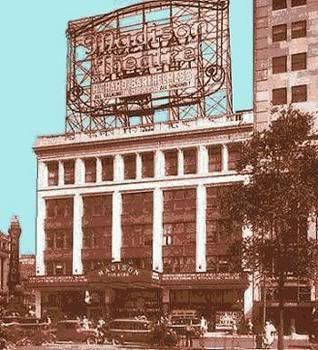
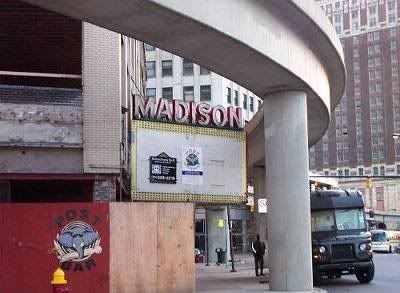
The theatres that Saeeda describes are in mostly a parlous state, or long gone. The Madison Theater has been demolished after serving time as the more exotic sort of cinema, and the site is under redevelopment today for a new entertainment complex. The Arcade Theater still stands at 2416 Hastings Ave. It was open from 1913-1949. The Castle Theater stands at 3412 Hastings Ave. It was open from 1915-1939. A combination of new forms of entertainment and music, economic troubles in the city, the flight of middle-class residents, and regeneration schemes have changed Detroit in many ways.


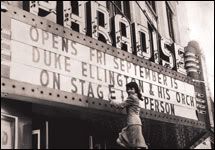
However, there is one story of hope and renewal amongst the ghosts. In 1919, the Detroit Symphony Orchestra build Orchestra Hall on Woodward Avenue and played there until 1939, when they left under financial pressures. Thus began the buildings second and more celebrated life as the Paradise Theater. It was a premier jazz venue, Duke Ellington famously playing there. But the venue closed for the last time in 1951, and in 1970 was slated for demolition.


The community rallied together over the next few months to prevent demolition and raise funds to buy the building in 1972. They started to reopen it for a few fundraising concerts to help continue renovation. By 1989, after $7 million had been raised for repairs, the hall was readopted as the home of the Detroit Symphony Orchestra.

It helped to inspire numerous other community projects to revitalise the area around Woodward Avenue.


Orchestra Hall now promotes the development of the talents of young people via the addition of a new Detroit High School for the Fine, Performing & Communications Arts.

Yusef Lateef's Detroit (Atlantic SD 1525) 1969

Find out more about Orchestra Hall at the Detroit Symphony Orchestra website. To learn more about the local area, why not visit Hamtramck News. Great snippets of local history from the Paradise Valley and Black Bottom districts can be found with Detroit News.

Monday, July 24, 2006

Billy Young: You Left The Water Running

Photobucket - Video and Image Hosting


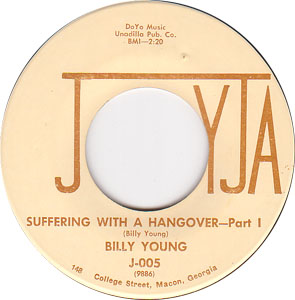
Individuals can make a difference, and Billy Young was one of those individuals. Not only did he produce some fine southern soul records, he served his community in Macon Georgia selflessly, donating his musical talents to causes and devoting his time to work with children in need.

Billy Young began his musical career in Macon, playing the venues of Broadway such as the Two Spot, and got his first chance to record in 1961 with Glendora b/w Are You For Me.

Billy came to the notice of local legends Otis Redding and Phil Walden, who both recognised a kindred musical spirit. Billy's voice had a similar gutsy and countrified delivery, although his voice was not quite as raw or his delivery quite as strident as Otis'. Otis took Billy down to Muscle Shoals for a session at Fame Studios recording for Otis's Jotis label. The single was Do the Sloopy b/w Same Thing All Over (Jotis 469), and was distributed by Atlantic.

Billy was invited to Chess Records to record a single for them in 1966, Have Pity On Me b/w You Left the Water Running (Chess 1961).

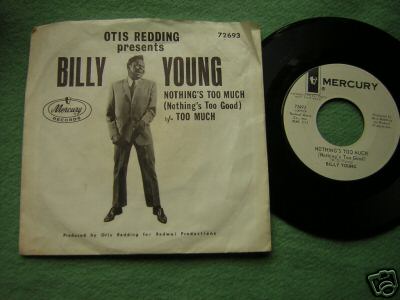
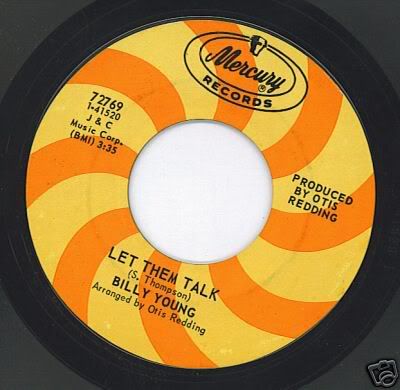
Otis Redding took Billy to record next at the Mercury label in 1966 and '67. Nothing's Too Much (Nothing's Too Good) b/w Too Much (Mercury 72693) and A Year, A Month, A Day b/w Let Them Talk (Mercury 72669) were both produced and arranged by Otis Redding, who was a conscientous mentor.
Billy Young - Nothing's Too Much (Nothing's Too Good) / Too Much

None of these singles took off nationally, but Billy continued to work through his own Joyja label(Georgia Soul! explained that this is a play on the pronunciation of Georgia out in the country), cutting songs such as Surviving With A Hangover, and the Grotto label in Macon, on which he recorded songs such as How Much Longer (Can You Hold Out) under the moniker Billy "Country Boy" Young. It was in the early 1970s that Billy began to see how he could actively contribute to the needs of his community.

Billy released a song called "Sickle Cell Anaemia" recorded purely to raise awareness among parents to have their children's blood checked, and vaccinations handled early.

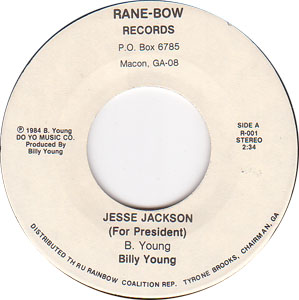
In the 1980s, Billy was involved in a local chapter of the Rev. Jesse Jackson's Rainbow Coalition. The Rainbow Coalition commissioned Billy Young to cut a single for the vanity Rane-Bow label called Jesse Jackson (For President) (Rane-Bow R-001) in 1984, but neither Jesse or the single had the success they had hoped for.

Billy Young also became a well-known figure at the Rosa Jackson Community Center working with disadvantaged children. According to the director of the center,

"The children at the center rushed to meet and hug him when he came to the center to provide active recreational outlets for them. The center staff was also overjoyed to see Mr Young on his regular visits to help provide assistance for these children. To many kids at the center he was the father they had always wished for but never had. He was instrumental in keeping them on the right path."

Billy also enjoyed writing poetry in later years, his most popular poem being one about Martin Luther King Jr, while for the children he read to regularly at the center, their favourite was titled "The Apple".

Billy Young died on 18th August 1999, but he was far from forgotten by the people of Macon. Since then, The Billy Young Memorial Tribute has been held annually at the Rosa Jackson Community Center on 1211 Maynard St, in Macon, Georgia. 31217. Over the years since this celebration started it has been attended by many city officials including members of the Macon City Council and the Mayor of Macon. The Annual Billy Young Tribute is sponsored by Reverend Frank Ray of Brothers Keeper Inc. This organization provides meals for the children who attend the Rosa Jackson Center on a daily basis. Reverend Ray also sponsors other community activities for children and young adults in and around the City of Macon, Georgia. The Rosa Jackson Center Staff co-sponsors this event every year. In 2002, the event was well attended by over 150 people.

Today's track is from Billy's Chess single, written by Dann Penn and Rick Hall, You Left All The Water Running, a reminder that sometimes, when you've got a good thing going with someone like Billy Young, you oughta stick around and appreciate things.

Billy Young - You Left All The Water Running (Chess 1961) 1966

London Lee at No1 Songs In Heaven was recently tracking down the many versions of this song, which has been sung by James & Bobby Purify, Wilson Pickett, Otis Redding, Maurice & Mac, Geno Washington, bluesman W.C. Clark, in the 90s by Dan Penn himself, numerous country singers, even Huey Lewis...

Invaluable information for this post was found from the Georgia Soul! Blog, and from the Billy Young Memorial website. Today's song is currently unavailable on CD, but Billy Young appears on several compilations such as Dave Godin's Deep Soul Treasures Vol. 1, and Lost Deep Soul Treasures Vol. 1.
Saturday, July 15, 2006

Having Fun With The Bobbettes...

This post is brought to you jointly by the people at Brown Eyed Handsome Man and Get On Down With The Stepfather Of Soul...
Photobucket - Video and Image Hosting
Jason Stone, The Stepfather of Soul, was hunting for a copy of I've Gotta Face The World by long-running girl group The Bobbettes. I was in a record-buying mood, cash card in hand, innocently perusing the Rare Soul Man website, and came away a little while later with one 45 and £30 lighter... and this is the first my girlfriend will know about it! What, have you lost yer marbles, you can't run with the northern soulers, I told myself, soon you'll be taking out a mortgage to fund your habit, I knew that, but then... Go on, said the voice...

The best praisie of The Bobbettes that I can find is by Marv Goldberg as part of his R&B Notebook series, based upon interviews with surviving members of hundreds of vocal groups of the 50s and 60s. For The Bobbettes, he was able to speak to surviving member Reather Dixon Turner.

In brief, The Bobbettes began as teen group the Harlem Queens, comprising Emma Pought, Jannie Pought, Reather Dixon, Laura Webb and Helen Gathers. Their first hit was the song Mr Lee in 1957 for Atlantic Records. When the relationship with Atlantic began to sour in 1959, they went on to record elsewhere for two more decades. Some of the most popular tracks include I Shot Mr Lee (based loosely on a teacher they didn't like -"shot him in the head, boom, boom.”- gangsta style in chiffon), and I Don't Like It Like That, an answer song to Chris Kenner's I Like It Like That. After a long career in which they created many classic records, tragedy struck in 1980, when Jannie Pought was killed in a random shooting, a victim of the gun culture they had once satirised. Yet, even today, the remaining members continue to perform.

Photobucket - Video and Image Hosting

The track featured today is the b-side to a single recorded in May 1966. It's called Having Fun, and that you will have, if you are past sixteen and fancy free. Oh, so long ago... A thumping bassline, punchy horns that suddenly break into a little nod to the Otis signature riff, and lots of attitude.

The Bobbettes - Having Fun (RCA Victor 47-8832) 1966

Now, if you haven't already, jump over to the Stepfather of Soul, who has another Bobbettes treat for you...

Information in this article taken from Marv Goldberg interviewing Reather Dixon Turner for the R&B Notebooks. Another source on the Bobbettes' career can be found at The Doo-Wop Society of Southern California.

You can buy the Bobbettes Ultimate Collection on CD from doo-wop and vocal group specialists Dead Dog Records, which contains all of their hits up until 1964.

Wednesday, July 05, 2006

Johnny Jenkins: Walking On Gilded Splinters


Photobucket - Video and Image Hosting


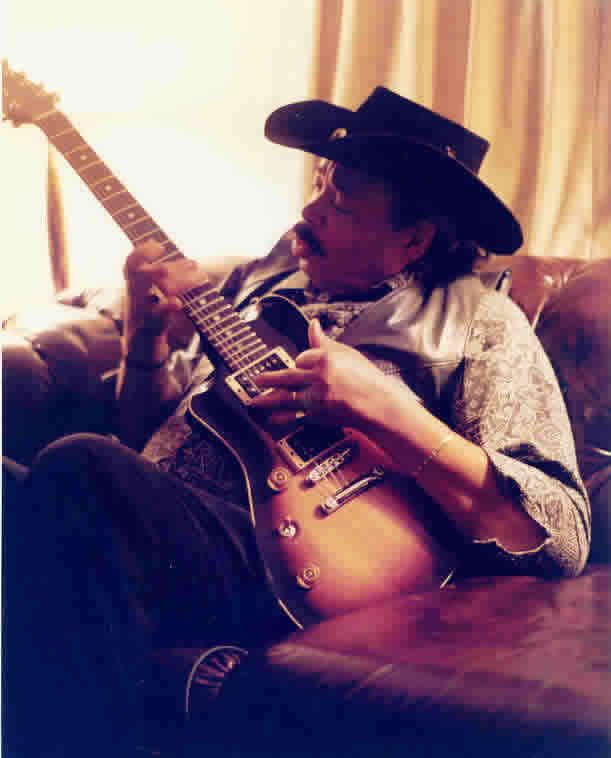
After a short weekend trip to France, I came back to read some sad news for soul fans. Agent 45 at Georgia Soul! Blog reports that Johnny Jenkins, leader of the Pinetoppers and recording artist at Capricorn Records, died on Sunday June 25th 2006, aged 67. I had been reading about him and telling my girlfriend about him on the plane home...

Johnny Jenkins was born in Macon, Georgia in 1939. At age 9, he made his first guitar out of a cigar box and rubber bands; as a left-hander, he learned to play it upside down and entertained people at a local gas station.

Phil Walden signed Jenkins in 1958, while he was a high school president looking for a way to book r&b shows for fraternities. Johnny began to tour around the South, playing fraternity parties and various venues, first with Pat T Cake & The Mighty Panthers, and then with his own band, the Pinetoppers.


Photobucket - Video and Image Hosting


Paul Hornsby of the Capricorn Rhythm Section, who played with Johnny on his key albums, recalls:

"He was legendary playing at college fraternities at the University of Alabama. I always heard about the left-handed guitar player who was doing all these acrobatics."

Phil Walden talked about Johnny in a 1996 interview with the Macon Telegraph:

"I have a great deal of sentiment attached to Johnny Jenkins. He was my first client, and it was through him that I met Otis Redding. ... I was still a teenager when I met him, and I thought my entire world rotated around Johnny Jenkins' guitar. I was convinced he could have been the greatest thing in rock 'n' roll. He had all the earmarks of stardom. He looked the part, he played the part, he acted the part. ... He made a major impression on my entire career. This was my first relationship with an African-American musician, and what made that unusual was the time of the relationship (the late '50s). I learned so much about life from Johnny Jenkins and Otis Redding during those early years. It was exhilarating, to say the least."

At the Douglass Theatre in Macon, an amateur talent show was held every week and broadcast as The Teenage Party. Otis Redding sang regularly in 1958, and won week after week. One night, Johnny went to watch. Jenkins described what happened to Peter Guralnick:

"I heard Otis at the Douglass, and the group behind him just wasn't making it. So I went up to him, and I said, 'Do you mind if I play behind you?' And he looked at me like, 'Who are you?' 'Cause he didn't know me. And I say, 'I can make you sound good.' ... And you know how the guitar can make a singer sound good by covering up his weaknesses? Well, he sounded great with me playing behind him - and he knowed it. I say, 'How much you pay me?' He say, '25 cents.' I say, 'Well, that be all right, maybe you better pay me 15 cents now, 10 cents at the gig.'"

The Pinetoppers, now with Otis singing, got a chance to record a single, Shout Bamalama, for Confederate Records, but the excitement was short-lived,a nd money became tight. Phil Walden set up Phil Walden & Associates, and booked the members of the band in various guises and combinations under assumed names to try to eke out more gigs - once they performed just as Johnny & Otis, with Otis playing the drums.

Johnny Jenkins then recorded a regional hit instrumental, Love Twist, released on Tifco, and then distributed by Atlantic thanks to record promoter Joe Galkin, who took a cut, and Phil Walden got a follow-up session booked at Stax Records. The confusion over Otis' role at the session stems from the fact that while Otis was an integral part of the band, they were there to record an instrumental follow-up to capitalise on Love Twist. But when the tunes didn't come together for the Pinetoppers, the remaining half-hour went over to trying some vocal tracks. Johnny Jenkins was there playing guitar on Hey Hey Baby and These Arms Of Mine, happily supporting his friend. Rogers Redding said that the original idea had been to promote These Arms Of Mine as a duo, Johnny & Otis.

But Johnny decided not to tour, disliking air travel, and perhaps more nervous, or more wary, about the prospect of fame than he liked to admit. He was suspicious of the Stax set-up, and like those black artists such as Gilbert Caple who played on Last Night but received no credit, believed that his contribution was being appropriated:

"They [Jim Stewart and Stax] had me in the motherfucking studio, and I played the best I knowed how... [then got Steve Cropper to study it]"

Johnny released just one 45 on Volt, Spunky bw Bashful Guitar. Johnny preferred to stick with Phil and those whom he trusted from Macon, and despite some portrayals of Johnny as a bitter man, others recall him quite differently. Joseph Johnson, curator of the Georgia Music Hall of Fame, recalls:
"I listened to an interview in which he said he never really wanted to become famous, he just wanted to play guitar. ... He was happy playing guitar, playing with a band and going home."

Paul Hornsby worked as a producer at Phil Walden's Capricorn Records when Jenkins recorded his most well-known album, Ton Ton Macoute, in 1970. He believes that Jenkins didn't try to get the fame and attention the other artists on the label such as the Allman Brothers, were receiving:

"Capricorn wanted him to be something special. They wanted him to be another Hendrix. But that just wasn't him."

Jenkins' guitar style is more familiar than you might think. Jimi Hendrix, whose aunt lived in Macon, saw Jenkins perform and fell in love with his signature acrobatic left-handed guitar style. Johnny was light-hearted about his possible influence:

"He used to see me at Sawyer Lake. The next thing you know, he's jumping around like me, but he had his own stuff."

The death of his best friend Otis Redding in 1967 had a profound impact upon Johnny. He could not bring himself to go to the funeral in Macon, unable to hold back his distress, and filled with suspicions that something more sinister might lay behind the plane crash. He feared also that Zelma and the family might be upset by his presence; and that Stax associates might not want him there, a reminder of Otis' younger, wilder days, rather than as a pop idol.

Johnny's career petered out with the fall of Capricorn Records. In 1996, Phil Walden produced Jenkins' comeback album, Blessed Blues. He performed at the first concert at the Douglass Theatre after it was renovated in 1997. Jenkins continued to perform sporadically, including a 2000 show at the Georgia Music Hall of Fame. His last two albums, Handle with Care (1999) and All in Good Time (2000), were produced by Mean Old World Records.

The singer Arthur Ponder sums up Johnny Jenkins as a character:

"I learned a lot from him... If you sang or played, you would go find Johnny. He would give you a chance."


The first track today comes from Ton Ton Macoute, and is a funky blues titled Walking On Gilded Splinters. Yes, Paul Weller once chewed this one up... Then, on his 2003 album, Johnny sings the William Bell penned tribute to his old friend Otis:

Johnny Jenkins - Walking On Gilded Splinters ('Ton Ton Macoute' 1970 Capricorn Records)


Johnny Jenkins - A Tribute To a King ('All In Good Time' 2003 Mean Old World)

Information and quotes from the Macon Telegraph, and from Sweet Soul Music by Peter Guralnick. Photos by Mark Pucci, and by the Capricorn Rhythm Section.